Live preview · Letter (8.5" × 11") · Dark lines
1 Inch Hex Battle Map (D&D Miniatures)
A battle map of hexagons that measure exactly 1 inch (25.4 mm) from flat side to flat side. That is the size a miniature on a standard 25 mm round base fills, so each hex holds one figure and stands for 5 feet of game space, the same scale as a 1 inch square grid. Only whole hexes are printed, so there are no clipped half-cells at the page edge.
Download saves a vector PDF in the size and color selected below, no print dialog needed.
Other formats:
Direct PDF:1 Inch Hex Battle Map (D&D Miniatures) Letter PDF1 Inch Hex Battle Map (D&D Miniatures) A4 PDF
Choose a different paper size:
Choose a different line color:
Great for
- D&D and Pathfinder combat on a hex grid instead of squares
- GURPS and The Fantasy Trip tactical combat (1 inch hexes)
- Skirmish games with miniatures on 25 mm or 1 inch bases
- Printing and tiling pages into a full-table battle mat
1 Inch Hex Battle Map (D&D Miniatures) at a glance
| What it is | Hex grid with 1 inch (25.4 mm) hexes, flat-to-flat: one hex per miniature on a standard 25 mm base, for D&D, Pathfinder and GURPS combat. |
|---|---|
| Category | Specialty |
| Paper sizes | Letter (8.5" × 11"), A4 (210 × 297 mm), A5 (148 × 210 mm), Half Letter (5.5" × 8.5"), B5 (176 × 250 mm), Legal (8.5" × 14"), 11" × 17", A3 (297 × 420 mm), A2 (420 × 594 mm), Poster (18" × 24"), Movie Poster (27" × 40"), Letter Landscape (11" × 8.5"), A4 Landscape (297 × 210 mm), Tabloid Landscape (17" × 11") |
| Line colors | Faint, Light, Gray, Dark, Black, Blue, Green (default: Dark) |
| Format | Vector PDF at exact physical scale (Letter PDF, A4 PDF), PNG or SVG, or print directly from the browser |
| Price & license | Free. No signup or watermark. Printed sheets may be used for personal, classroom and commercial work. |
About 1 inch hex battle map (d&d miniatures)
Most tabletop RPG miniatures stand on a 25 mm (1 inch) round base, and most battle grids are built around it: 1 inch on the table equals 5 feet in the game. On a square grid that scale causes a well-known problem. A diagonal step covers about 1.4 times the distance of a straight one, so rule sets either ignore the difference or ask you to count alternating diagonals as double. A hex grid removes the problem, because all six neighbouring hexes are the same distance away. The fifth edition Dungeon Master's Guide describes playing on hexes as an option, GURPS has used 1 inch hexes as its standard combat map for decades, and many groups prefer hexes for outdoor encounters where there are no straight walls to line up with. A hex is measured flat-to-flat, and at 1 inch flat-to-flat a 25 mm round base touches all six sides, so the figure sits in the hex without overlapping its neighbours. Movement converts directly from a square grid: a speed of 30 feet is six hexes. This template is the hex counterpart of our dungeon map paper; the smaller hex battle map has 16 mm hexes, which suit cardboard counters but are too small for a miniature.
What's on the page
Flat-top hexagons 1 inch (25.4 mm) flat-to-flat and about 1.15 inches (29.3 mm) point-to-point, with sides of about 14.7 mm. Only complete hexes are drawn and the block is centred on the page: 8 columns × 9 rows (72 hexes) on US Letter, 8 × 10 on A4, 11 × 7 on Letter landscape and 11 × 15 on 11 × 17. Alternate columns sit half a hex lower, as on any flat-top hex map.
How to use it well
Print at 100 percent
Choose 'Actual size' or 100 % in the print dialog. 'Fit to page' shrinks the sheet by a few percent, and a hex that should be 1 inch comes out too small for a 25 mm base. Check the first print with a ruler across the flat sides of one hex.
Tile pages for a bigger map
One Letter sheet is enough for a small skirmish. For a full encounter, print several sheets, trim the margins along the hex edges and tape them from behind. If you have access to a large-format printer, the Poster size gives a single-sheet map.
Make it reusable
Laminate the sheet or slide it into a clear page protector and draw terrain with wet-erase markers. One printed map then lasts a whole campaign.
Decide facing before play
On hexes a figure can face a side or a corner. GURPS faces a hex side; most D&D groups ignore facing. Agree which you use, because it changes what counts as flanking.
Count larger creatures in whole hexes
A Large creature (2 inch base) covers three hexes in a triangle, or one hex and parts of its neighbours. Pick one convention and use it for every large figure.
Common mistakes to avoid
- Printing with 'Fit to page' or 'Shrink oversized pages' enabled. The hexes come out smaller than 1 inch and bases overlap their neighbours.
- Drawing straight dungeon walls on hexes. Walls that run across the columns cut hexes in half and leave arguments about who can stand where. Use hexes for caves, forests and open ground, and dungeon map paper for corridors and rooms.
- Measuring the hex point-to-point. A 1 inch hex is 1 inch across the flats; corner to corner it is about 1.15 inches. A map sold as '1 inch point-to-point' is smaller and a 25 mm base won't fit.
FAQ, 1 Inch Hex Battle Map (D&D Miniatures)
Will a 25 mm miniature base fit in one hex?+
Yes. The hexes are 25.4 mm (1 inch) across the flat sides, so a 25 mm round base fits with a fraction of a millimetre to spare. 28 mm and 32 mm bases overhang slightly but still work, as they do on a 1 inch square grid.
How many hexes fit on a page?+
72 whole hexes (8 columns × 9 rows) on US Letter, 80 (8 × 10) on A4, 77 (11 × 7) on Letter landscape and 165 (11 × 15) on 11 × 17. Larger sizes up to 27 × 40 inches are in the size picker.
Can I play D&D on a hex grid?+
Yes. The fifth edition Dungeon Master's Guide covers it as an option. Each hex is 5 feet, so speeds and ranges convert directly: 30 feet of movement is six hexes. The main changes are that there are no diagonals to count and that areas of effect are counted in hexes.
Is the 1 inch measured flat-to-flat or point-to-point?+
Flat-to-flat, which is the convention for battle maps and the measurement that matters for fitting a round base. Point-to-point the hexes are about 1.15 inches (29.3 mm).
Is there a square-grid version?+
Yes. Dungeon map paper has a 1 inch square grid with 1/4 inch subdivisions, and plain 1 inch graph paper has the squares alone.
Do you have smaller hexes?+
Yes. The hex battle map uses 16 mm hexes for counters, and hexagonal graph paper uses 8 mm hexes for sketching and chemistry.
Printing tips for best results+
- 1. Click Print above. A new tab opens the template at exact size.
- 2. The print dialog appears automatically. Set Scale to 100%. Never "Fit to page", which silently shrinks every cell.
- 3. Set Margins to None or Minimum so the grid reaches the page edge.
- 4. For a PDF, click Download instead. It generates a vector PDF directly without going through the printer driver.
More detail in the guide to printing graph paper at actual size. Need a spacing that isn’t listed? Use the graph paper generator.
You might also like
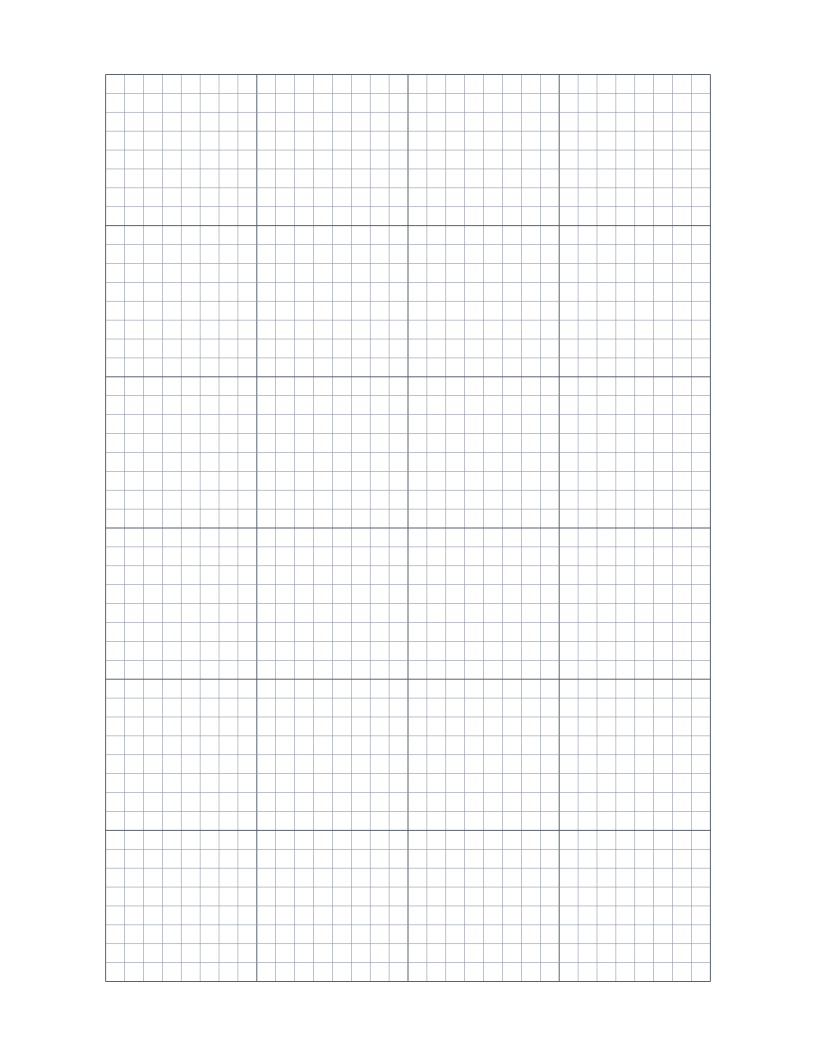
Specialty
Pixel Art Grid Paper
5mm grid with bold lines every 8 squares for planning 8, 16 and 32 pixel sprites.
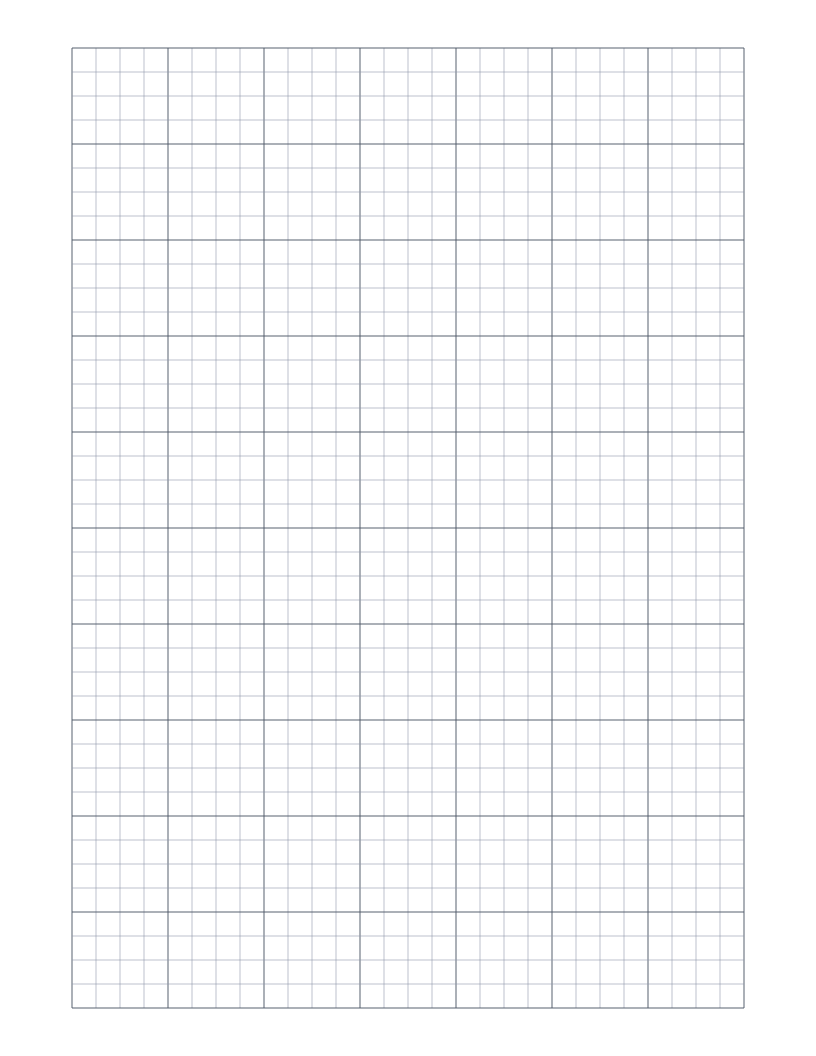
Specialty
Quilt Graph Paper
1/4 inch grid with bold lines every inch for drafting quilt blocks and layouts to scale.
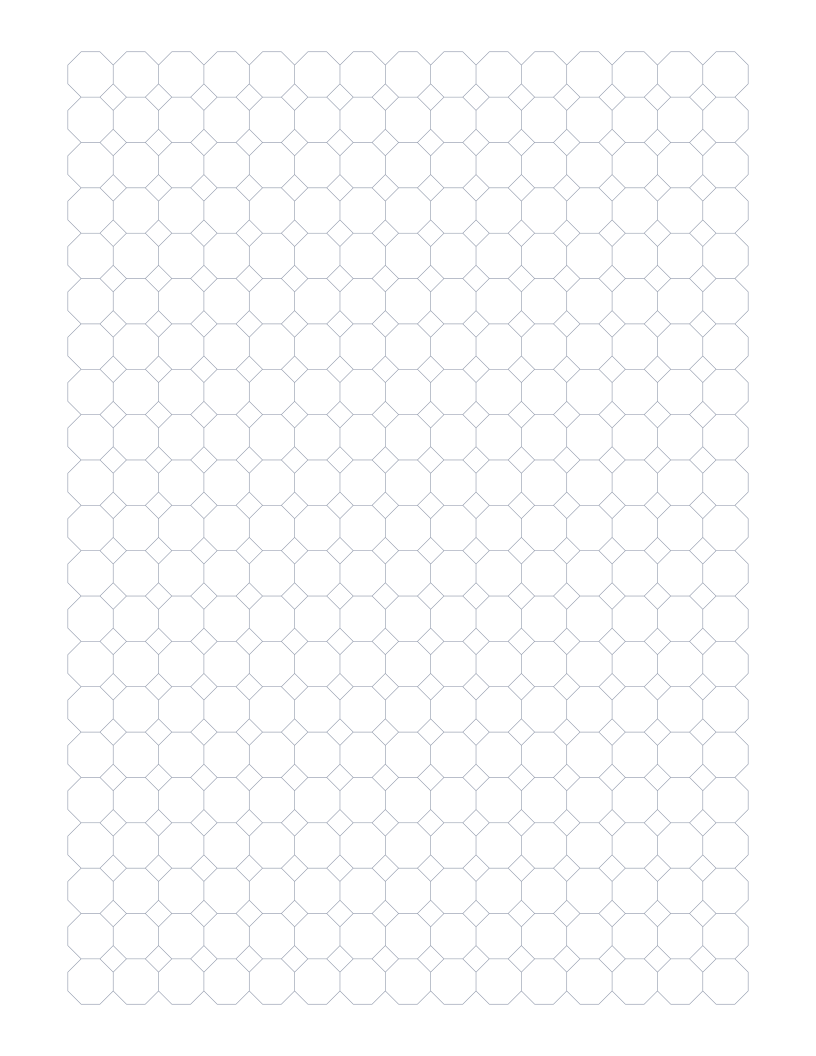
Specialty
Octagon Graph Paper
Regular octagons with small squares between them: the classic octagon-and-square tiling.
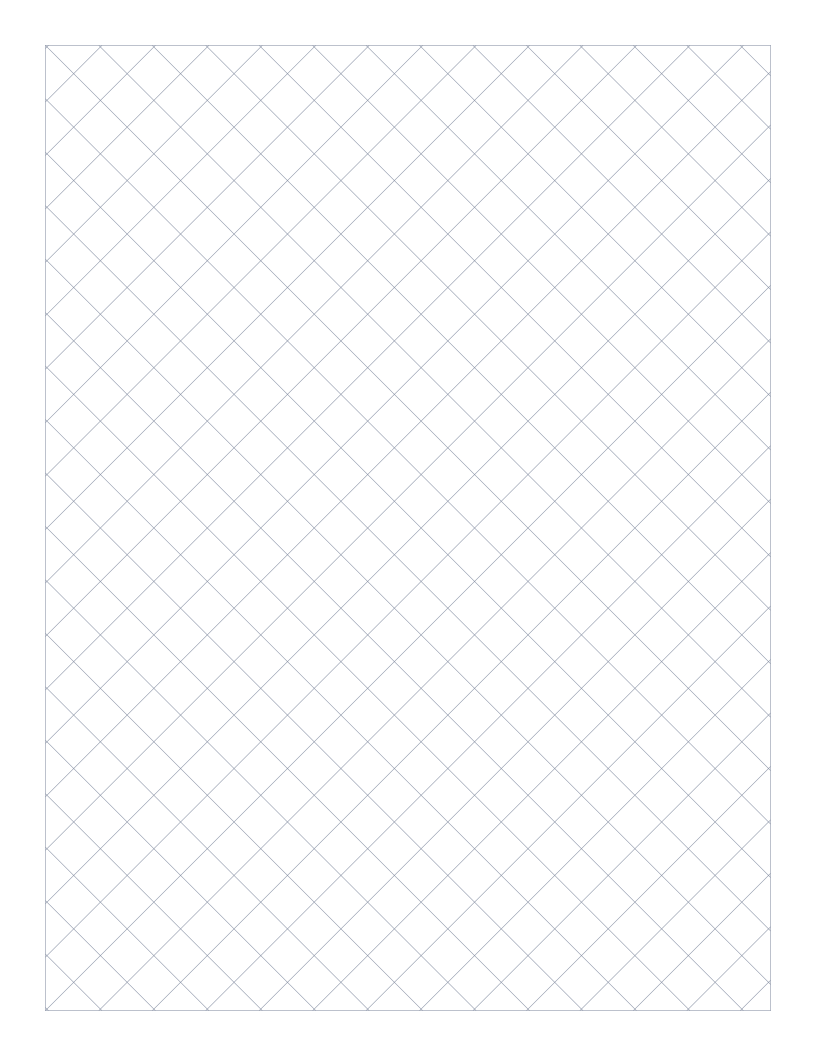
Specialty
Diamond Graph Paper
Square grid turned 45 degrees, for argyle, harlequin and on-point designs.