Live preview · Letter (8.5" × 11") · Gray lines
Hexagonal Graph Paper
Hex paper replaces the right-angle grid with a tessellation of regular hexagons. Each cell has six neighbours instead of four, all at the same distance. Which is the geometric trick that makes movement on the grid feel natural rather than stair-stepped.
Download generates a crisp vector PDF directly, no print dialog needed.
Choose a different paper size:
Choose a different line color:
Great for
- Tabletop and wargaming maps (Avalon Hill, GMT, ASL)
- Organic chemistry ring structures and benzene diagrams
- Tile-based puzzle and board game design
- Hex-and-counter strategy game prototyping
Hexagonal Graph Paper at a glance
| What it is | Hexagonal tessellation: perfect for tabletop wargaming, organic chemistry and tile-based games. |
|---|---|
| Category | Specialty |
| Paper sizes | Letter (8.5" × 11"), A4 (210 × 297 mm), 11" × 17", Legal (8.5" × 14"), A3 (297 × 420 mm), A2 (420 × 594 mm), Poster (18" × 24"), Movie Poster (27" × 40") |
| Line colors | Faint, Light, Gray, Dark, Black, Blue, Green (default: Gray) |
| Format | Vector PDF download at exact physical scale, or print directly from the browser |
| Price & license | Free. No signup or watermark. Printed sheets may be used for personal, classroom and commercial work. |
About hexagonal graph paper
Hex grids solve a problem that square grids can't: how to give a unit on a grid the same distance to every neighbour. On a square grid, your eight neighbours sit at two distances. The four cardinal neighbours one cell away, the four diagonal neighbours about 1.41 cells away. Movement rules end up either ignoring that (pretending diagonal moves are 'free') or applying an awkward correction. Hex grids dodge the problem entirely: every hex has exactly six neighbours, all the same distance. That single property is why hex grids became the default for serious wargames. Avalon Hill standardised on them in the 1960s, and modern hex-and-counter games from GMT and MMP still use them for the same reason. Chemists adopted the same shape independently for aromatic ring structures: benzene's six carbon atoms naturally arrange as a hexagon, and the hex grid lets a chemist draw multiple fused rings without realigning anything.
What's on the page
A flat-top hexagonal tessellation at 8 mm flat-to-flat (about 9.2 mm point-to-point), drawn in 0.15 mm hairlines. Hexes tile in offset columns. Every other column is shifted vertically by half a hex height, which is how regular flat-top hexagons interlock. On Letter you get about 27 columns × 31 rows of hexes; on A4, 26 × 34. The orientation is flat-top by default (one horizontal edge on top, one on bottom), the dominant convention in wargaming and chemistry.
How to use it well
Pick an axial coordinate system early
Hex grids don't have (x, y) coordinates by default, you have to pick a convention. The two common systems are offset coordinates (row, col with every other row shifted) and axial coordinates (two skewed axes at 60°). For tabletop games, offset is more intuitive; for procedural generation in code, axial is much cleaner.
Use flat-top hexes for wargaming, pointy-top for video games
Flat-top hexes (two horizontal edges) are the wargaming standard because units placed on them line up in rows you can read across. Pointy-top hexes (two vertical edges) are more common in computer games like Civilization where the rendering pipeline prefers them. Both work geometrically; the choice is convention.
Number the rows in offset coordinates
Wargames typically label columns A, B, C and rows 1, 2, 3. Add the labels by hand before the first game. Pre-printed labels rarely match the campaign's coordinate convention.
For chemistry, ignore the grid edges
Benzene rings live inside individual hexes, not across multiple of them. Treat the grid as a placement aid, not a structural constraint. Most molecules will span just a few hexes.
Common mistakes to avoid
- Confusing flat-top and pointy-top conventions. The two are 30° rotations of each other and won't overlay cleanly. If you're transcribing a map from another source, check the orientation before you start drawing.
- Trying to treat hex grids like square grids. The diagonal you're tempted to draw across a hex grid isn't a single direction, it's a stair-step across alternating rows. Movement rules need to be hex-native; you can't shoehorn square-grid logic onto them.
- Using too small a hex for tabletop play. At 8 mm flat-to-flat, our default is sized for paper prototypes and chemistry sketches. For actual tabletop play with miniatures, you typically want 25–30 mm hexes. Print at A3 if you need that scale, or use a single hex template enlarged.
FAQ, Hexagonal Graph Paper
What's the difference between flat-top and pointy-top hexes?+
Orientation only, they're the same shape rotated 30°. Flat-top hexes have two horizontal edges, pointy-top hexes have two vertical edges. Flat-top is the wargaming and chemistry standard; pointy-top is more common in computer strategy games. Don't mix them in the same project.
How many hexes fit on a Letter page?+
About 27 columns × 31 rows at our default 8 mm flat-to-flat size, depending on margin and orientation. For larger hexes, scale up. At 16 mm flat-to-flat (typical for tabletop play) you'll get about 13 × 16 hexes per Letter sheet.
Why are hex grids better than squares for wargames?+
Because every hex has six equidistant neighbours, movement and line-of-sight work the same in every direction. On a square grid, diagonal movement either has to cost extra (typically 1.5×) or be banned entirely, both of which produce artificial-feeling movement. Hexes eliminate the problem geometrically.
Can I use hex paper for organic chemistry?+
Yes. It's the natural ruling for aromatic rings (benzene, pyridine, furan) and polycyclic structures. Each ring fits in one hex, and fused rings share edges between neighbouring hexes. For straight-chain molecules, ordinary paper works fine; switch to hex only when ring structures dominate.
Is there a hex equivalent to 'rows and columns'?+
Two common systems: offset coordinates (row, col with every other row shifted, intuitive for humans) and axial coordinates (two skewed axes at 60°, cleaner for math). For paper play, offset is what you want; for procedural map generation in code, axial is the standard.
Printing tips for best results+
- 1. Click Print above. A new tab opens the template at exact size.
- 2. The print dialog appears automatically. Set Scale to 100%. Never "Fit to page", which silently shrinks every cell.
- 3. Set Margins to None or Minimum so the grid reaches the page edge.
- 4. For a PDF, click Download instead. It generates a vector PDF directly without going through the printer driver.
You might also like
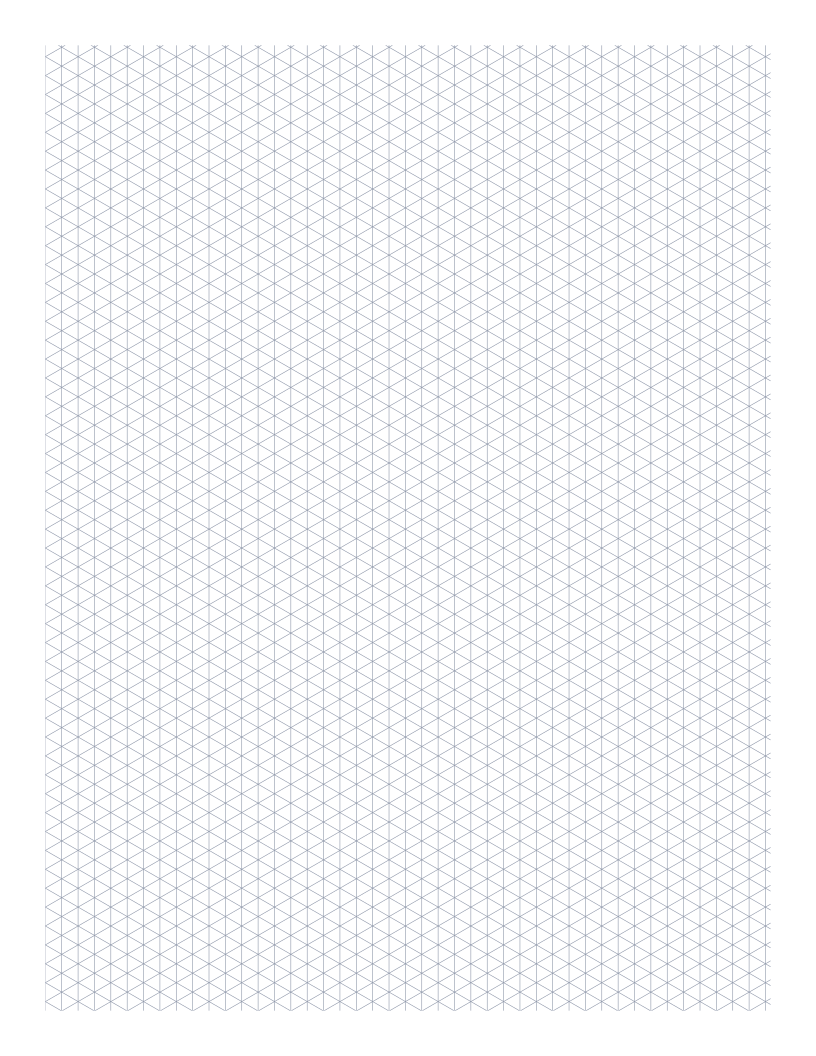
Isometric Graph Paper
Triangular 30°/60° grid for 3D drawings, technical sketches and Minecraft-style design.
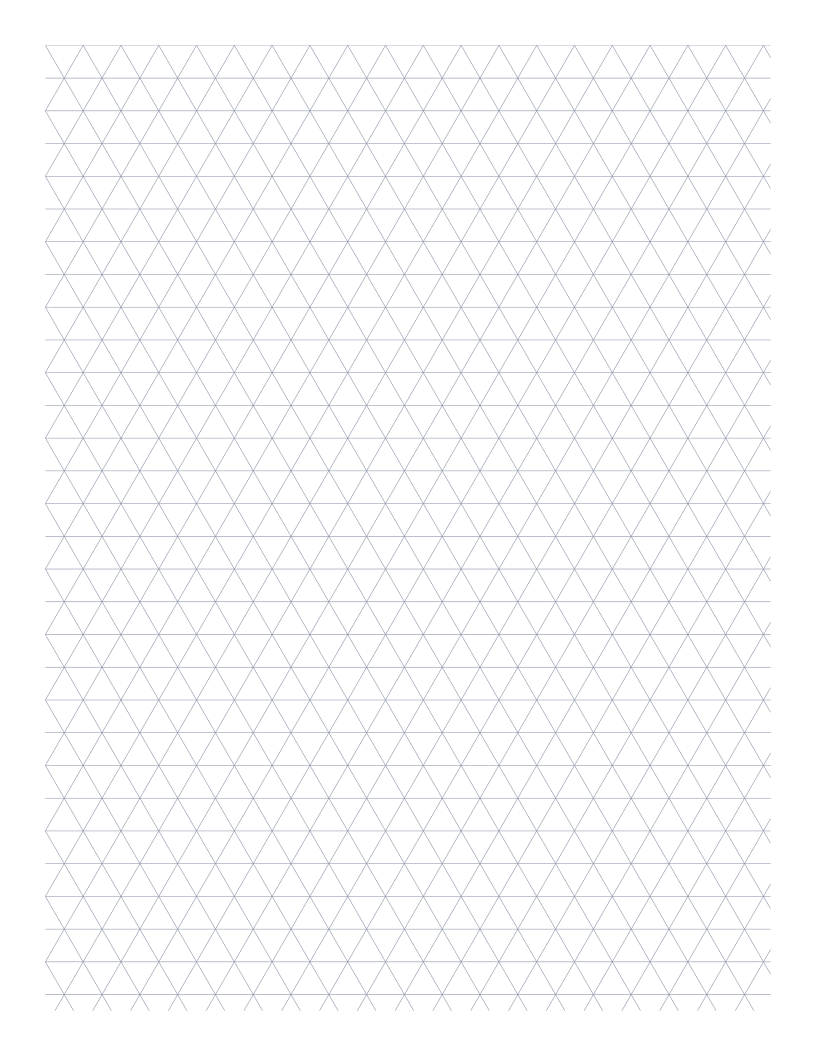
Triangular Graph Paper
Equilateral triangle grid: useful for ternary diagrams and tessellation art.
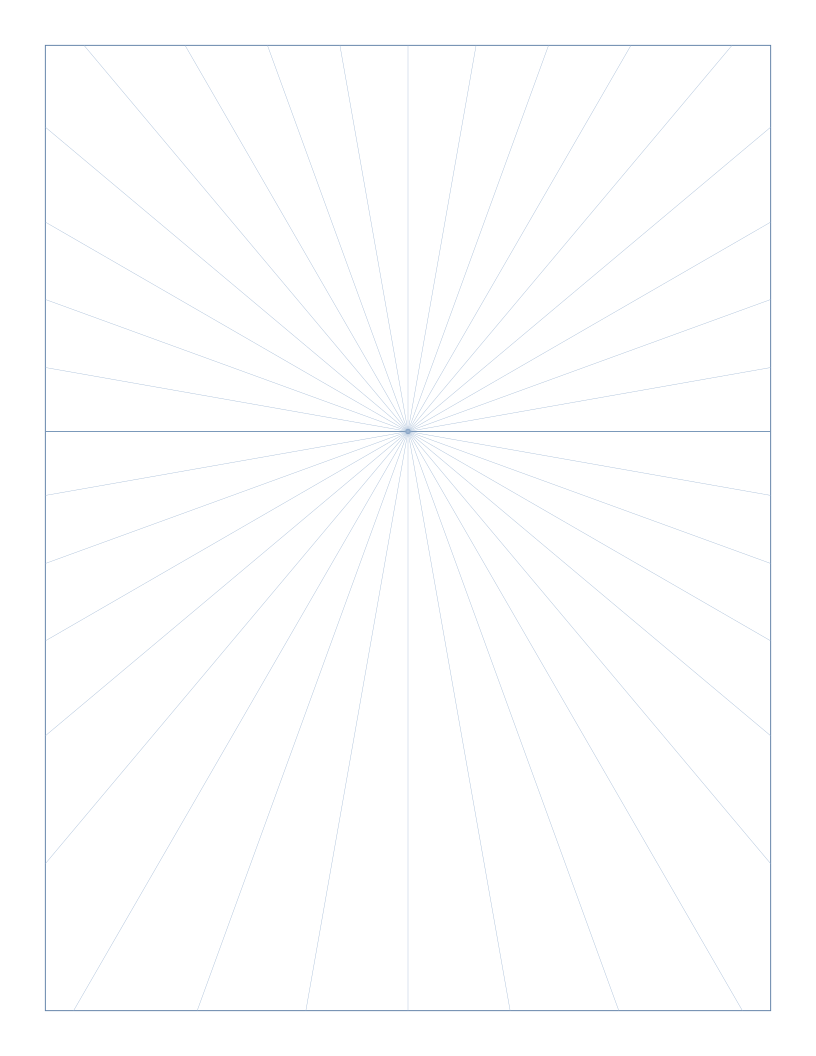
1-Point Perspective Grid
Single vanishing point on the horizon with radiating guides: the classic setup for hallways, rooms and street scenes.
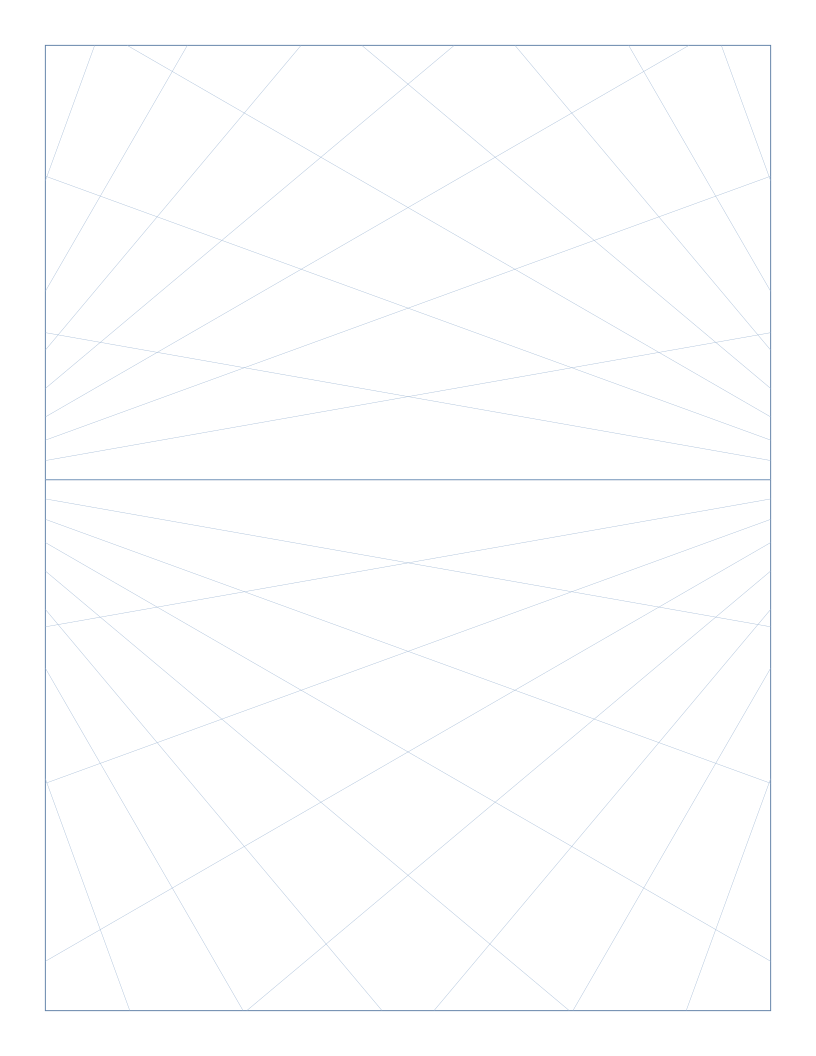
2-Point Perspective Grid
Two vanishing points on the horizon, set wide for natural-looking corners: the standard for architecture and product illustration.