Live preview · Letter (8.5" × 11") · Gray lines
1" Graph Paper
One-inch graph paper turns the page into a small grid of generously-sized cells. About 8 × 10 on a Letter sheet. It's the grid you use when each cell needs to hold a labelled object or a chunk of writing, not when you need to plot anything precise.
Download generates a crisp vector PDF directly, no print dialog needed.
Choose a different paper size:
Choose a different line color:
Great for
- Poster and large-signage layout
- Floor plans at 1:48 scale (one cell = 4 ft)
- Large-print educational worksheets
- Card, board and tile-game prototyping
1" Graph Paper at a glance
| What it is | One inch grid: the largest squares we offer, great for posters and quick layout work. |
|---|---|
| Category | Grid Paper |
| Paper sizes | Letter (8.5" × 11"), A4 (210 × 297 mm), 11" × 17", Legal (8.5" × 14"), A3 (297 × 420 mm), A2 (420 × 594 mm), Poster (18" × 24"), Movie Poster (27" × 40") |
| Line colors | Faint, Light, Gray, Dark, Black, Blue, Green (default: Gray) |
| Format | Vector PDF download at exact physical scale, or print directly from the browser |
| Price & license | Free. No signup or watermark. Printed sheets may be used for personal, classroom and commercial work. |
About 1" graph paper
One-inch grid paper is the largest practical grid for a single-sheet template. With 25.4 mm cells, each square is almost the size of a postage stamp. Too large to be useful as a precision plotting surface, but exactly right when the cells themselves are the working units. Tabletop game designers prototype card layouts on it. Architects sketch building outlines at 1:48. Vision-impaired students get worksheets printed on it so they can read each cell without strain. The defining characteristic is that you draw inside cells rather than across them.
What's on the page
A grid of 1 inch (25.4 mm) squares in 0.15 mm hairlines, no accent lines. On Letter you get a 7 × 10 grid of full cells; on Legal, 7 × 13; on A3, 10 × 15. The grid is centred so margins on opposite sides match. Lines run cleanly to the grid edge. You can count cells outward from any corner without losing track at the boundary.
How to use it well
Treat cells as containers
On a 1 inch grid, the cells are big enough to write inside, paste sticky notes into, or hold a labelled object outline. Use them as units of meaning, not as units of measurement.
Scale architectural drawings at 1:48
At 1:48 (also called 1/4 inch = 1 ft), one cell equals 4 ft of real-world space, so a 40 × 60 ft house plot fits in a 10 × 15 cell grid. That's the conventional US architectural scale for small-building schematic plans.
Pair with thick markers, not pens
A 0.5 mm pen looks lost inside a 25 mm cell. Crayons, chunky markers, and dry-erase markers all suit this paper better than fine writing instruments.
Print at A3 for poster work
Letter gives you about 70 cells of working area, which runs out fast. A3 nearly doubles that to roughly 175 cells, with no change in cell size.
Common mistakes to avoid
- Trying to plot data on it. With only about 70 cells per Letter sheet, you have one tenth the resolution of 1/4 inch paper. Use a finer grid for anything quantitative.
- Forgetting to set margins to None. Most consumer printers reserve 6–10 mm at each edge by default; on a grid this coarse, that's the difference between getting 7 × 10 cells and getting 6 × 9 plus a sliver of a partial cell on each side.
- Treating 1 inch as 25 mm flat. The difference (0.4 mm per cell) compounds: across a Letter page you drift by more than 3 mm, enough to misalign a stencil or laser-cut overlay made for one over the other.
FAQ, 1" Graph Paper
How many cells fit on a Letter sheet?+
Edge-to-edge, an 8.5 × 11 in sheet holds 8 × 11 cells. With our centred margins and typical printer borders, you'll see about 7 × 10 full cells in the printable area.
Is 1 inch the right scale for game prototyping?+
It is for many tabletop games, Magic-style cards are about 2.5 × 3.5 inches, hex tiles are typically 1 inch flat-to-flat. For miniature wargames on 25 mm bases, one inch graph paper is the standard movement grid.
Why no accent lines?+
At 25.4 mm per cell, the cells already provide their own visual structure. Accent ruling would add clutter without giving you more usable information. If you want a heavier subdivision, draw it in by hand or switch to engineering paper.
Can I use it for large-print homework?+
Yes. This is one of the most common requests for 1 inch paper. The large cells make it easier to read for students with low vision, dyslexia, or motor coordination challenges, and the spacing reduces visual clutter on math worksheets.
What's the metric equivalent?+
One inch is 25.4 mm. There's no standard metric grid at that size. The nearest options are 20 mm and 25 mm, neither of which lines up exactly with one inch. If you need both, print at one inch and label the cells in inches throughout.
Printing tips for best results+
- 1. Click Print above. A new tab opens the template at exact size.
- 2. The print dialog appears automatically. Set Scale to 100%. Never "Fit to page", which silently shrinks every cell.
- 3. Set Margins to None or Minimum so the grid reaches the page edge.
- 4. For a PDF, click Download instead. It generates a vector PDF directly without going through the printer driver.
You might also like
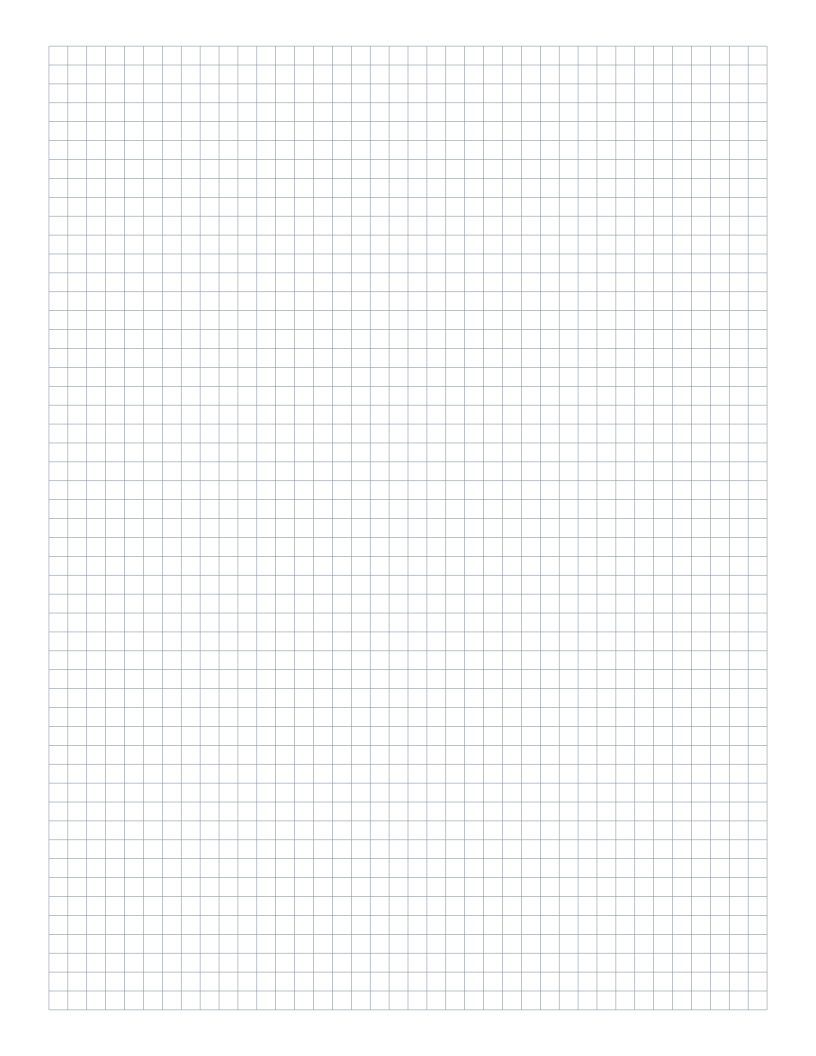
5mm Graph Paper
Standard 5mm square grid: the most popular spacing for math, engineering and general use.
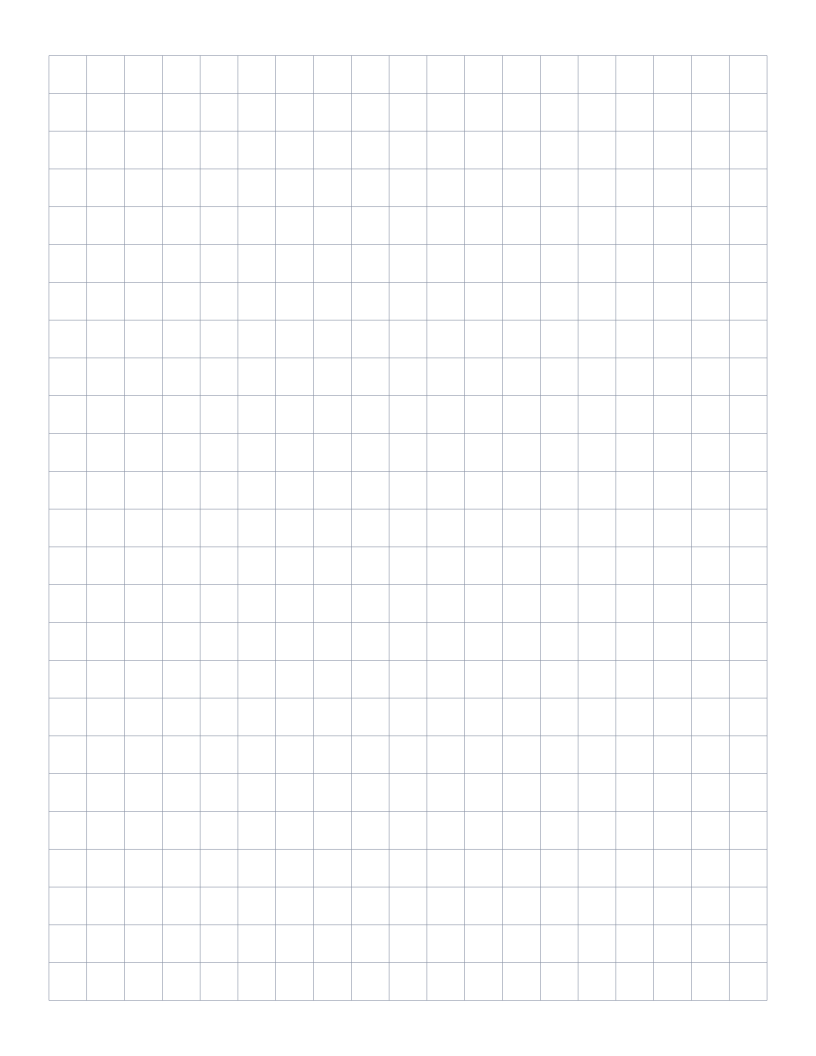
1cm Graph Paper
1 centimeter grid: the everyday graphing standard for elementary math and primary school.
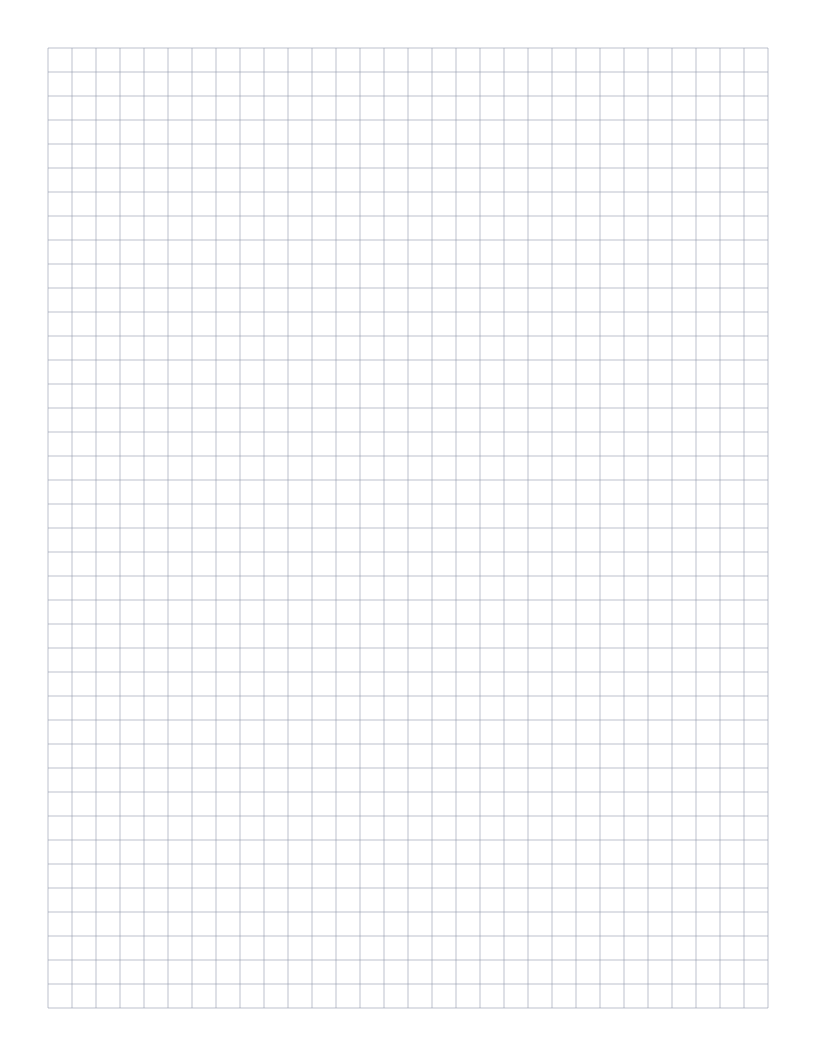
1/4 Inch Graph Paper
Classic four-squares-per-inch quad ruled paper: the US engineering standard.
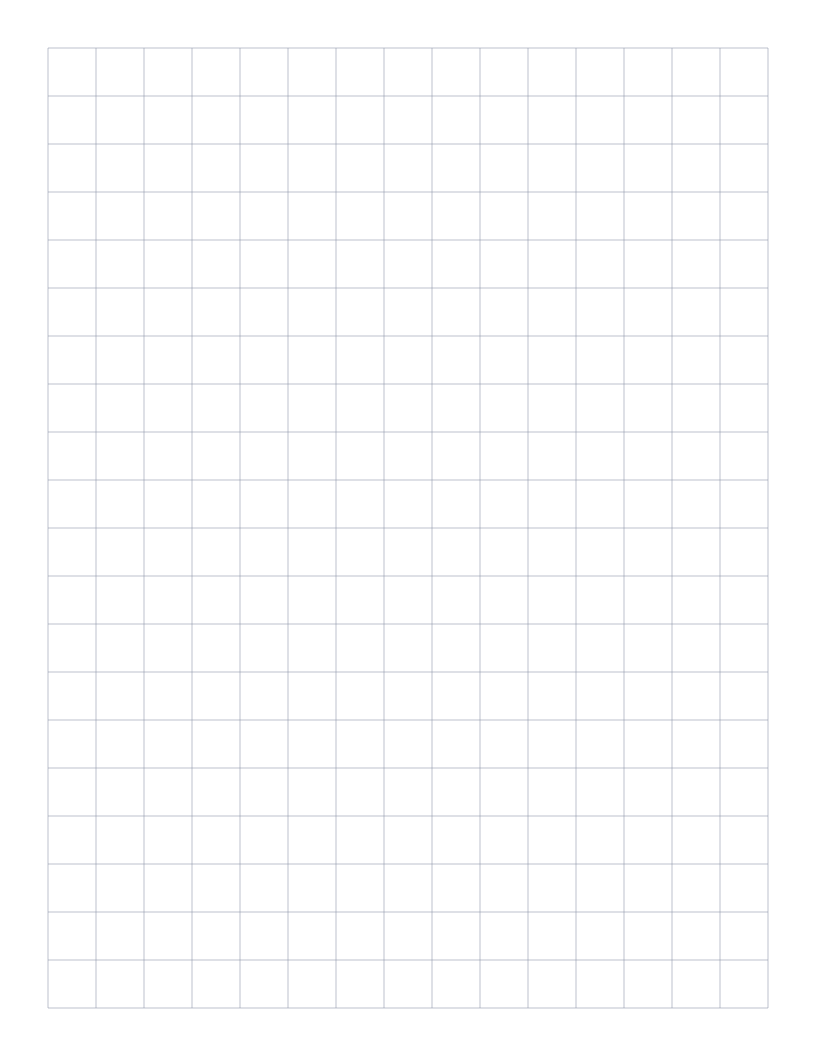
1/2 Inch Graph Paper
Two squares per inch: large grid that doubles as a 2D ruler for measurement.