Live preview · Letter (8.5" × 11") · Gray lines
Quilt Graph Paper
Quilt graph paper is a quarter-inch grid with a heavier line at every inch. Quilters use it to draft blocks at full size or to plan a whole quilt at a reduced scale, counting squares instead of measuring.
Download saves a vector PDF in the size and color selected below, no print dialog needed.
Other formats:
Direct PDF:Quilt Graph Paper Letter PDFQuilt Graph Paper A4 PDF
Choose a different paper size:
Choose a different line color:
Great for
- Drafting quilt blocks at full size
- Planning quilt layouts and colour placement
- Working out fabric and cutting requirements
- Designing patchwork, borders and sashing
Quilt Graph Paper at a glance
| What it is | 1/4 inch grid with bold lines every inch for drafting quilt blocks and layouts to scale. |
|---|---|
| Category | Specialty |
| Paper sizes | Letter (8.5" × 11"), A4 (210 × 297 mm), A5 (148 × 210 mm), Half Letter (5.5" × 8.5"), B5 (176 × 250 mm), Legal (8.5" × 14"), 11" × 17", A3 (297 × 420 mm), A2 (420 × 594 mm), Poster (18" × 24"), Movie Poster (27" × 40") |
| Line colors | Faint, Light, Gray, Dark, Black, Blue, Green (default: Gray) |
| Format | Vector PDF at exact physical scale (Letter PDF, A4 PDF), PNG or SVG, or print directly from the browser |
| Price & license | Free. No signup or watermark. Printed sheets may be used for personal, classroom and commercial work. |
About quilt graph paper
Quilting in the US tradition is measured in inches, and the seam allowance is a quarter of an inch. A grid ruled in quarter inches with inch lines emphasised therefore speaks the same language as the rotary ruler and cutting mat on a quilter's table. At full size, one square is a quarter inch and a 6 inch block fills six bold squares. At reduced scale, a common choice is one square to one inch, or one bold square to one foot, which lets a bed-sized quilt fit on a single page. Drawing the design before cutting shows how blocks, sashing and borders add up, and makes it possible to count how many pieces of each fabric are needed.
What's on the page
A grid of 1/4 inch (6.35 mm) squares with a bold line every four squares, marking whole inches. The grid is trimmed to whole inches and centred: 7 inches wide by 10 inches tall on both US Letter and A4, which is 28 by 40 squares. Larger paper sizes give a larger drafting area at the same scale.
How to use it well
Write the scale on the page
Note '1 square = 1/4 inch' for full-size drafting or '1 square = 1 inch' for a layout. Mixed-up scales are the most common planning mistake.
Draft finished sizes, add seams later
Draw each patch at its finished size. When you cut, add 1/4 inch on every side, which is exactly one square at full scale.
Colour with pencils that match your fabrics
Shade lights, mediums and darks rather than exact colours. Value contrast is what makes a block pattern read from across a room.
Count pieces from the drawing
Once the layout is drawn, tally each shape and fabric. Multiply by the cut size to estimate yardage before buying.
Common mistakes to avoid
- Printing with 'Fit to page'. A full-size block drafted on a grid that printed at 96 percent will be too small by about a quarter inch across 6 inches.
- Forgetting seam allowances when cutting. The drawing shows finished sizes; every cut piece is half an inch larger in each direction.
- Using it for metric patterns. For centimetre-based designs use 1 cm graph paper or 5 mm graph paper.
FAQ, Quilt Graph Paper
What graph paper is best for quilting?+
For patterns in inches, a 1/4 inch grid with bold inch lines, because seam allowances and most patch sizes are multiples of a quarter inch.
How large a block can I draft at full size?+
Up to 7 inches wide by 10 inches tall on Letter or A4. For 12 inch blocks print on 11×17 or A3.
What scale should I use for a whole quilt?+
One square to one inch fits a quilt up to 28 by 40 inches on Letter. For bed quilts use one square to 2 or 3 inches, or one bold square to one foot.
Is this different from regular 1/4 inch graph paper?+
The squares are the same size. 1/4 inch graph paper has uniform lines; this version adds a bold line every inch and trims the grid to whole inches.
Is there paper for triangle and hexagon quilts?+
Yes. Use triangular graph paper for 60 degree designs and hexagonal graph paper for English paper piecing hexagons.
Printing tips for best results+
- 1. Click Print above. A new tab opens the template at exact size.
- 2. The print dialog appears automatically. Set Scale to 100%. Never "Fit to page", which silently shrinks every cell.
- 3. Set Margins to None or Minimum so the grid reaches the page edge.
- 4. For a PDF, click Download instead. It generates a vector PDF directly without going through the printer driver.
More detail in the guide to printing graph paper at actual size. Need a spacing that isn’t listed? Use the graph paper generator.
You might also like
Specialty
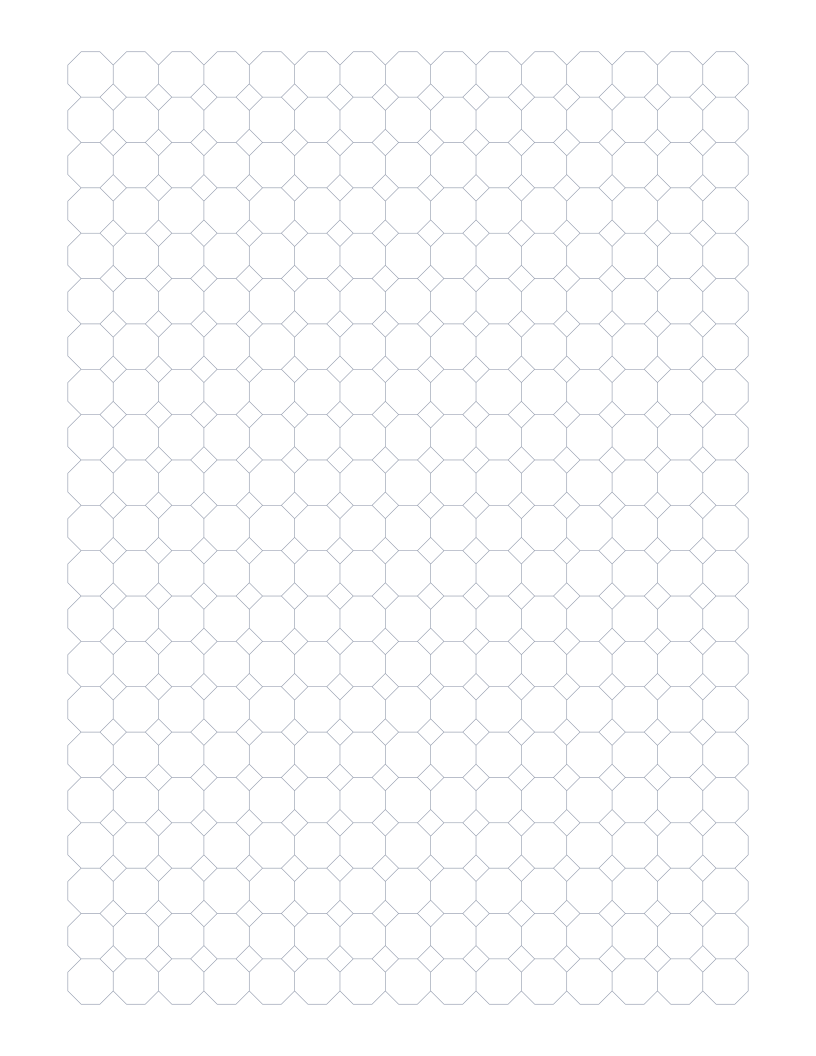
Octagon Graph Paper
Regular octagons with small squares between them: the classic octagon-and-square tiling.
Specialty
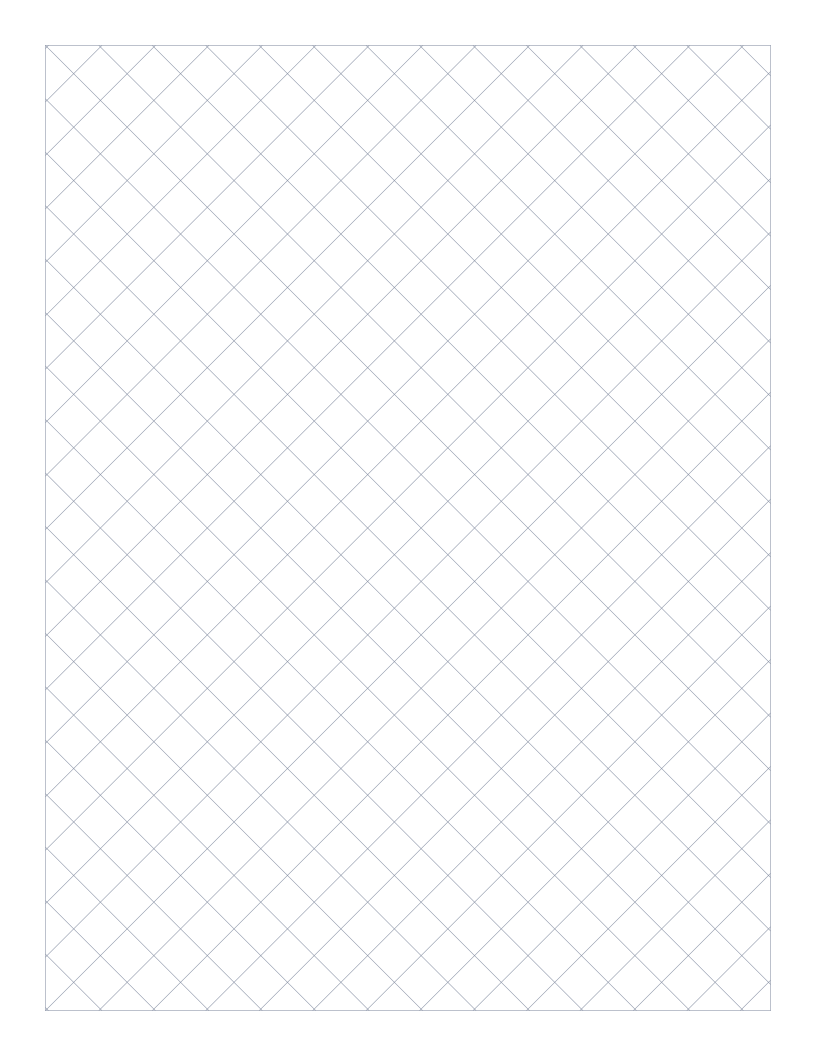
Diamond Graph Paper
Square grid turned 45 degrees, for argyle, harlequin and on-point designs.
SpecialtyPopular
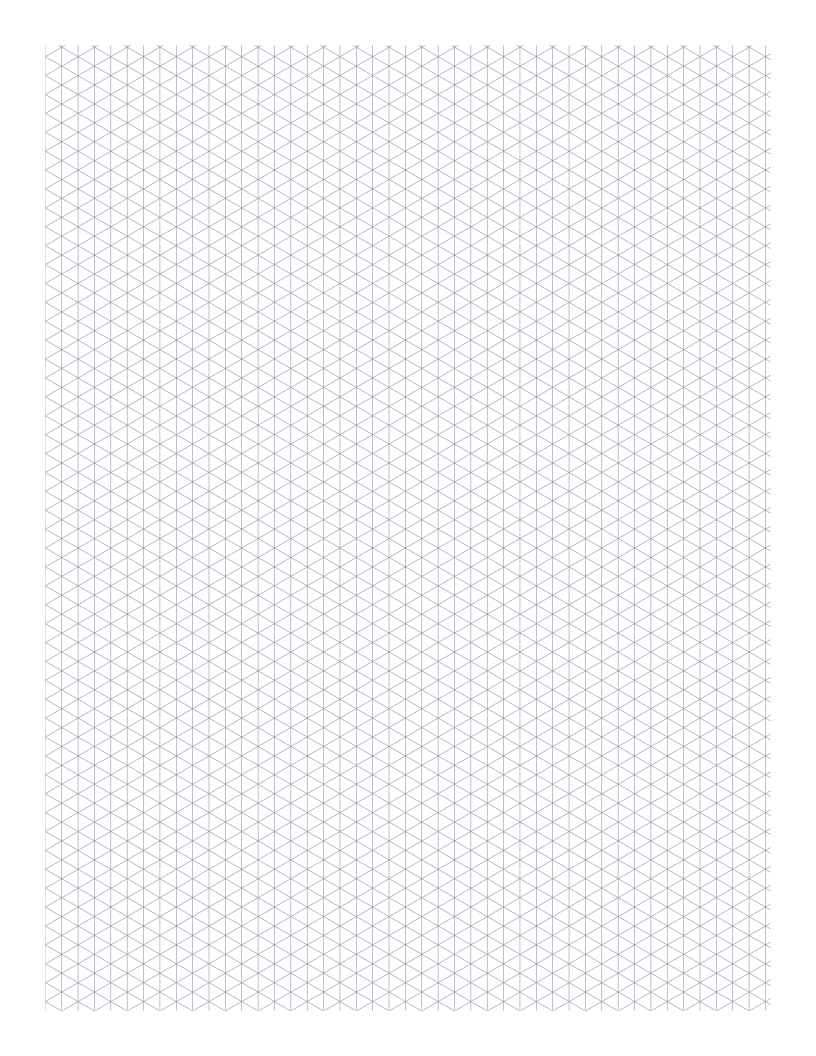
Isometric Graph Paper
Triangular 30°/60° grid for 3D drawings, technical sketches and Minecraft-style design.
Specialty
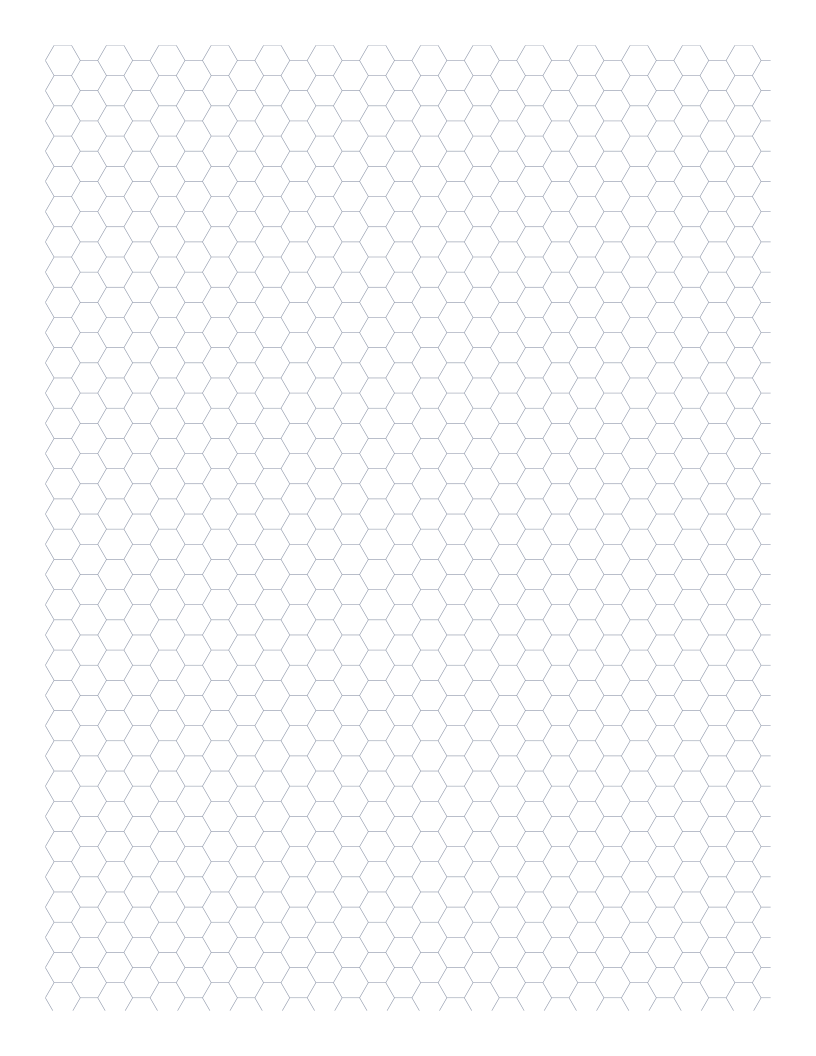
Hexagonal Graph Paper
Hexagonal tessellation: perfect for tabletop wargaming, organic chemistry and tile-based games.