Live preview · Letter (8.5" × 11") · Dark lines
Hex Battle Map (Tactical)
A hex grid with larger 16 mm flat-to-flat hexes — the standard tactical-wargame scale where each hex represents one move or attack distance. Suited to systems that resolve combat on hex maps (Battletech, Star Fleet Battles, OGRE) and to hex-based RPG combat for those who prefer hex movement to square movement.
Download generates a crisp vector PDF directly, no print dialog needed.
Choose a different paper size:
Choose a different line color:
Great for
- Battletech, Star Fleet Battles and similar tactical wargames
- Hex-based RPG combat (some D&D variants, OSR systems)
- Naval and air combat with hex-based movement
- Strategy game prototyping
Hex Battle Map (Tactical) at a glance
| What it is | Larger hex grid (16mm flat-to-flat) sized for tactical wargames and hex-based RPG combat: matches the standard 5/8" hex used by Battletech, Star Fleet Battles and others. |
|---|---|
| Category | Specialty |
| Paper sizes | Letter (8.5" × 11"), A4 (210 × 297 mm), 11" × 17", Legal (8.5" × 14"), A3 (297 × 420 mm), A2 (420 × 594 mm), Poster (18" × 24"), Movie Poster (27" × 40") |
| Line colors | Faint, Light, Gray, Dark, Black, Blue, Green (default: Dark) |
| Format | Vector PDF download at exact physical scale, or print directly from the browser |
| Price & license | Free. No signup or watermark. Printed sheets may be used for personal, classroom and commercial work. |
About hex battle map (tactical)
Hex grids are the dominant alternative to square grids in tactical wargaming, and have been since the late 1960s when SPI and Avalon Hill began publishing hex-based wargames in large numbers. The advantage over squares is geometric: in a hex grid, all six neighbours of a cell are at the same centre-to-centre distance, which makes diagonal movement equivalent to orthogonal movement. In a square grid, diagonal neighbours are √2 ≈ 1.414× further than orthogonal neighbours, which creates 'diagonal movement' rule complications (the famous '5-10-5' counting rule in some D&D editions). Tactical wargames almost always use hexes for this reason. The 16 mm flat-to-flat scale on this template is the dominant size for tabletop wargame maps — large enough to hold counters or miniatures, small enough that many hexes fit on a standard page. Battletech specifically uses a 1¼ inch hex on its published maps, which is close to but slightly larger than this template; you can resize the printout if you need exact game-system compatibility, or use the template as-is for general tactical play.
What's on the page
A grid of flat-top hexagons at 16 mm flat-to-flat spacing, filling the printable area. The hex grid is the same shape as the hexagonal graph paper template but at a larger cell size suited to tactical map play (counters and miniatures fit inside). Margins are minimal so as much hex area as possible is available for map design.
How to use it well
Number the hexes for game reference
Tabletop wargames typically number hexes by column and row (e.g., '0813' for column 8, row 13). Number the columns across the top and rows down the side once you've sketched the terrain, so players can reference specific hexes in play.
Outline terrain by hex boundaries
Forests, hills, rivers and roads should follow hex edges where possible — not cut through the middle of a hex. Each hex should belong to one terrain type so that movement and combat rules apply unambiguously.
Mark elevation with numbers in the hex
Multi-level maps (hills, ridges, buildings) typically write an elevation number inside each affected hex. The number indicates which 'level' that hex occupies for line-of-sight calculations.
Save a clean copy for re-use
Hand-drawn maps take hours; protect the original by photocopying or scanning before play. Use the copies for one-off battles; the original survives multiple games.
Common mistakes to avoid
- Mixing pointy-top and flat-top hex orientations. Most tactical games use flat-top hexes (long edges horizontal); some use pointy-top (long edges vertical). The two orientations are not interchangeable for game rules that count adjacency. Pick one and stay consistent.
- Drawing terrain across hex centres. Terrain features that bisect a hex create ambiguity about which side of the feature the hex is on. Routes, rivers and walls should run along hex edges, not through the middle.
- Forgetting movement-cost notation. Different terrain types cost different amounts to enter (1 hex for clear, 2 for forest, etc. in most systems). Note the movement costs near the map legend so they're available during play.
FAQ, Hex Battle Map (Tactical)
How is this different from [hexagonal graph paper](/graph-paper/hexagonal-graph-paper)?+
The hexagonal graph paper template uses 8 mm hexes — smaller, suited to chemistry notation and quilting patterns. This battle map uses 16 mm hexes — larger, suited to tactical wargames where counters and miniatures occupy individual hexes. Same shape, different scale.
Why hexes instead of squares?+
In a hex grid, all six neighbours of any cell are at the same distance from that cell. In a square grid, diagonal neighbours are √2 further than orthogonal neighbours, which causes rule complications. Hex grids handle movement and range more cleanly — which is why tactical wargames have used them for over 50 years.
What scale should I print at?+
Letter or A4 portrait works for typical tactical battles (~30 hexes across); for larger campaigns or naval maps, scale up to A3 or tabloid. Battletech's official maps are roughly 17×22 hexes, which fits comfortably on A3 at this scale.
Can I use this with a [dungeon-map paper](/graph-paper/dungeon-map-paper)?+
Not interchangeably. The two systems use different movement (hex vs square). Mixing them in one game requires a clear rule for converting between movement systems. Most groups stick to one or the other for a given campaign.
What about online play?+
Roll20, Foundry VTT and similar virtual tabletops have built-in hex grid support that this template imitates. For online play, the digital grids are usually more flexible. The paper version is for in-person play, recording a memorable map, or playing without electronics.
Printing tips for best results+
- 1. Click Print above. A new tab opens the template at exact size.
- 2. The print dialog appears automatically. Set Scale to 100%. Never "Fit to page", which silently shrinks every cell.
- 3. Set Margins to None or Minimum so the grid reaches the page edge.
- 4. For a PDF, click Download instead. It generates a vector PDF directly without going through the printer driver.
You might also like
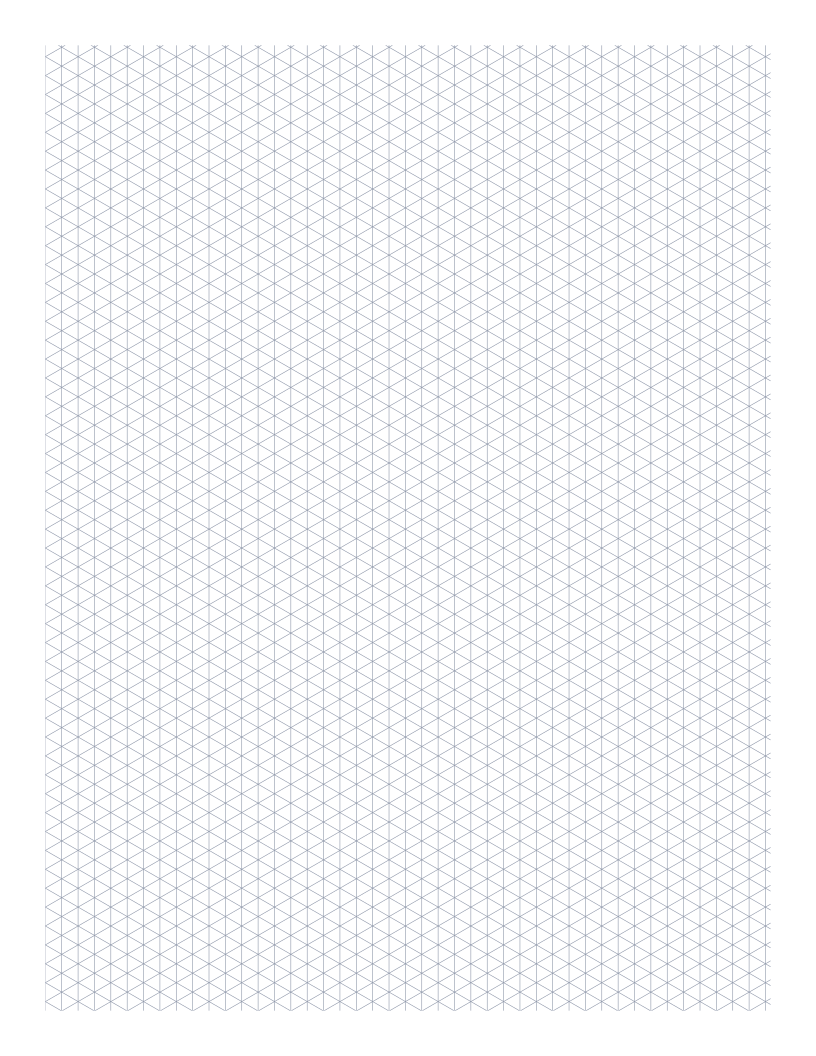
Isometric Graph Paper
Triangular 30°/60° grid for 3D drawings, technical sketches and Minecraft-style design.
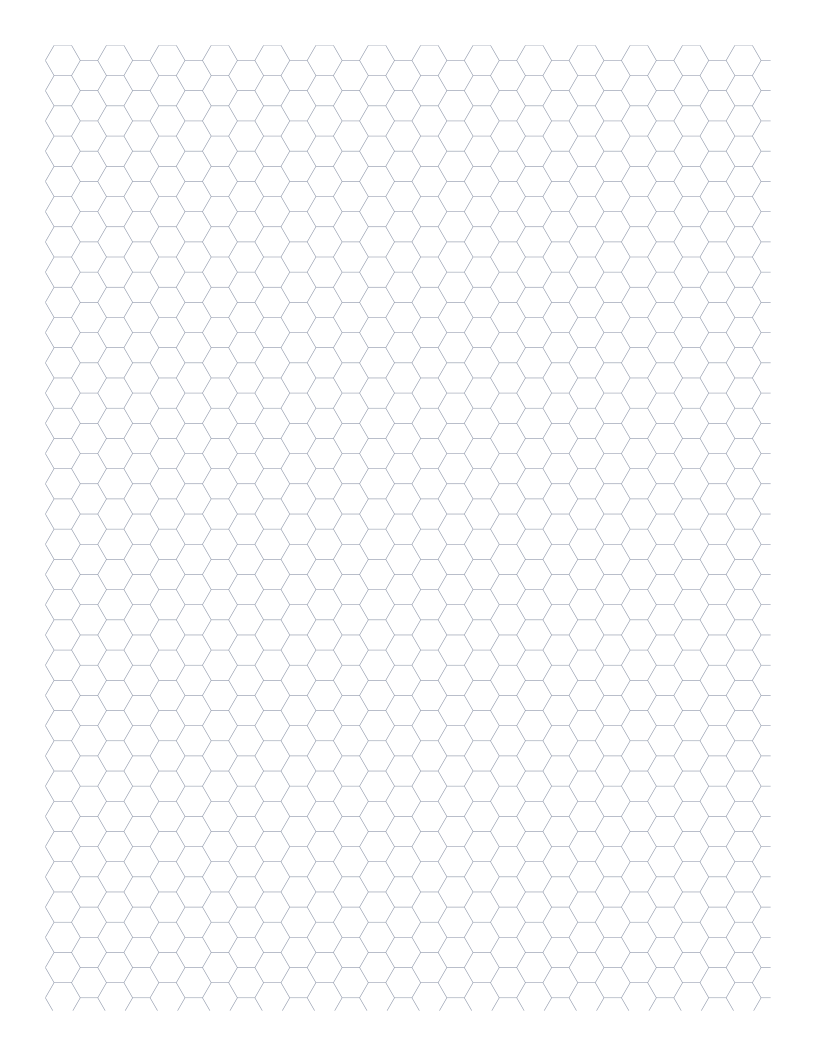
Hexagonal Graph Paper
Hexagonal tessellation: perfect for tabletop wargaming, organic chemistry and tile-based games.
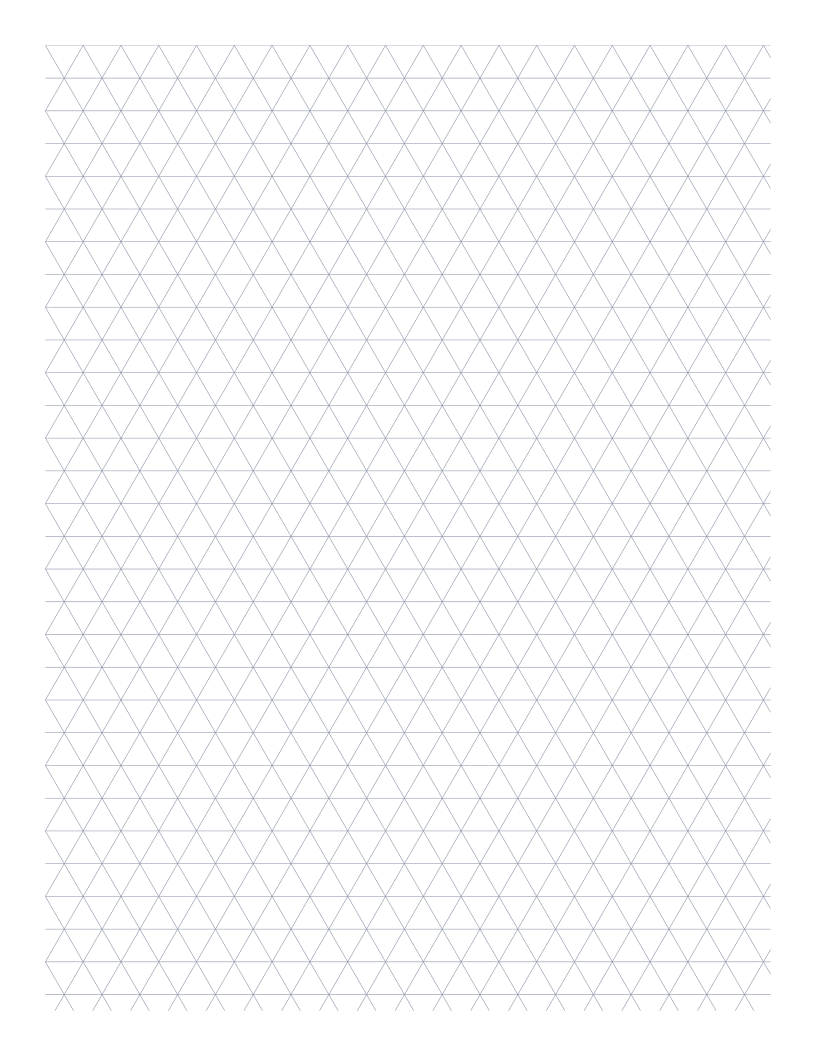
Triangular Graph Paper
Equilateral triangle grid: useful for ternary diagrams and tessellation art.
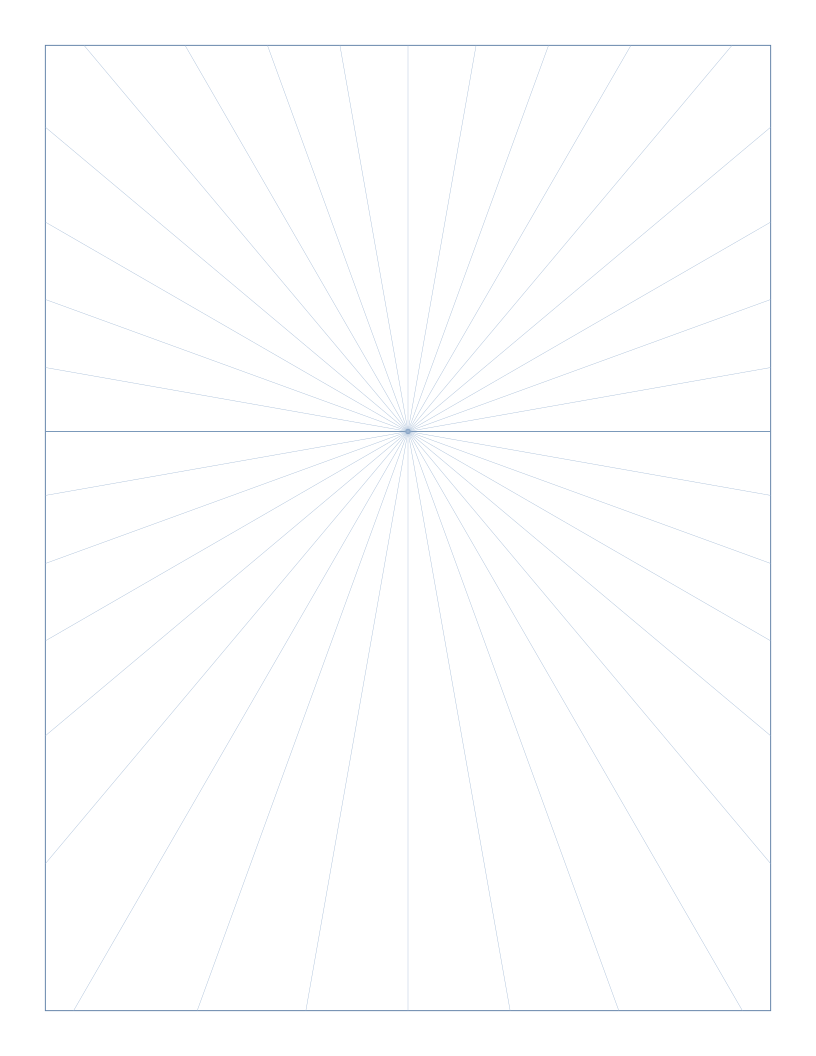
1-Point Perspective Grid
Single vanishing point on the horizon with radiating guides: the classic setup for hallways, rooms and street scenes.