Live preview · Letter (8.5" × 11") · Dark lines
Lined Paper (College Ruled)
College ruled (also called medium ruled) is the standard line spacing for high school and university notebooks in the US. At 7.1 mm between baselines, it fits a typical adult's handwriting comfortably while packing more lines per page than the wide-ruled paper used in elementary school.
Download generates a crisp vector PDF directly, no print dialog needed.
Choose a different paper size:
Choose a different line color:
Great for
- High-school and university class notes
- Essay drafts and longhand writing
- Journaling and longform notebooks
- Meeting notes and professional logbooks
Lined Paper (College Ruled) at a glance
| What it is | Classic college-ruled lined paper: 7.1mm line spacing with a red margin. |
|---|---|
| Category | Writing & Notes |
| Paper sizes | Letter (8.5" × 11"), A4 (210 × 297 mm), 11" × 17", Legal (8.5" × 14"), A3 (297 × 420 mm), A2 (420 × 594 mm), Poster (18" × 24"), Movie Poster (27" × 40") |
| Line colors | Faint, Light, Gray, Dark, Black, Blue, Green (default: Dark) |
| Format | Vector PDF download at exact physical scale, or print directly from the browser |
| Price & license | Free. No signup or watermark. Printed sheets may be used for personal, classroom and commercial work. |
About lined paper (college ruled)
College ruled paper occupies a particular spot in the history of US stationery. When ballpoint pens replaced fountain pens in mid-20th-century schools, handwriting got smaller. The ballpoint produces a tighter line and encourages smaller letterforms than the fountain pen does. The American Pencil Company and other notebook makers responded by introducing a 9/32 inch ruling (7.14 mm) as a 'medium' option, sitting between the existing 11/32 inch 'wide ruled' (8.7 mm) and the older European 'narrow ruled' standards. The name 'college ruled' stuck because it was marketed as the grown-up alternative to wide ruled. The implicit suggestion being that you graduated to college ruled around high school. Today it's the default in virtually every US notebook brand from Mead to Five Star, and it remains the standard students are expected to use in higher education.
What's on the page
Horizontal lines at 7.1 mm vertical spacing in your chosen line colour, with a single vertical margin line about 32 mm in from the left edge (rendered in red on classic notebook paper, here it follows your selected colour). The top and bottom of the page leave a small unruled margin to match the look of standard composition books. On Letter you get about 36 lines; on A4, 39; on Legal, 47.
How to use it well
Write with the line, not on it
Place the baseline of each letter on the printed line. Descenders (g, p, q, y) hang below it. Writing 'on top of' the line typically means floating slightly above it, which produces uneven baselines over time.
Use the margin for annotations, not main text
The left margin column exists for page numbers, paragraph numbers, comment marks, or short cue words, not for the body of your writing. Treat it as a working zone the way Cornell paper treats its cue column.
Skip a line between paragraphs
College ruled gets dense fast. A blank line between paragraphs and sections makes the page much easier to scan when you come back to it for review.
Pencil page numbers in the top corner
The page itself has no pre-printed numbering. Adding numbers in the top-right corner is a small habit that turns a stack of loose sheets into a referenceable document. Especially useful for long-form research or lecture notes.
Common mistakes to avoid
- Printing without testing the line spacing first. If your printer is calibrated even slightly off vertical, every page will have a different number of lines than expected. Print one sheet, count lines, and adjust scale only if absolutely needed (but never with 'Fit to page').
- Using college ruled for young writers. Children under about age 10 typically write at 8–10 mm letter height, which doesn't fit comfortably in 7 mm rows. Wide-ruled is the right pick for them; college ruled comes later.
- Treating the margin as decoration. The vertical margin line is functional. It gives you a consistent left-edge for the body of your writing and a separate zone for annotations. Writing across the margin produces a slightly chaotic-looking page.
FAQ, Lined Paper (College Ruled)
What's the difference between college ruled and wide ruled?+
Line spacing. College ruled is 7.1 mm (9/32 inch) between lines; wide ruled is 8.7 mm (11/32 inch). Wide ruled fits about six fewer lines per page and is the standard for US elementary schools; college ruled is the high-school-and-up default.
What's the metric equivalent of college ruled?+
There isn't a direct one, 7.1 mm doesn't line up with any standard metric ruling. The closest European equivalent is 8 mm 'medium ruling' (Oxford, Clairefontaine), which is slightly wider. UK paper is often 7 mm or 8 mm; both are close enough that the difference is barely noticeable across a single page.
Why is the margin red on real notebooks?+
Convention from the 1950s. Red ink was chosen because it stands out against the light grey ruled lines and was visually distinct from anything a student was likely to write. We render the margin in your chosen line colour for consistency; a red margin would be the most authentic option if your printer supports colour.
Will the lines be exactly 7.1 mm apart after printing?+
Yes, at 100 % scale. As with all our templates, never select 'Fit to page'. It rescales the document by a few percent and the lines won't match commercial college-ruled paper.
Can I print this double-sided?+
Yes. Set duplex on your printer and the lines will register on both sides at the same height, the layout is symmetrical front-to-back. Make sure to use paper thick enough to prevent show-through (90+ gsm).
Printing tips for best results+
- 1. Click Print above. A new tab opens the template at exact size.
- 2. The print dialog appears automatically. Set Scale to 100%. Never "Fit to page", which silently shrinks every cell.
- 3. Set Margins to None or Minimum so the grid reaches the page edge.
- 4. For a PDF, click Download instead. It generates a vector PDF directly without going through the printer driver.
You might also like
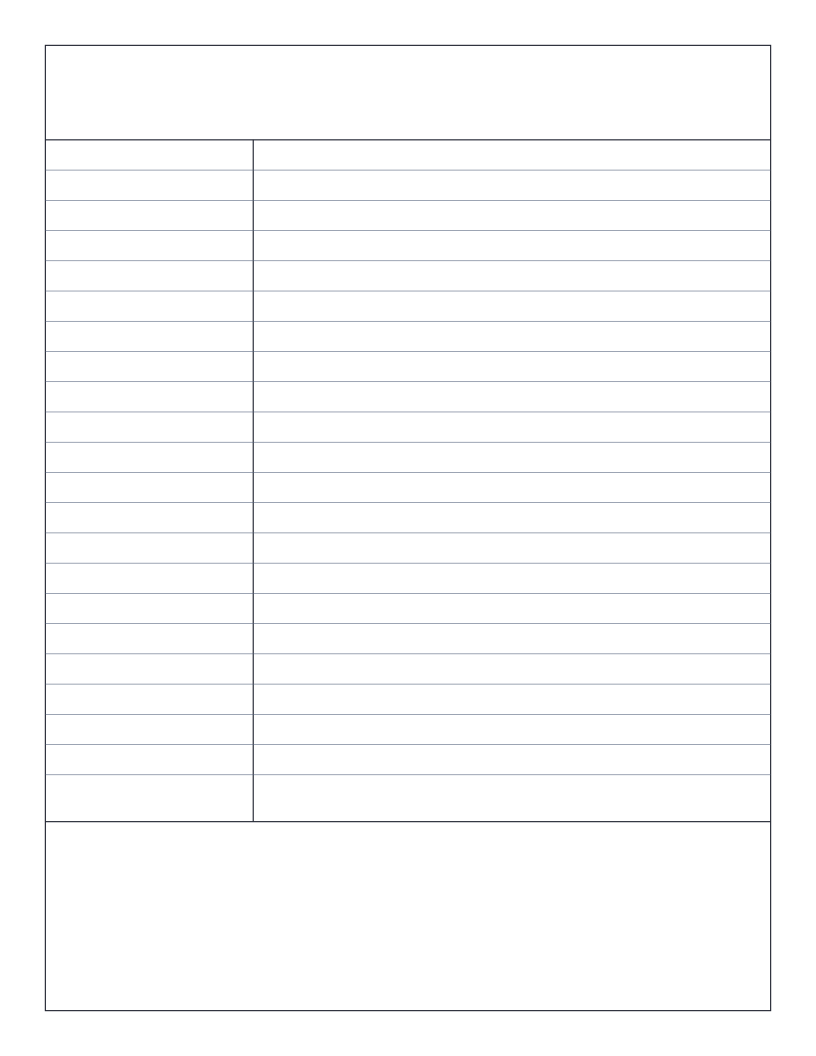
Cornell Notes Paper
The famous Cornell note-taking layout: cue column, main notes and summary band.
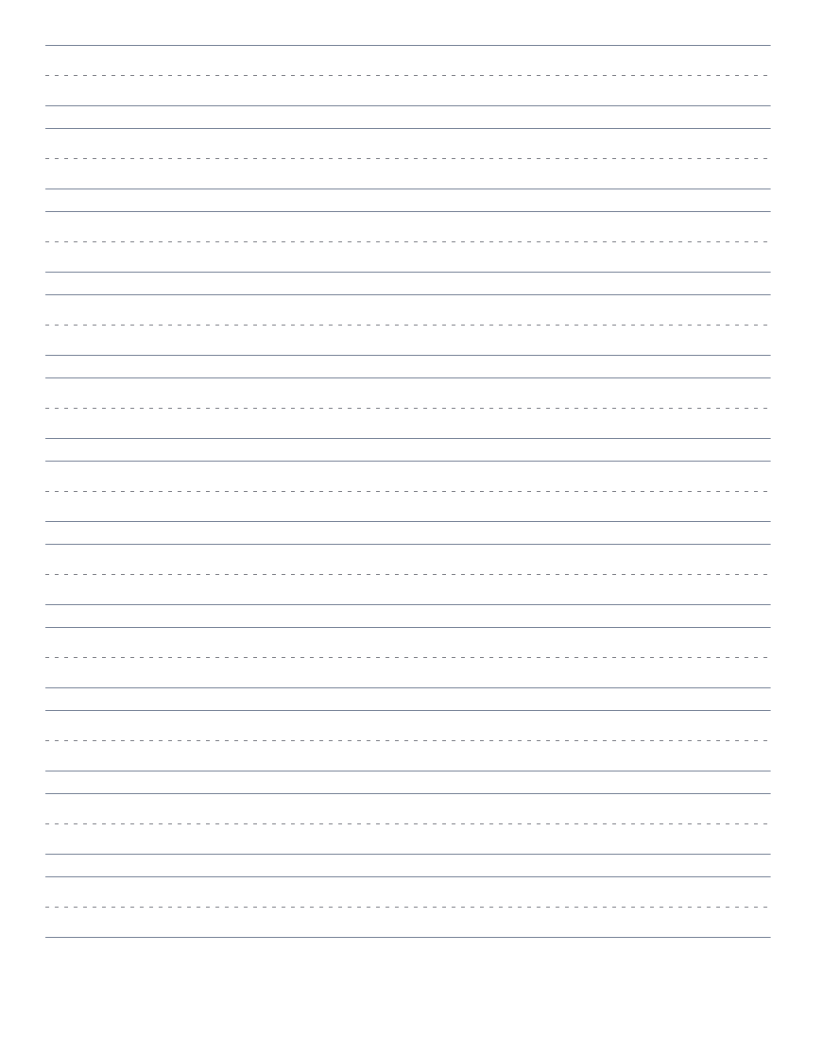
Handwriting Practice Paper
Three-line handwriting paper with dashed midline: for primary writing practice.
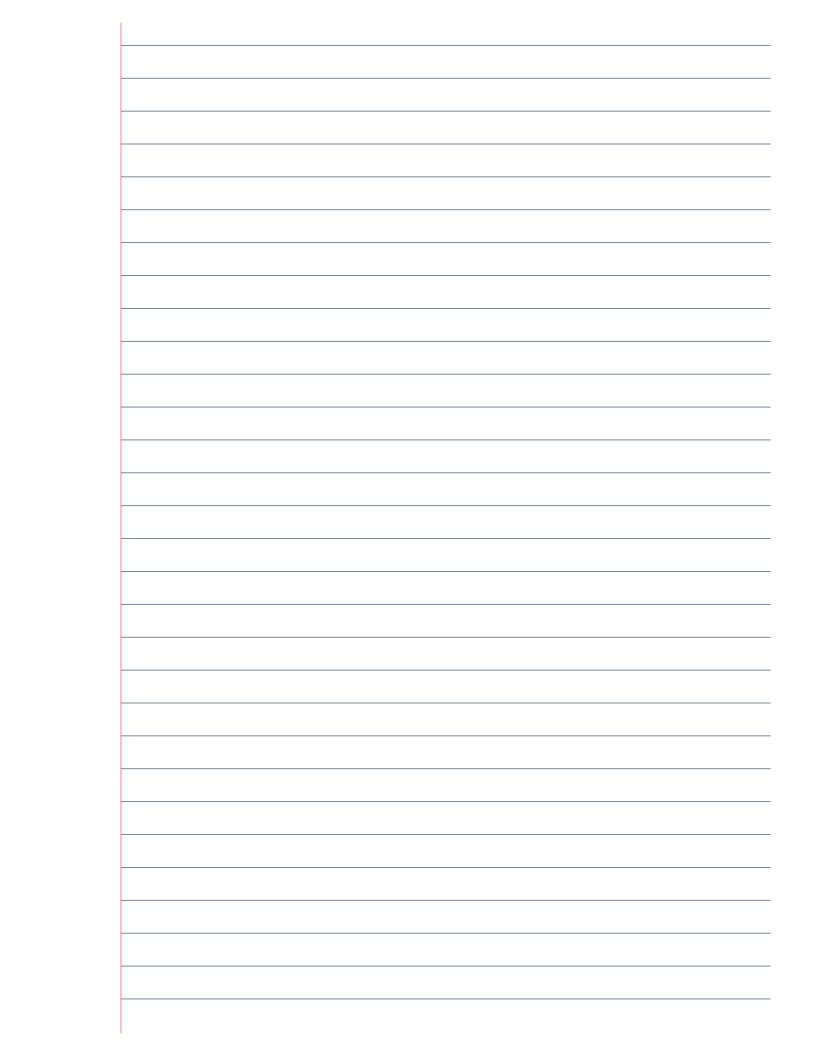
Wide Ruled Lined Paper
Classic wide-ruled lined paper: 8.7mm line spacing, the US elementary school standard.
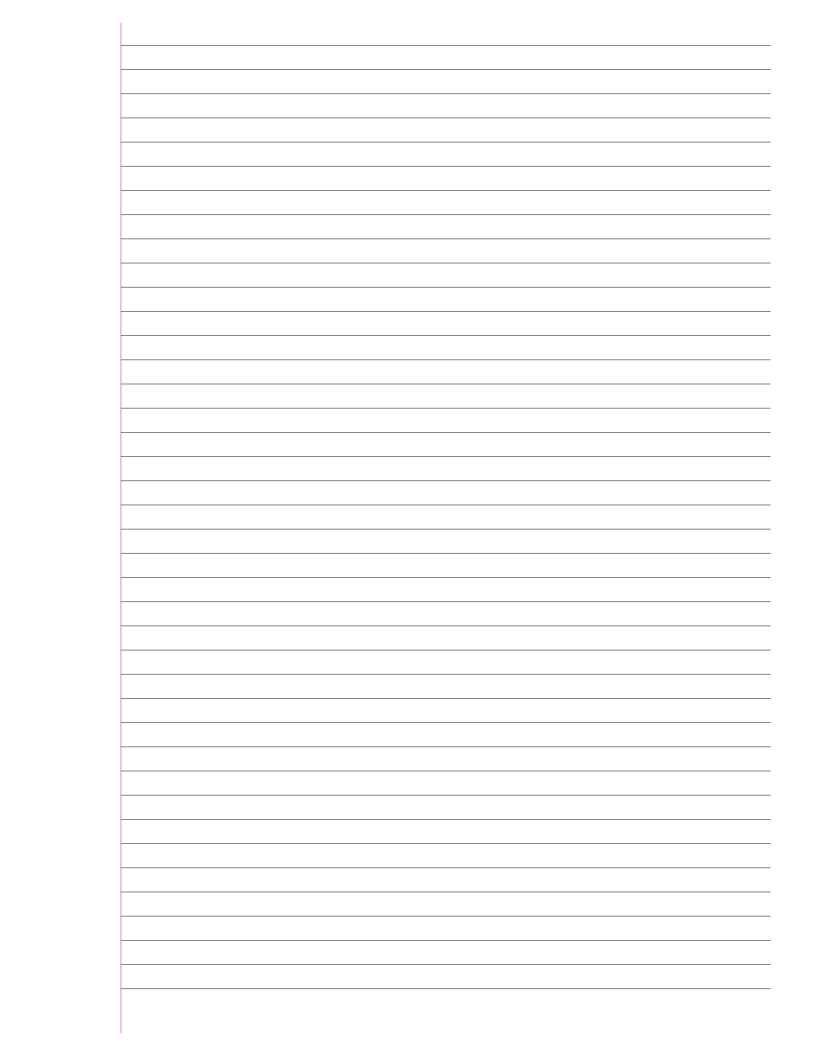
Narrow Ruled Lined Paper
Narrow-ruled lined paper: 6.4mm line spacing, more text per page.