Live preview · Letter (8.5" × 11") · Dark lines
Narrow Ruled Lined Paper
Narrow ruled paper packs about 40 lines onto a Letter sheet, roughly 20 % more than college ruled. It's the right pick when you need maximum content per page: dense lecture notes, technical drafting, or anyone whose handwriting naturally stays small.
Download generates a crisp vector PDF directly, no print dialog needed.
Choose a different paper size:
Choose a different line color:
Great for
- Dense lecture and seminar notes
- Technical and engineering field notes
- Compact journaling and travel notebooks
- Foreign-language vocabulary lists
Narrow Ruled Lined Paper at a glance
| What it is | Narrow-ruled lined paper: 6.4mm line spacing, more text per page. |
|---|---|
| Category | Writing & Notes |
| Paper sizes | Letter (8.5" × 11"), A4 (210 × 297 mm), 11" × 17", Legal (8.5" × 14"), A3 (297 × 420 mm), A2 (420 × 594 mm), Poster (18" × 24"), Movie Poster (27" × 40") |
| Line colors | Faint, Light, Gray, Dark, Black, Blue, Green (default: Dark) |
| Format | Vector PDF download at exact physical scale, or print directly from the browser |
| Price & license | Free. No signup or watermark. Printed sheets may be used for personal, classroom and commercial work. |
About narrow ruled lined paper
Narrow ruled is the densest practical line spacing for adult handwriting, at 6.4 mm (1/4 inch) per row, it's about the limit before letters start to interfere with their neighbours in normal-size script. It's most common in two contexts: European notebooks (where 6 mm and 7 mm rulings have been standard since the 19th century, predating the US 8.7/7.1 mm conventions) and US legal pads or engineering field books where information density matters more than reading comfort. The tradeoff is real. Narrow ruled fits more content per page but reads more slowly and tires the eye faster, so it suits high-density capture more than long-form reading. Writers with naturally small handwriting (think 3–4 mm x-height) find it comfortable; anyone with larger handwriting will see their letters crowd into adjacent lines.
What's on the page
Horizontal lines at 6.4 mm vertical spacing with a single vertical margin line about 32 mm from the left edge. The top and bottom unruled margins are slightly tighter than on wide and college ruled, reflecting the denser overall look of narrow ruled. On Letter you get about 40 lines; on A4, 43; on Legal, 52.
How to use it well
Test with your handwriting first
Write a paragraph at your natural size on narrow ruled before committing to it for a project. If your descenders cross into the next line, the spacing is too tight for your hand and college ruled will serve you better.
Pair with fine pens
0.3 to 0.5 mm pens are the sweet spot. Anything wider produces ink that visually doubles the line height. Pencil at H or HB also works well. Softer leads (2B+) smudge across the tight spacing.
Use for capture, not review
Narrow ruled is excellent for fast capture of dense information (lectures, meetings, references) but uncomfortable for re-reading at length. Many writers use narrow ruled for raw notes and transcribe key passages to wider-ruled paper for study.
Skip lines deliberately
On narrow ruled, leaving a blank line between paragraphs has more visual impact than on wider rulings, it gives the eye somewhere to rest. Use it generously to break up long passages.
Common mistakes to avoid
- Choosing narrow ruled for young writers. Children's handwriting is too large for 6.4 mm rows by a wide margin. They'll write across two lines per letter and the page becomes unusable. Wide ruled is the right choice for elementary school students.
- Pairing with thick pens. A 1.0 mm pen or marker fills more than 15 % of the line height with ink alone, making the page feel cluttered before you've finished writing. Stick to fine pens (0.5 mm and below) for narrow ruled.
- Using for first drafts that need editing. The tight spacing leaves no room for inserting edits between lines. Use narrow ruled for clean copies or for content you don't expect to revise.
FAQ, Narrow Ruled Lined Paper
How many lines fit on a Letter sheet?+
About 40 lines at 6.4 mm spacing, depending on margins. For comparison, college ruled gives you about 36 lines and wide ruled about 30.
Is narrow ruled the same as 'European ruled'?+
Close, but European brands vary. Clairefontaine and Rhodia commonly use 6 mm or 7 mm rulings; Oxford uses 8 mm. Narrow ruled at 6.4 mm sits at the dense end of the European range and is closer to French rulings than German or British.
What pen size works best on narrow ruled?+
0.3 to 0.5 mm. Wider pens produce ink lines that look heavy against the tight spacing; thinner pens (0.1–0.2 mm) can disappear if you're scanning the page later.
Will it survive photocopying?+
Use Dark or Black colour and crank up contrast on the copier. The thin lines and tight spacing both reduce against the lighter end of the colour range. Anything from Faint through Gray risks dropping out of low-contrast scans.
Why use narrow ruled when I could just write smaller on wide ruled?+
You can, but the page will feel half-empty and the line baselines won't match your handwriting size. Matching the ruling to your handwriting produces visually consistent pages that are easier to scan and review.
Printing tips for best results+
- 1. Click Print above. A new tab opens the template at exact size.
- 2. The print dialog appears automatically. Set Scale to 100%. Never "Fit to page", which silently shrinks every cell.
- 3. Set Margins to None or Minimum so the grid reaches the page edge.
- 4. For a PDF, click Download instead. It generates a vector PDF directly without going through the printer driver.
You might also like
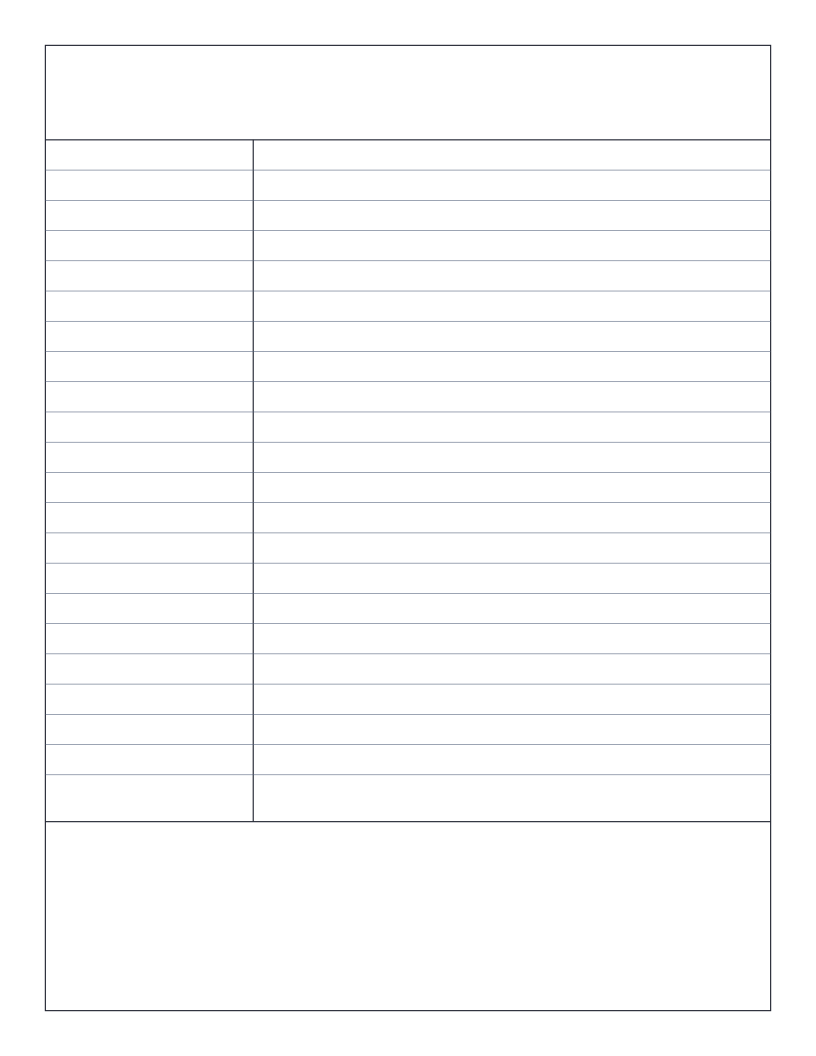
Cornell Notes Paper
The famous Cornell note-taking layout: cue column, main notes and summary band.
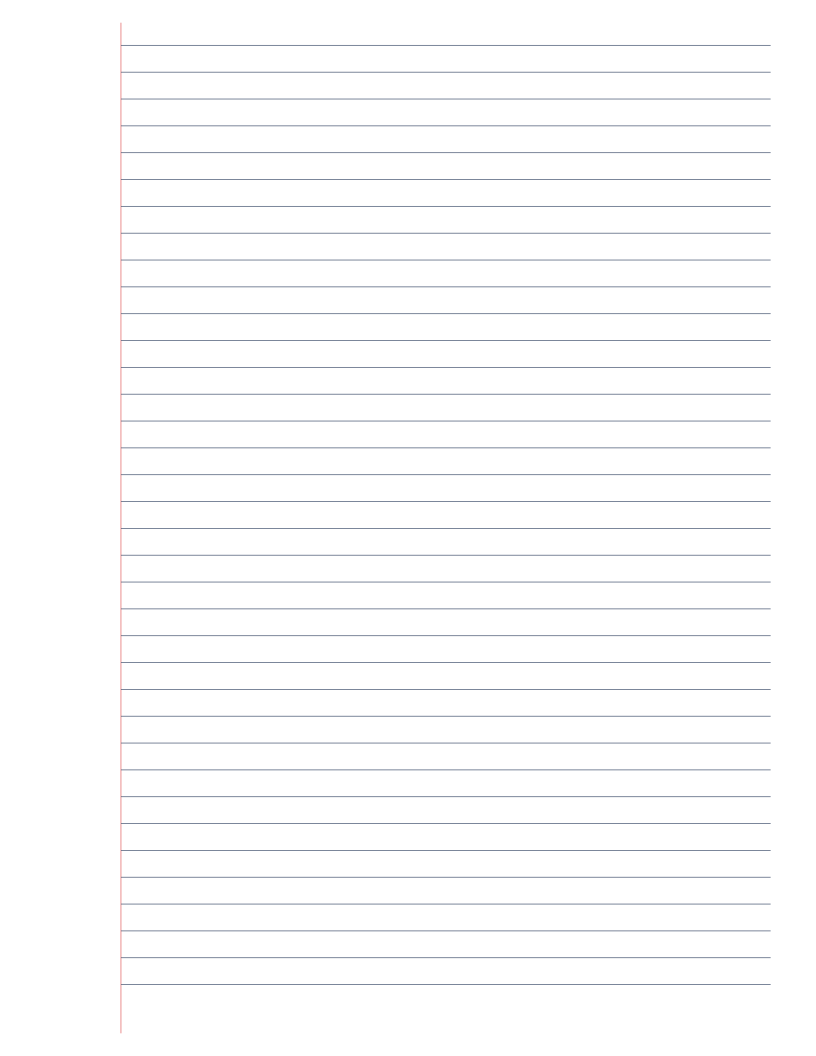
Lined Paper (College Ruled)
Classic college-ruled lined paper: 7.1mm line spacing with a red margin.
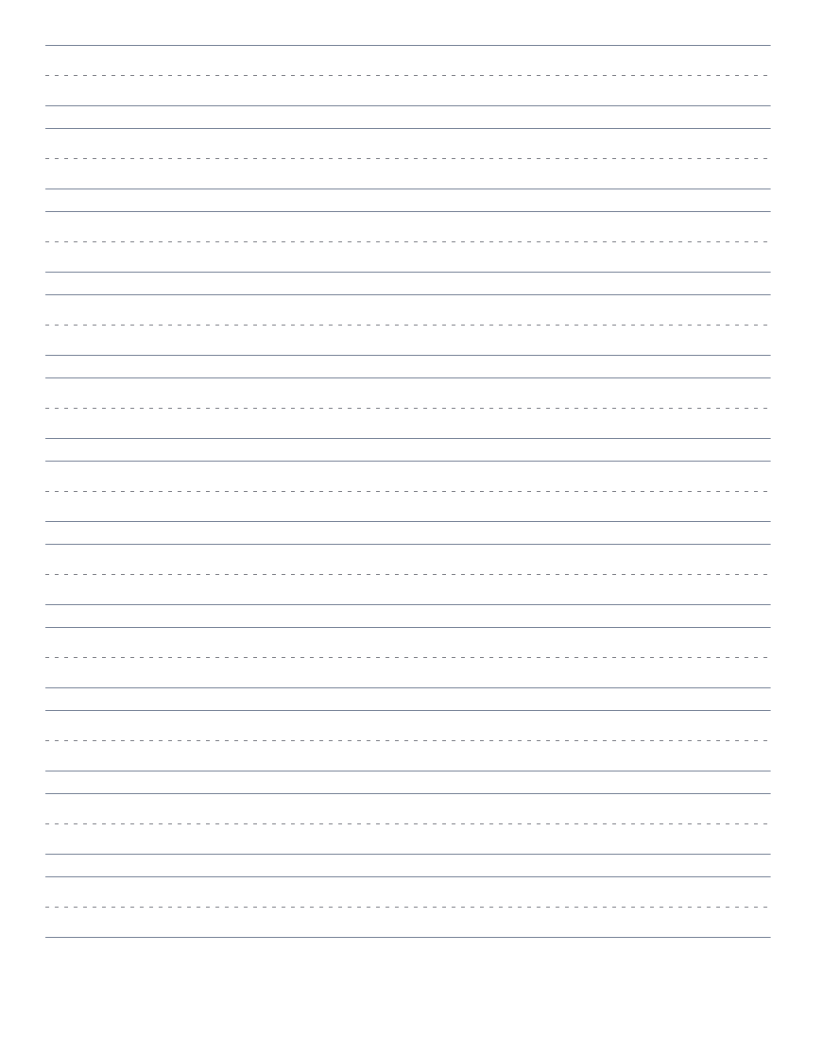
Handwriting Practice Paper
Three-line handwriting paper with dashed midline: for primary writing practice.
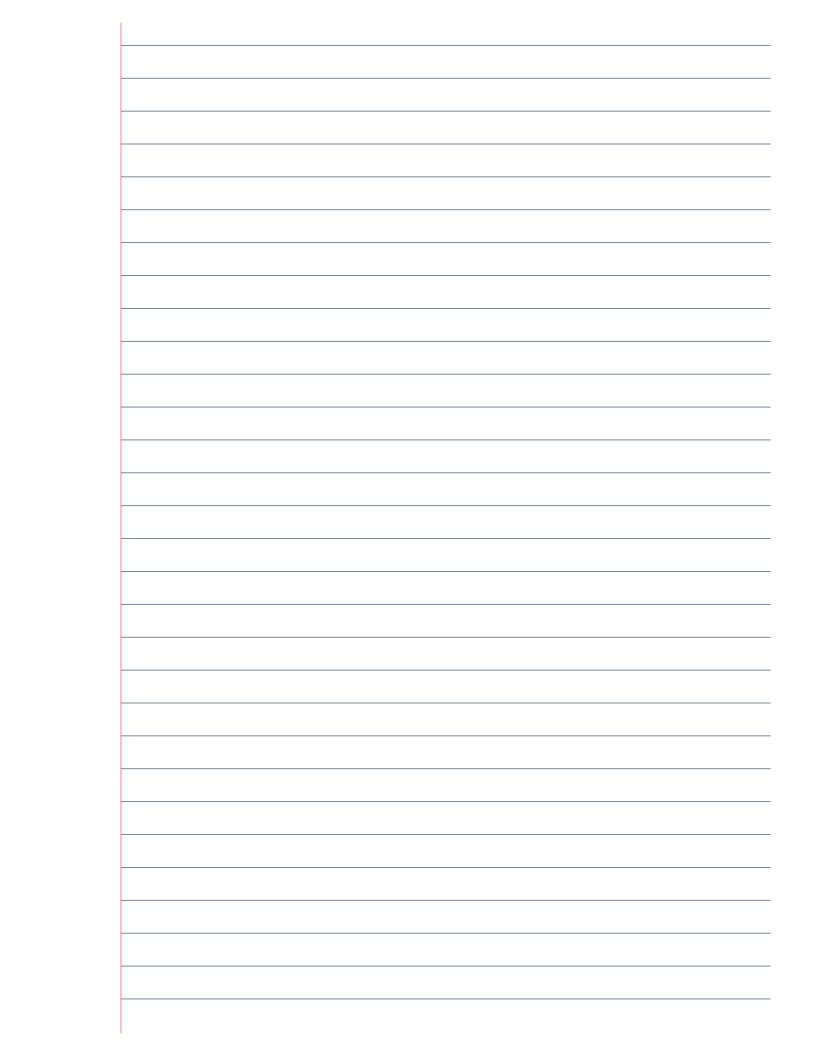
Wide Ruled Lined Paper
Classic wide-ruled lined paper: 8.7mm line spacing, the US elementary school standard.