Live preview · Letter (8.5" × 11") · Dark lines
Wide Ruled Lined Paper
Wide ruled paper has lines 8.7 mm (11/32 inch) apart. About a fifth more space than college ruled. It's the standard for US elementary schools, anyone with larger handwriting, and anyone whose vision benefits from more vertical room between baselines.
Download generates a crisp vector PDF directly, no print dialog needed.
Choose a different paper size:
Choose a different line color:
Great for
- Elementary school writing (grades K–5)
- Larger-handwriting note-taking
- Vision accessibility and easier-read worksheets
- Journaling and longform reflective writing
Wide Ruled Lined Paper at a glance
| What it is | Classic wide-ruled lined paper: 8.7mm line spacing, the US elementary school standard. |
|---|---|
| Category | Writing & Notes |
| Paper sizes | Letter (8.5" × 11"), A4 (210 × 297 mm), 11" × 17", Legal (8.5" × 14"), A3 (297 × 420 mm), A2 (420 × 594 mm), Poster (18" × 24"), Movie Poster (27" × 40") |
| Line colors | Faint, Light, Gray, Dark, Black, Blue, Green (default: Dark) |
| Format | Vector PDF download at exact physical scale, or print directly from the browser |
| Price & license | Free. No signup or watermark. Printed sheets may be used for personal, classroom and commercial work. |
About wide ruled lined paper
Wide ruled is the original US notebook standard. Before college ruled was introduced in the mid-20th century as a denser alternative, wide ruled was simply 'ruled paper'. The spacing chosen by 19th-century stationers to fit the schoolchild handwriting of the day, which was practiced with broad-nib pens and ran 7–9 mm tall as a rule. When ballpoint pens shrank the average handwriting size by about 20 %, college ruled appeared as the new default for older students. Wide ruled stayed put, where it still serves two main groups: young children whose motor control hasn't yet produced consistent small handwriting, and adults whose writing remains naturally large or whose vision benefits from generous line spacing. It's also the standard for handouts and worksheets intended to be photocopied. The larger line height survives the contrast reduction that copying introduces.
What's on the page
Horizontal lines at 8.7 mm vertical spacing, with a single vertical margin line about 32 mm from the left edge. The top and bottom margins are slightly larger than on college ruled to maintain the proportions of standard composition paper. On Letter you get about 30 lines; on A4, 32; on Legal, 39.
How to use it well
Match line height to letter height
Wide ruled accommodates handwriting that's about 5–6 mm tall (lowercase x-height). If your handwriting is smaller, switch to college ruled. The empty space above each line will otherwise feel wasteful and your lines will look sparse.
Pair with broader writing instruments
Wider lines suit slightly broader pens. A 0.7 or 1.0 mm pen looks proportional on wide ruled; a 0.3 mm fineliner can look spindly. Pencil HB or B is also a good match.
Use for first drafts
The extra space between lines makes it easier to insert edits between existing lines without crowding. Many writers use wide ruled for draft work and college ruled for clean copies, same content, two different layouts.
Print at A4 if you're outside the US
Wide ruled has no metric equivalent. If you're printing for European or Asian use, A4 wide ruled is unfamiliar to readers there but works fine functionally, just be aware it'll look like an American notebook page.
Common mistakes to avoid
- Using wide ruled for high school or university work. The line spacing is generous enough that pages feel sparse to older students and instructors, and you'll fit substantially less content per page than the college ruled your peers are using.
- Mixing wide and college ruled in the same notebook. The two have different baselines and you'll notice the inconsistency every time you flip pages. Pick one for a given notebook and stay with it.
- Photocopying without contrast adjustment. Wide ruled looks dense enough in person, but at default copier settings the margin line and grid often come through faint. Crank contrast up or use Dark / Black colour at the source.
FAQ, Wide Ruled Lined Paper
What's the difference between wide ruled and college ruled?+
Line spacing. Wide ruled is 8.7 mm (11/32 inch); college ruled is 7.1 mm (9/32 inch). Wide ruled fits about 30 lines on a Letter page; college ruled fits about 36. Wide ruled is the US elementary school standard; college ruled takes over from high school onward.
Is wide ruled the same as 'legal ruled'?+
No. Legal ruled is similar in line spacing but typically has a vertical margin on both sides of the page (left and right) and is used on legal-size paper for law office work. Wide ruled has a single left margin only.
Why are US elementary schools standardised on wide ruled?+
Young children's handwriting is naturally larger, typically 8–10 mm tall, and their fine motor control isn't yet refined enough to write consistently in college-ruled (7.1 mm) rows without letters crossing into adjacent lines. Wide ruled gives the headroom to prevent that, while still teaching the discipline of writing within lines.
Does anyone outside the US use wide ruled?+
Not by that name. UK and European elementary education uses 8 mm 'standard' ruling, which is functionally very similar (within 0.7 mm) but never called 'wide'. The 'wide ruled' name is specifically a US convention.
What pen size works best?+
0.7 mm to 1.0 mm ballpoint or roller, or HB to 2B pencil. Fine pens (0.3–0.5 mm) work but tend to look thin against the generous line spacing.
Printing tips for best results+
- 1. Click Print above. A new tab opens the template at exact size.
- 2. The print dialog appears automatically. Set Scale to 100%. Never "Fit to page", which silently shrinks every cell.
- 3. Set Margins to None or Minimum so the grid reaches the page edge.
- 4. For a PDF, click Download instead. It generates a vector PDF directly without going through the printer driver.
You might also like
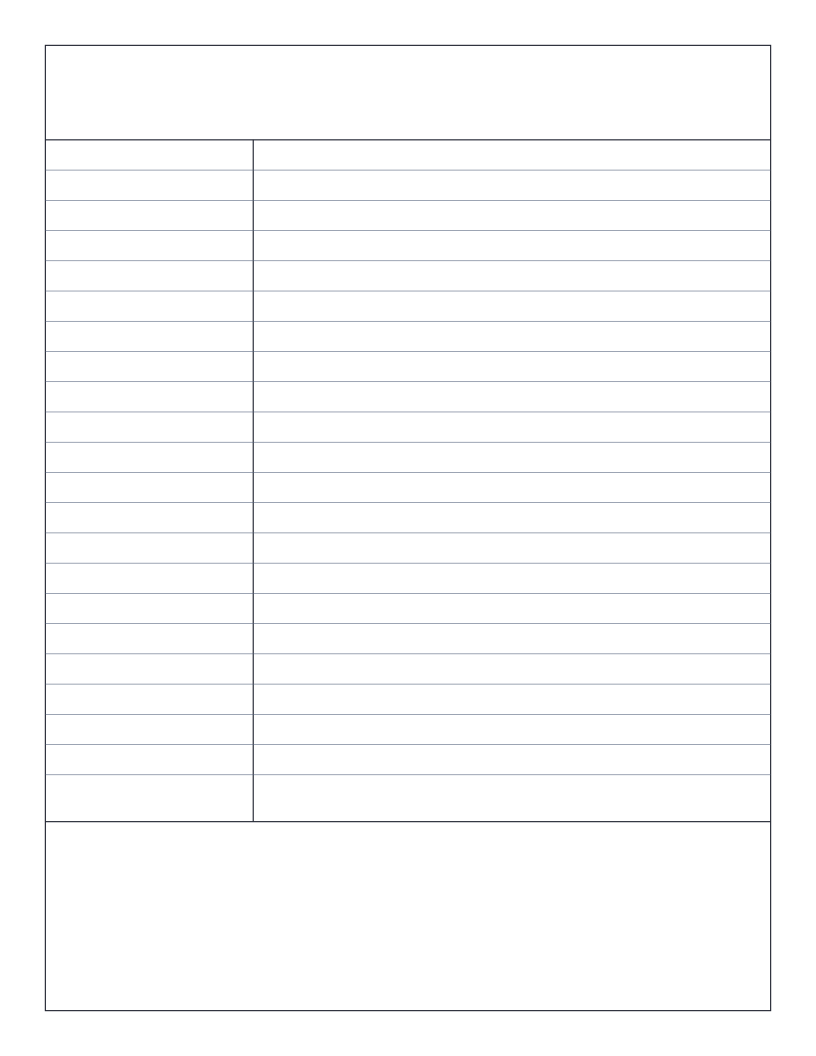
Cornell Notes Paper
The famous Cornell note-taking layout: cue column, main notes and summary band.
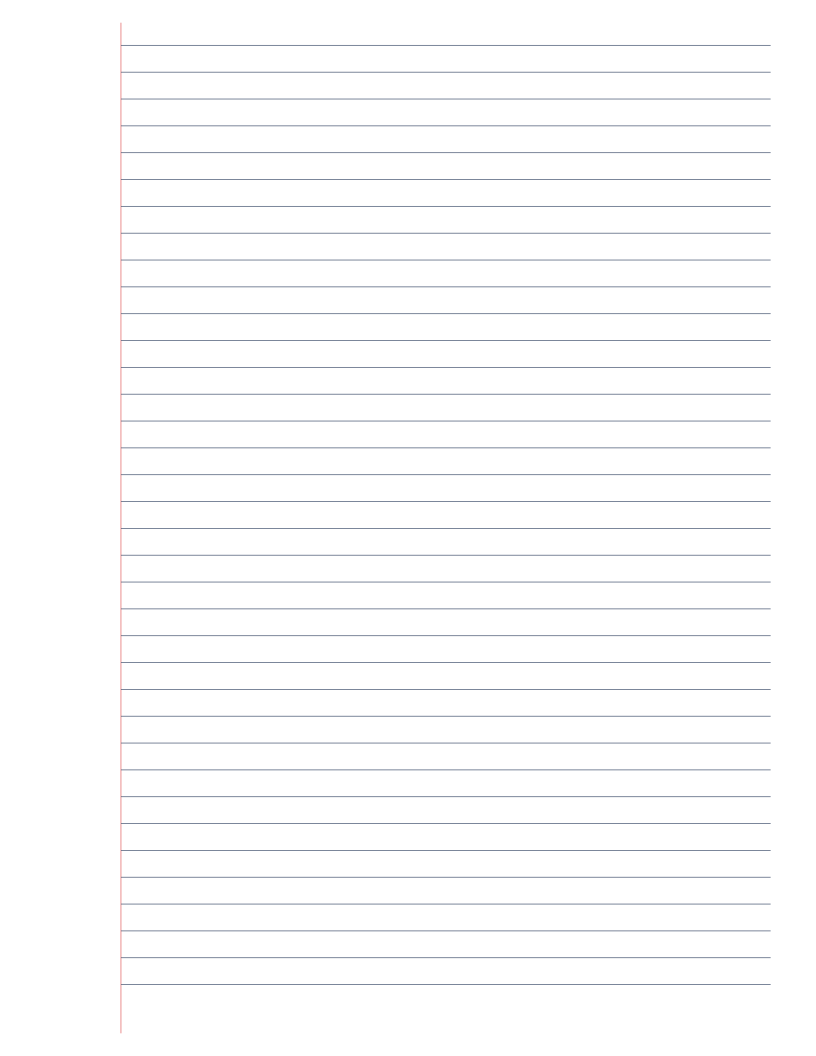
Lined Paper (College Ruled)
Classic college-ruled lined paper: 7.1mm line spacing with a red margin.
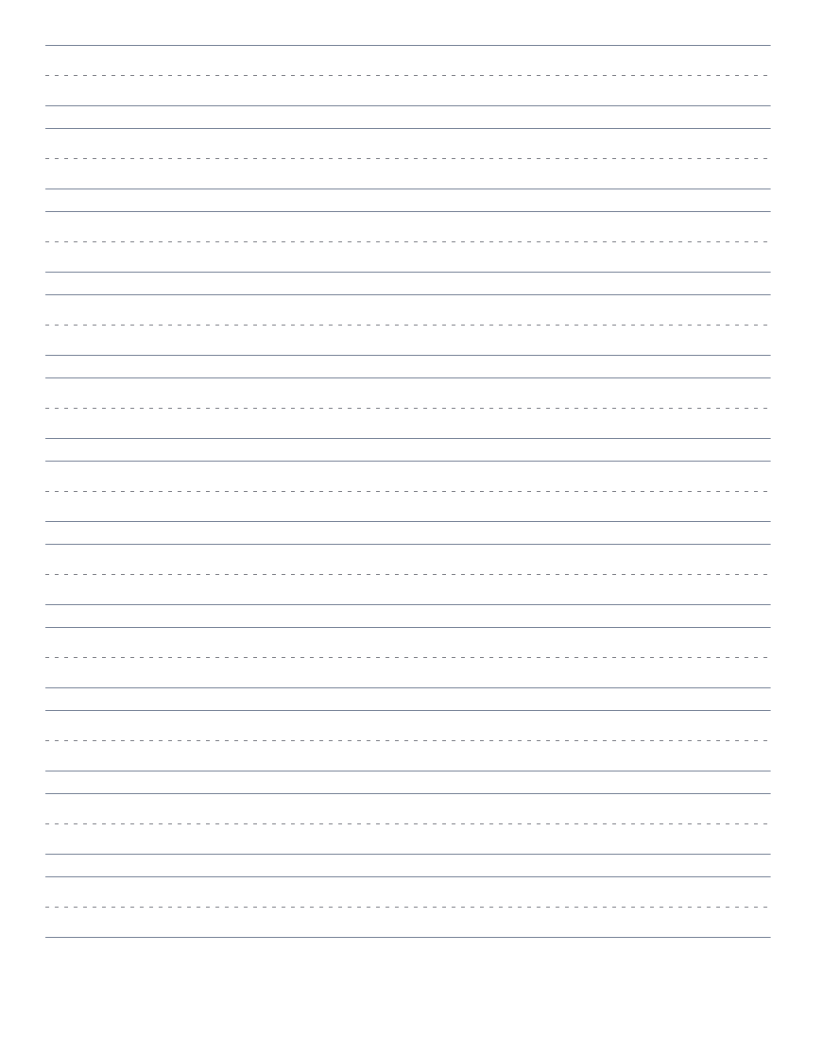
Handwriting Practice Paper
Three-line handwriting paper with dashed midline: for primary writing practice.
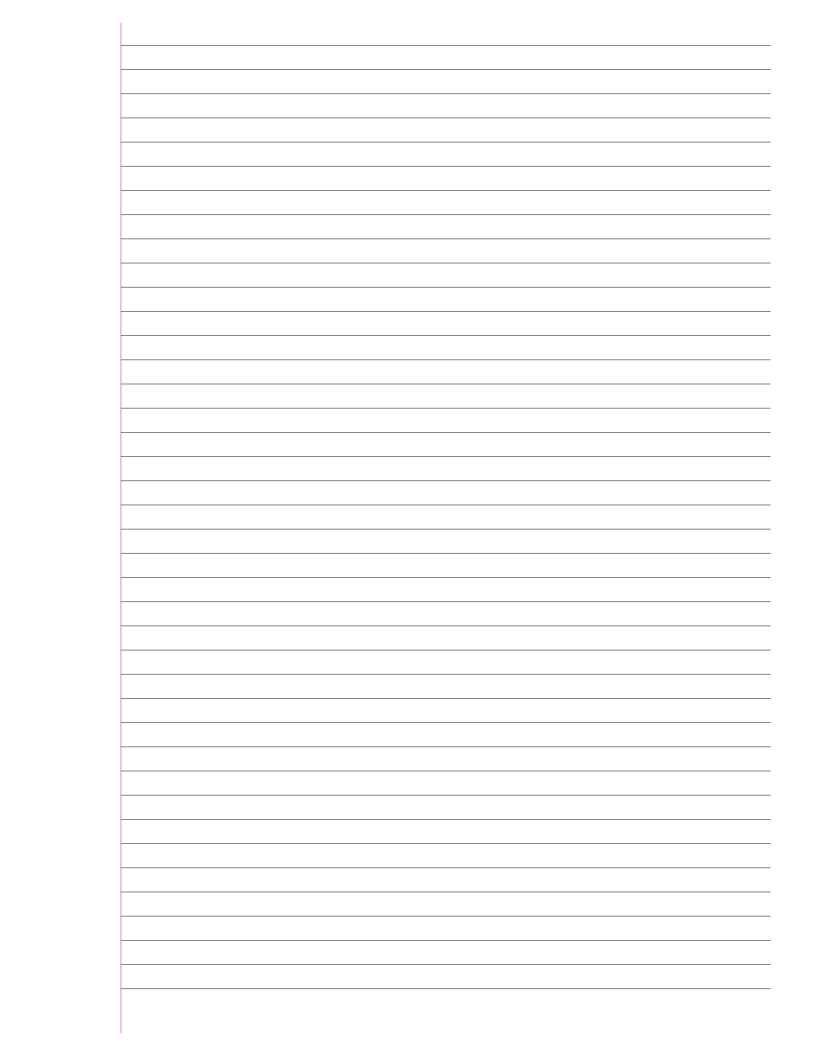
Narrow Ruled Lined Paper
Narrow-ruled lined paper: 6.4mm line spacing, more text per page.