Live preview · Letter (8.5" × 11") · Dark lines
Dungeon Map Paper
A heavy 1-inch grid (the standard '5-foot square' scale used by D&D and most tabletop RPGs) with faint 1/4-inch subdivisions for finer alignment. Every 1-inch cell represents a 5-foot square of game space — the canonical movement and combat grid for tactical play.
Download generates a crisp vector PDF directly, no print dialog needed.
Choose a different paper size:
Choose a different line color:
Great for
- Dungeon design and battle-map drafting
- D&D, Pathfinder, OSR and similar tactical RPGs
- Wargaming terrain at the 1-inch = 5-foot or 1-inch = 5-meter scale
- Boardgame prototype maps and tile design
Dungeon Map Paper at a glance
| What it is | Heavy 1-inch grid with faint 1/4-inch subdivisions: the standard scale for tabletop battle maps and dungeon design. |
|---|---|
| Category | Specialty |
| Paper sizes | Letter (8.5" × 11"), A4 (210 × 297 mm), 11" × 17", Legal (8.5" × 14"), A3 (297 × 420 mm), A2 (420 × 594 mm), Poster (18" × 24"), Movie Poster (27" × 40") |
| Line colors | Faint, Light, Gray, Dark, Black, Blue, Green (default: Dark) |
| Format | Vector PDF download at exact physical scale, or print directly from the browser |
| Price & license | Free. No signup or watermark. Printed sheets may be used for personal, classroom and commercial work. |
About dungeon map paper
The 1-inch grid is the dominant scale in tabletop RPG combat. The convention dates to 1977 and the original *Advanced Dungeons & Dragons* Dungeon Master's Guide, which standardised the 1-square = 5-foot abstraction. Every subsequent edition of D&D (1st through 5th and now beyond) inherited the scale; Pathfinder, OSR retroclones, and most other tactical-grid RPGs use the same. The 1-inch dimension matches the standard miniature base size — a single 25 mm or 28 mm mini fits comfortably inside one square — so the grid simultaneously serves as a movement counter and a placement guide. The 1/4-inch subdivisions are a more recent addition, popularised by modern map-makers for cases where you need finer alignment than the 5-foot grid offers. Walls that aren't on grid lines, doors and door swings, narrow corridors that occupy half a square. Old-school dungeon maps were drawn entirely on the 1-inch grid; modern ones often use the subdivisions to capture details the original scale couldn't.
What's on the page
A 1-inch (25.4 mm) primary grid with bold lines, and a 1/4-inch (6.35 mm) secondary grid with hairline lines. The major lines define the 5-foot combat squares; the minor lines provide alignment guides for half-squares, doors and decorative features. The grid is centred so the leftover space splits evenly into the margins. On Letter paper you get about 7×9 major squares; on A4, about 7×10; on tabloid, 10×15.
How to use it well
Sketch in 5-foot units, refine in 1.25-foot
Lay out the dungeon's room sizes and corridor widths on the 1-inch grid first. Once the floor plan is correct, use the 1/4-inch subdivisions to add doors (which conventionally occupy 1/4 to 1/2 a major square), wall thickness (1/4 square is standard), and small terrain features.
Use thick walls for stone, thin for wood
A traditional convention: stone walls are drawn at full 1/4-inch thickness (the width of one subdivision); wooden walls or partitions are drawn as a single line. The reader can tell at a glance which walls are destructible.
Number rooms before describing them
Standard dungeon-design practice: assign each room a number before writing the key. Numbering as you draw (1, 2, 3 …) makes the key easier to follow and prevents the all-too-common 'where did room 7 go?' problem.
Sketch in pencil, ink the keepers
First-pass exploration of room arrangements is best done in pencil — you'll erase and revise. Once the layout's settled, ink the walls in a bold, dark line; pencil shows up faintly under ink in case you need to refer back, but the final map prints and copies cleanly.
Common mistakes to avoid
- Drawing walls on the grid lines. The convention is to draw walls *along* grid lines, not on top of them — the line should be visibly thicker than the underlying gridline, and ideally on a slight offset (use the 1/4-inch grid to offset by one subdivision). Walls drawn directly on the gridline can blur with the grid itself.
- Mixing scales between maps. If one dungeon uses 1 square = 5 feet and the next uses 1 square = 10 feet, players spend half the session asking 'wait, what's the scale here?'. Pick a scale and stick with it across a campaign.
- Over-detailing. A battle map is a tactical tool, not architectural draughting. Show only the features that matter for combat or exploration: walls, doors, hazards, key features. Decorative details belong in the room descriptions or in separate illustrations, not on the grid.
FAQ, Dungeon Map Paper
Why 1 inch = 5 feet?+
Inherited from the original 1977 AD&D rules and unchanged through five editions of D&D. The scale works because it lets a 25–28 mm miniature stand in one square comfortably, a humanoid character's 5-foot reach lines up with diagonal adjacency, and movement (commonly 30 feet per turn) translates to six squares — easy to track at a glance.
How is this different from the [1-inch grid paper](/graph-paper/graph-paper-1-inch)?+
Plain 1-inch grid paper has uniform lines at 1-inch intervals — no subdivisions. Dungeon map paper adds 1/4-inch subdivisions for finer alignment (doors, partial walls, half-squares) and uses bolder lines for the major 1-inch grid to make the combat squares more visually distinct. For pure tactical movement, either works; for actual dungeon design, the subdivisions are usually worth having.
Can I use metric instead?+
Yes. The major spacing in metric is typically 25 mm (close to 1 inch) or 30 mm. Some European tabletop systems use 1 square = 1.5 m, which suits a slightly different grid size. The 25.4 mm version on this template translates cleanly between US and metric users.
Does this work for hex-based games?+
No, hex games use hexagonal graph paper. The square grid is for games that use square movement (D&D, Pathfinder, most miniature wargames). Hex grids are for games where diagonal/hex movement matters (Battletech, Star Fleet Battles, some OSR variants).
What about outdoor / wilderness maps?+
Different scale. Outdoor adventure maps typically use 1 square = 1 mile or 1 square = 1 hex of overland travel — far coarser than the 5-foot grid. For outdoor maps you'd want a different template, possibly the hexagonal or larger-spaced grid at a totally different unit scale.
Printing tips for best results+
- 1. Click Print above. A new tab opens the template at exact size.
- 2. The print dialog appears automatically. Set Scale to 100%. Never "Fit to page", which silently shrinks every cell.
- 3. Set Margins to None or Minimum so the grid reaches the page edge.
- 4. For a PDF, click Download instead. It generates a vector PDF directly without going through the printer driver.
You might also like
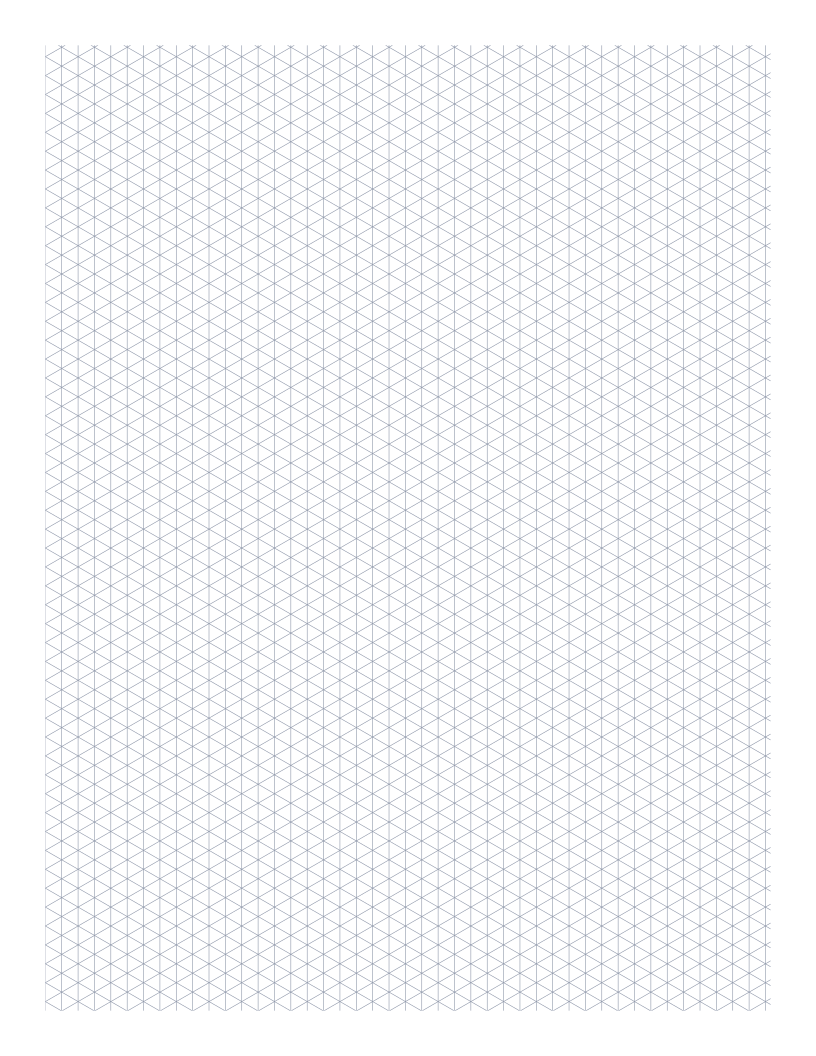
Isometric Graph Paper
Triangular 30°/60° grid for 3D drawings, technical sketches and Minecraft-style design.

Hexagonal Graph Paper
Hexagonal tessellation: perfect for tabletop wargaming, organic chemistry and tile-based games.
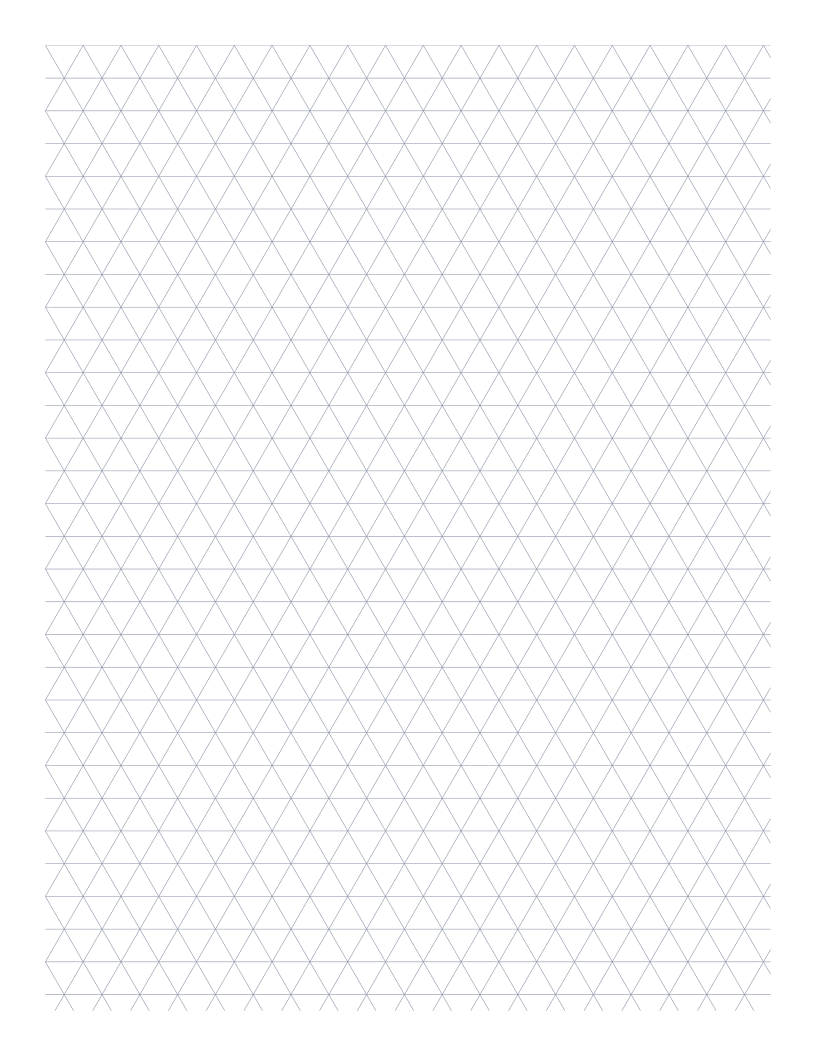
Triangular Graph Paper
Equilateral triangle grid: useful for ternary diagrams and tessellation art.
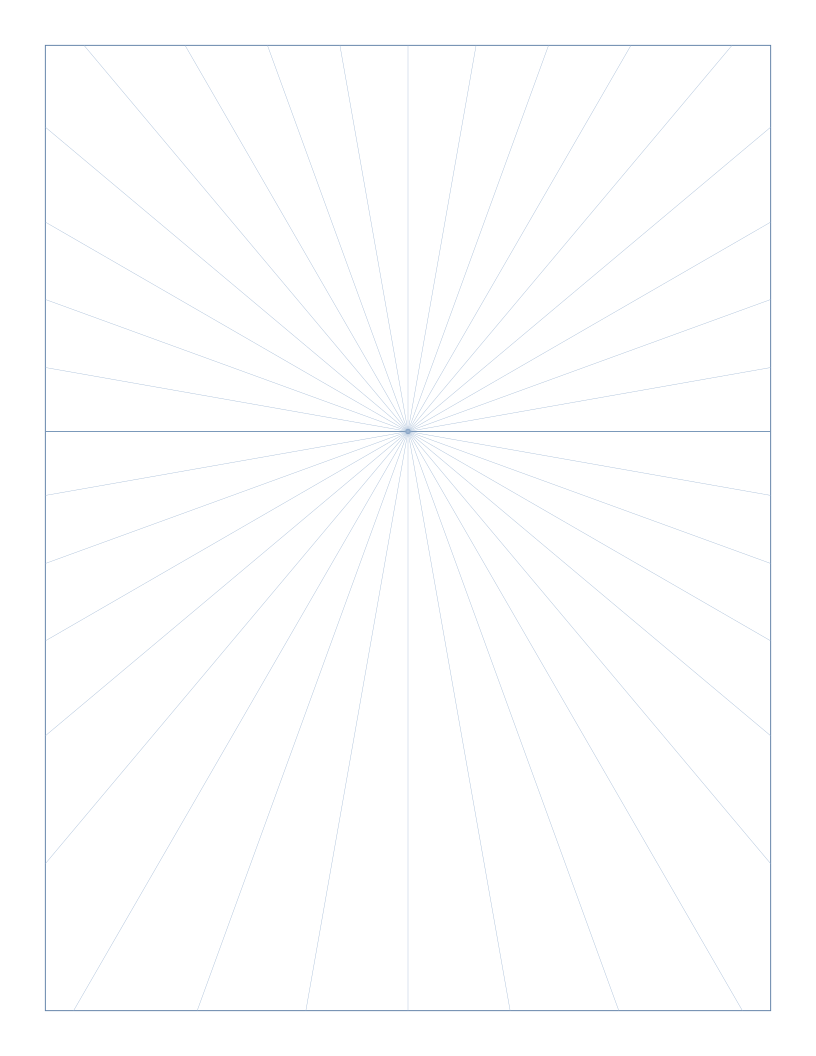
1-Point Perspective Grid
Single vanishing point on the horizon with radiating guides: the classic setup for hallways, rooms and street scenes.