Live preview · Letter (8.5" × 11") · Dark lines
Wongoji (Korean Manuscript Paper)
Wongoji (원고지) is Korean manuscript paper. Each square holds one syllable block, punctuation mark or space, and rows are written left to right. This sheet has the standard 400 squares, 20 to a row.
Download saves a vector PDF in the size and color selected below, no print dialog needed.
Other formats:
Direct PDF:Wongoji (Korean Manuscript Paper) Letter PDFWongoji (Korean Manuscript Paper) A4 PDF
Choose a different paper size:
Choose a different line color:
Great for
- Hangul handwriting practice
- TOPIK writing section practice
- Korean composition and essay drafts
- Counting characters for length limits
Wongoji (Korean Manuscript Paper) at a glance
| What it is | Korean manuscript paper with 400 squares, 20 per row, for Hangul writing practice. |
|---|---|
| Category | Language & Script |
| Paper sizes | Letter (8.5" × 11"), A4 (210 × 297 mm), A5 (148 × 210 mm), Half Letter (5.5" × 8.5"), B5 (176 × 250 mm), Legal (8.5" × 14"), 11" × 17", A3 (297 × 420 mm), A2 (420 × 594 mm), Poster (18" × 24"), Movie Poster (27" × 40") |
| Line colors | Faint, Light, Gray, Dark, Black, Blue, Green (default: Dark) |
| Format | Vector PDF at exact physical scale (Letter PDF, A4 PDF), PNG or SVG, or print directly from the browser |
| Price & license | Free. No signup or watermark. Printed sheets may be used for personal, classroom and commercial work. |
About wongoji (korean manuscript paper)
Wongoji is the Korean counterpart of Japanese genkō yōshi. It was the standard way to submit handwritten manuscripts, and it remains in use in Korean schools and in the writing section of the TOPIK proficiency test, where answers are written on a wongoji-style grid and length is counted in squares. Korean is written in syllable blocks, each a square arrangement of two to four letters, so one block per cell gives even, well-proportioned handwriting. The paper also teaches spacing: Korean separates words with spaces, and on wongoji a space is an empty square. A set of conventions covers the details, such as indenting one square at the start of a paragraph and sharing a square between two digits.
What's on the page
Twenty rows of twenty squares, 400 in all. Rows are separated by a narrow blank strip, about a third of a square tall, used for corrections and proofreading marks. Squares are 9.5 mm on US Letter and 9 mm on A4. The grid is centred on the page with no header, page number or character count printed.
How to use it well
One syllable block per square
Write each Hangul syllable, such as 한 or 글, centred in its own square. Keep the block balanced so it fills the square without touching the sides.
Leave a square for each space
Where a sentence has a space between words, leave one square empty. At the end of a row, a space that would fall in the first square of the next row is omitted.
Indent paragraphs by one square
Leave the first square of a new paragraph empty. Titles are usually centred on the second row.
Pair up digits and Latin letters
Arabic numerals and lowercase Latin letters are written two to a square. A single capital letter takes a square of its own.
Common mistakes to avoid
- Starting a row with a full stop or comma. If punctuation would begin a row, it is placed in the last square of the previous row together with the final character, or in the margin beside it.
- Writing in the strips between rows. They are for corrections only.
- Confusing it with genkō yōshi. Japanese manuscript paper is traditionally written in vertical columns; wongoji is normally written in horizontal rows.
FAQ, Wongoji (Korean Manuscript Paper)
What is wongoji?+
Korean manuscript paper (원고지): a grid of squares in which each square holds one syllable block, punctuation mark or space. It is used for handwriting practice, school compositions and the TOPIK writing test.
How many squares are on a sheet?+
400, in 20 rows of 20. Two common commercial formats are 200-square and 400-square sheets; this is the 400-square layout.
Do spaces take up a square?+
Yes. A space between words is one empty square, which is how wongoji makes Korean word spacing visible.
Is wongoji written vertically or horizontally?+
Modern Korean is written horizontally, left to right, and this sheet is laid out for that.
Can I use it for Japanese or Chinese?+
The squares work for any block script, but purpose-made sheets are better: genkō yōshi for Japanese and tianzige for Chinese character practice.
Printing tips for best results+
- 1. Click Print above. A new tab opens the template at exact size.
- 2. The print dialog appears automatically. Set Scale to 100%. Never "Fit to page", which silently shrinks every cell.
- 3. Set Margins to None or Minimum so the grid reaches the page edge.
- 4. For a PDF, click Download instead. It generates a vector PDF directly without going through the printer driver.
More detail in the guide to printing graph paper at actual size. Need a spacing that isn’t listed? Use the graph paper generator.
You might also like
Language & Script
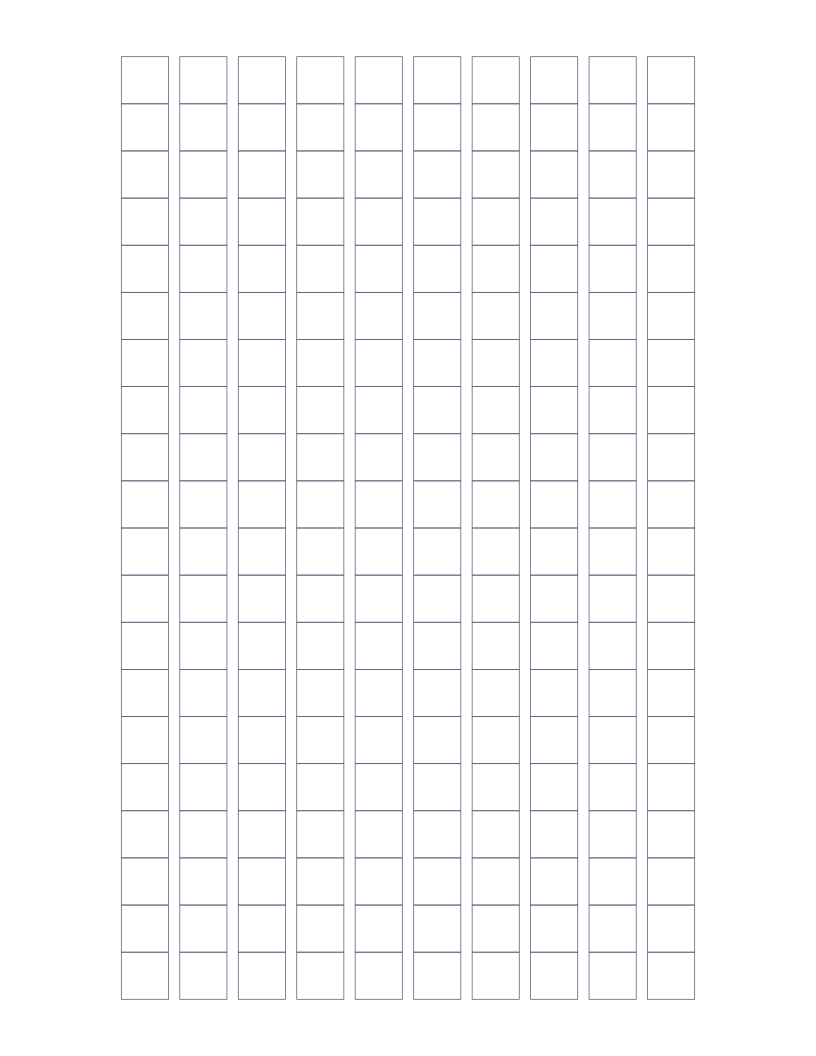
Genkō Yōshi (Japanese Writing Paper)
Traditional Japanese composition paper: 200 character cells per sheet for writing practice.
Language & Script
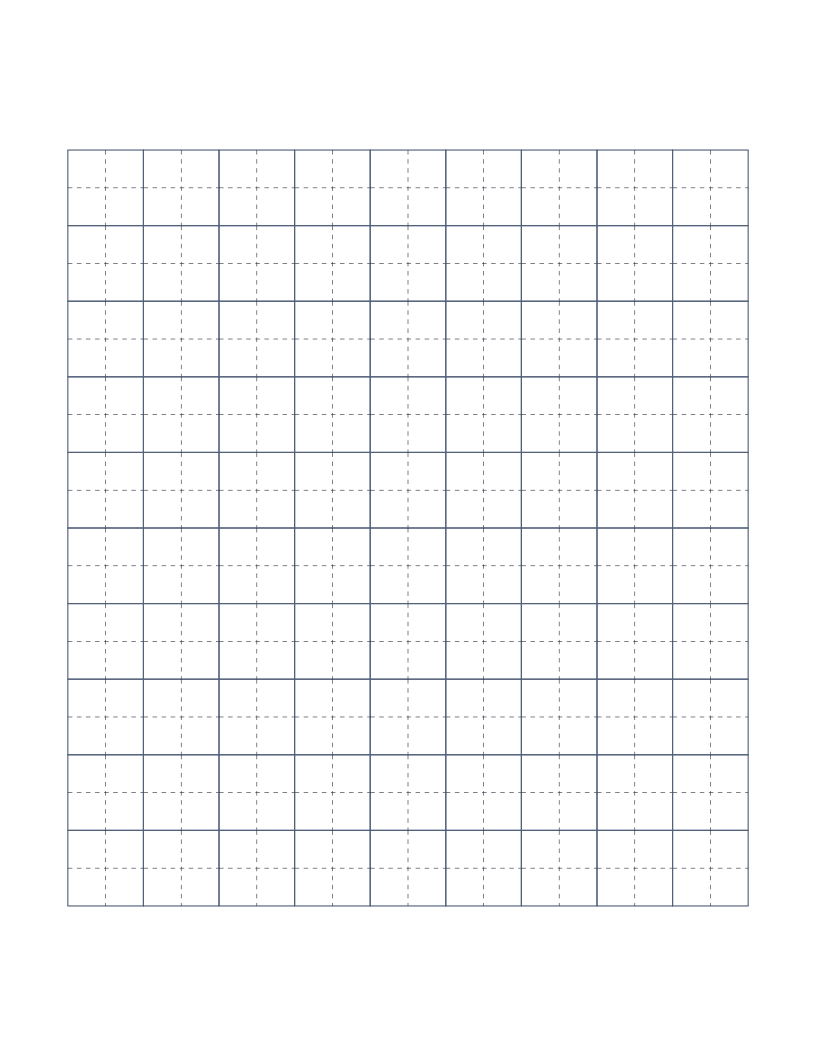
Tianzige Paper (Chinese Character Practice)
Chinese character practice grid: each cell divided by dashed crosshairs for stroke placement.
Language & Script
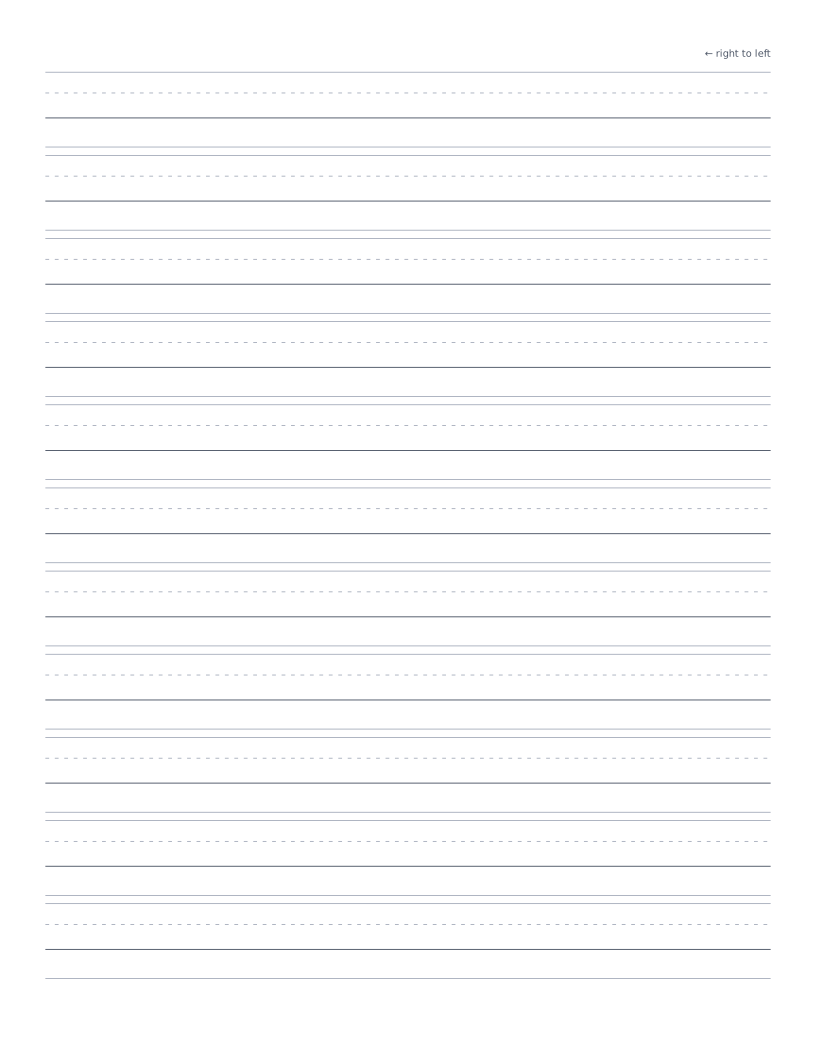
Arabic Handwriting Practice Paper
Four-line scaffold for Arabic handwriting practice: ascender, midline, baseline and descender lines marked right-to-left.
Language & Script
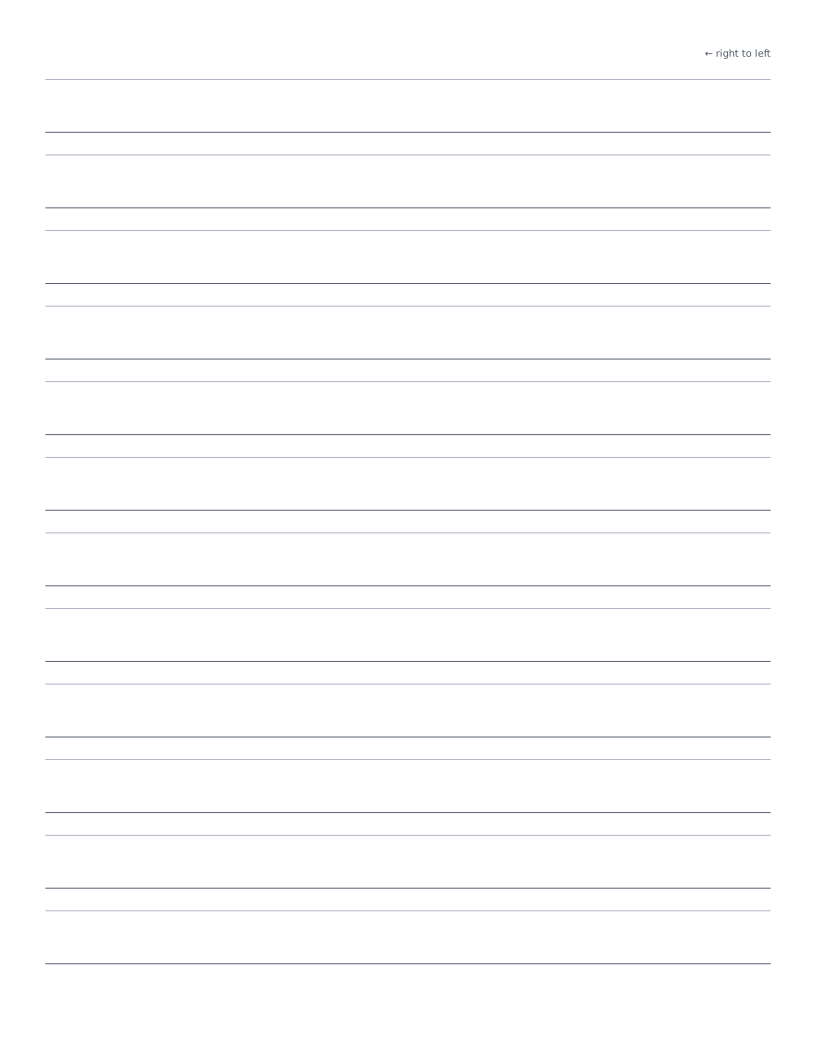
Hebrew Handwriting Practice Paper
Two-line scaffold for Hebrew handwriting practice: head line and baseline with right-to-left direction marker.