Live preview · Letter (8.5" × 11") · Gray lines
Hebrew Handwriting Practice Paper
Two-line scaffold paper for Hebrew handwriting practice. Hebrew letters are block-shaped and mostly fill the space between a head line and a baseline with no characteristic ascender or descender markers (except for final-form letters with descenders). The template is correspondingly simple: a head line, a baseline, and a small right-to-left direction marker.
Download generates a crisp vector PDF directly, no print dialog needed.
Choose a different paper size:
Choose a different line color:
Great for
- Learning Hebrew letter forms (Alef-Bet)
- Practising the five final-form letters (sofit forms)
- Children's Hebrew school handwriting practice
- Adult learners of modern Hebrew
Hebrew Handwriting Practice Paper at a glance
| What it is | Two-line scaffold for Hebrew handwriting practice: head line and baseline with right-to-left direction marker. |
|---|---|
| Category | Language & Script |
| Paper sizes | Letter (8.5" × 11"), A4 (210 × 297 mm), 11" × 17", Legal (8.5" × 14"), A3 (297 × 420 mm), A2 (420 × 594 mm), Poster (18" × 24"), Movie Poster (27" × 40") |
| Line colors | Faint, Light, Gray, Dark, Black, Blue, Green (default: Gray) |
| Format | Vector PDF download at exact physical scale, or print directly from the browser |
| Price & license | Free. No signup or watermark. Printed sheets may be used for personal, classroom and commercial work. |
About hebrew handwriting practice paper
Hebrew handwriting practice paper is structurally simpler than English or Arabic paper because Hebrew letters are predominantly block-shaped. Most letters fit cleanly between two horizontal guides (head line at the top, baseline at the bottom) with no characteristic ascender or descender. The script has 22 letters in the Alef-Bet, five of which have distinct 'final forms' (sofit) used only at the end of a word — four of these final forms (ך, ן, ף, ץ), plus the regular letter ק (qof), have descenders that drop below the baseline, the only feature requiring a notional 'descender zone' in the layout. Hebrew also reads right-to-left, with the writing hand trailing the script (the opposite of English). Modern Israeli handwriting (the kursive style taught in Israeli schools) is more curved than the print Hebrew typically seen in books, but follows the same two-line proportional system. The two-line scaffold gives the structure students need without crowding the page with guides for the rare descender-bearing letters.
What's on the page
Stacked two-line rows at 20 mm pitch — a head line near the top of each row and a heavier baseline near the bottom. The space between the lines is the main letter body; the small space above the head line and below the baseline accommodates occasional ascenders (rare in Hebrew) and descenders (in final-form letters). A small '← right to left' indicator in the top-right corner marks the reading direction. Lines run full-width from margin to margin.
How to use it well
Write from right to left, even in practice
Hebrew reads and writes right-to-left. From the first practice session, train yourself to start each word on the right and move leftward. Reversing the habit later is harder than learning the correct direction initially.
Use the final forms only at word ends
Five Hebrew letters have final forms (ך for ך, ם for מ, ן for נ, ף for פ, ץ for צ) used only at the very end of a word. Don't use the regular form in final position or vice versa; the distinction is consistent throughout written Hebrew.
Letters are block-shaped — match the model
Hebrew letters are visually 'blocky', filling most of the vertical space between head line and baseline. Don't write them tall and narrow (English handwriting habit) or short and squat. The block proportions are part of the script's identity.
Watch for similar-looking pairs
Several Hebrew letter pairs look very similar (ב/כ, ד/ר, ה/ח, ו/ז, etc.). Practice these in pairs early to internalise the small distinctions before they become entrenched as errors.
Common mistakes to avoid
- Writing too tall. Hebrew letters fit the block; making them taller than the head-to-baseline gap looks visually wrong and disrupts the script's rhythm.
- Skipping the final-form distinction. Five letters have distinct final forms; using the regular form at word-ends is jarring to native readers.
- Mistaking Hebrew print (square script) for Hebrew handwriting (kursive script). Modern Hebrew has two distinct styles — square print (used in books, signs, prayer books) and kursive (used in handwriting). Children typically learn both, but adult learners often focus on print first. Match the practice paper to the style you're learning.
FAQ, Hebrew Handwriting Practice Paper
Is this for square Hebrew or kursive Hebrew?+
Both work. The two-line scaffold accommodates either style — square print fills the box cleanly, kursive fills it with more curvature. For dedicated kursive practice, some published Hebrew workbooks add a slant line, but the basic layout is the same.
How is this different from [Arabic practice paper](/graph-paper/arabic-handwriting-practice)?+
Hebrew uses a two-line scaffold (head and baseline) because letters are block-shaped without characteristic ascenders. Arabic uses a four-line scaffold (ascender / midline / baseline / descender) because letters have more proportional variation. Both read right-to-left, but the underlying line structure differs.
Can children use this for Hebrew school?+
Yes. Hebrew is taught in synagogue schools (Hebrew schools), Jewish day schools, and Israeli elementary schools using similar two-line paper. The 20 mm row pitch suits children ages 6+; younger children benefit from larger rows (24+ mm).
What about vowel marks (niqqud)?+
Hebrew vowels are typically written as small dots and lines below, above, or inside the letters. The two-line scaffold doesn't have specific guides for these, but practiced placement is consistent — vowels usually sit just below the baseline or just below each letter's lower edge. For dedicated niqqud practice, specialised paper exists but isn't necessary for general writing.
Is modern Hebrew the same as biblical Hebrew handwriting?+
The letter forms are essentially the same (the modern alphabet has been used since roughly 500 BCE). Biblical Hebrew was originally written without vowel marks or spaces between words; modern Hebrew added these. The handwriting *practice* paper works for both, since the underlying letter shapes are unchanged.
Printing tips for best results+
- 1. Click Print above. A new tab opens the template at exact size.
- 2. The print dialog appears automatically. Set Scale to 100%. Never "Fit to page", which silently shrinks every cell.
- 3. Set Margins to None or Minimum so the grid reaches the page edge.
- 4. For a PDF, click Download instead. It generates a vector PDF directly without going through the printer driver.
You might also like
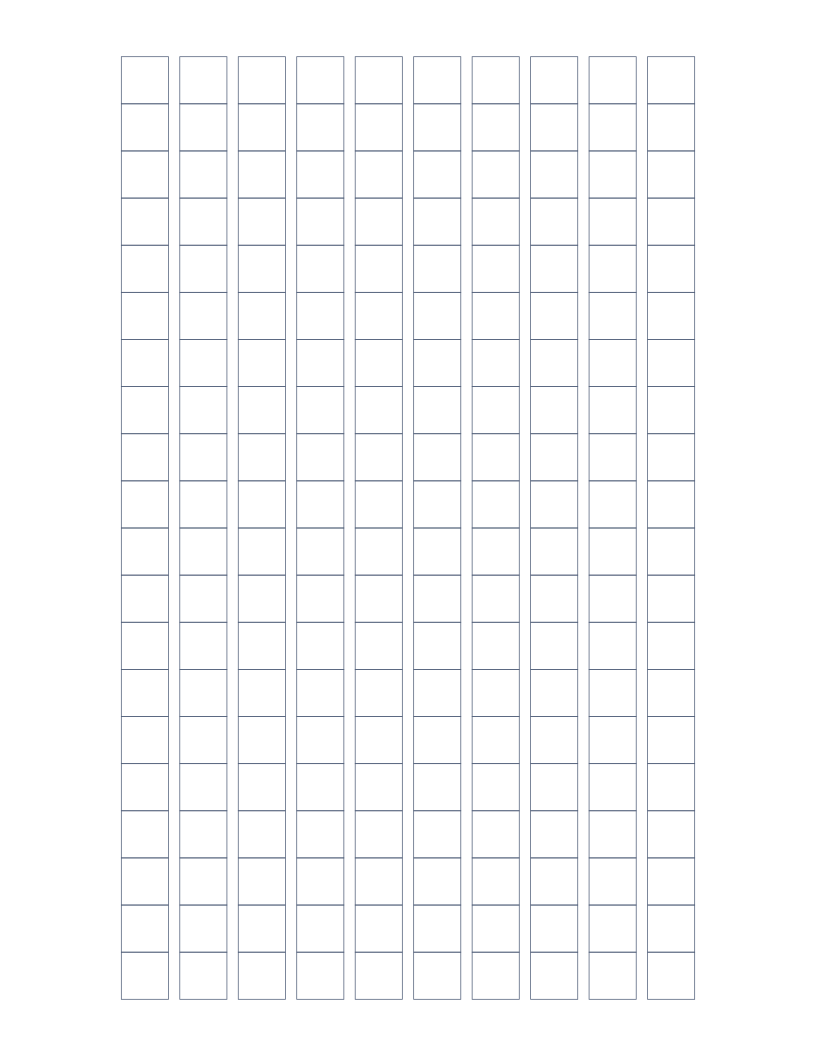
Genkō Yōshi (Japanese Writing Paper)
Traditional Japanese composition paper: 200 character cells per sheet for writing practice.
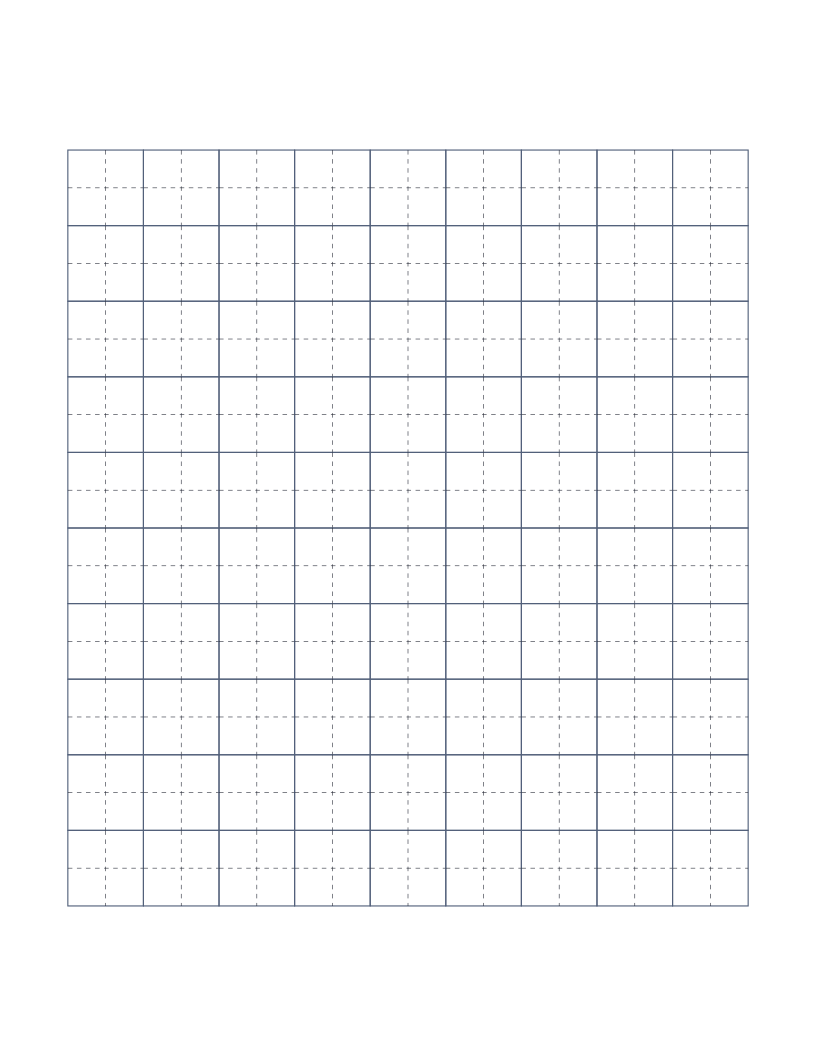
Tianzige Paper (Chinese Character Practice)
Chinese character practice grid: each cell divided by dashed crosshairs for stroke placement.
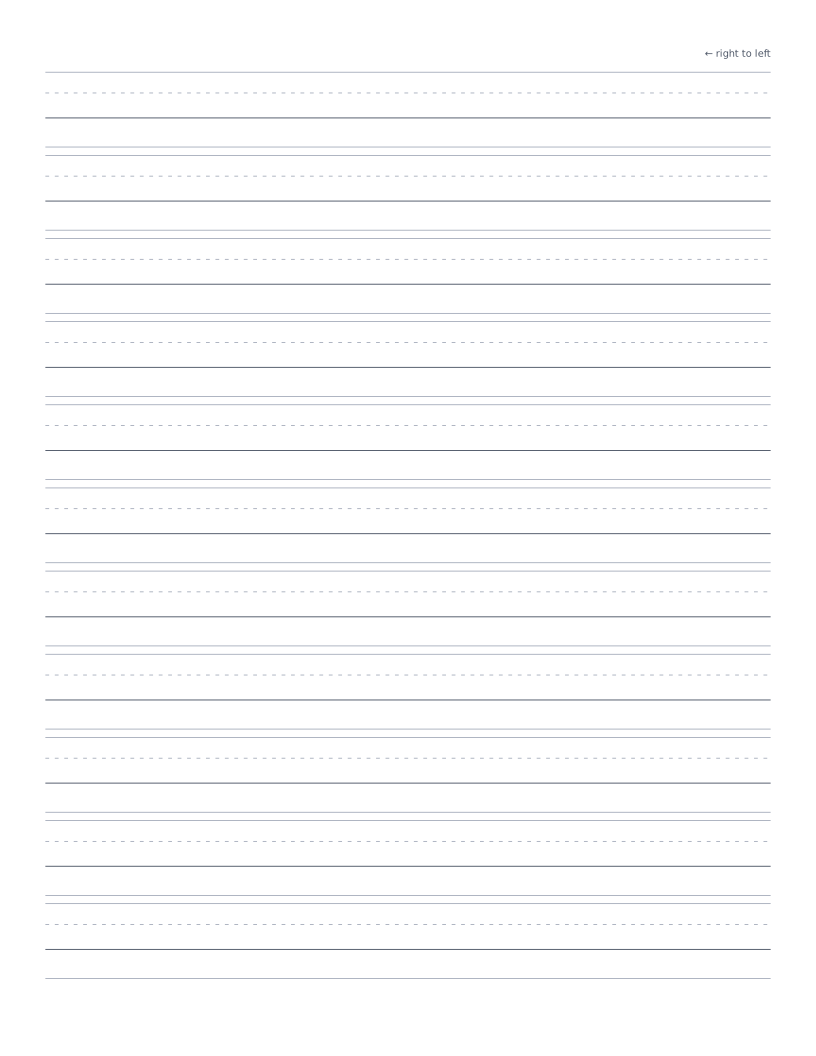
Arabic Handwriting Practice Paper
Four-line scaffold for Arabic handwriting practice: ascender, midline, baseline and descender lines marked right-to-left.
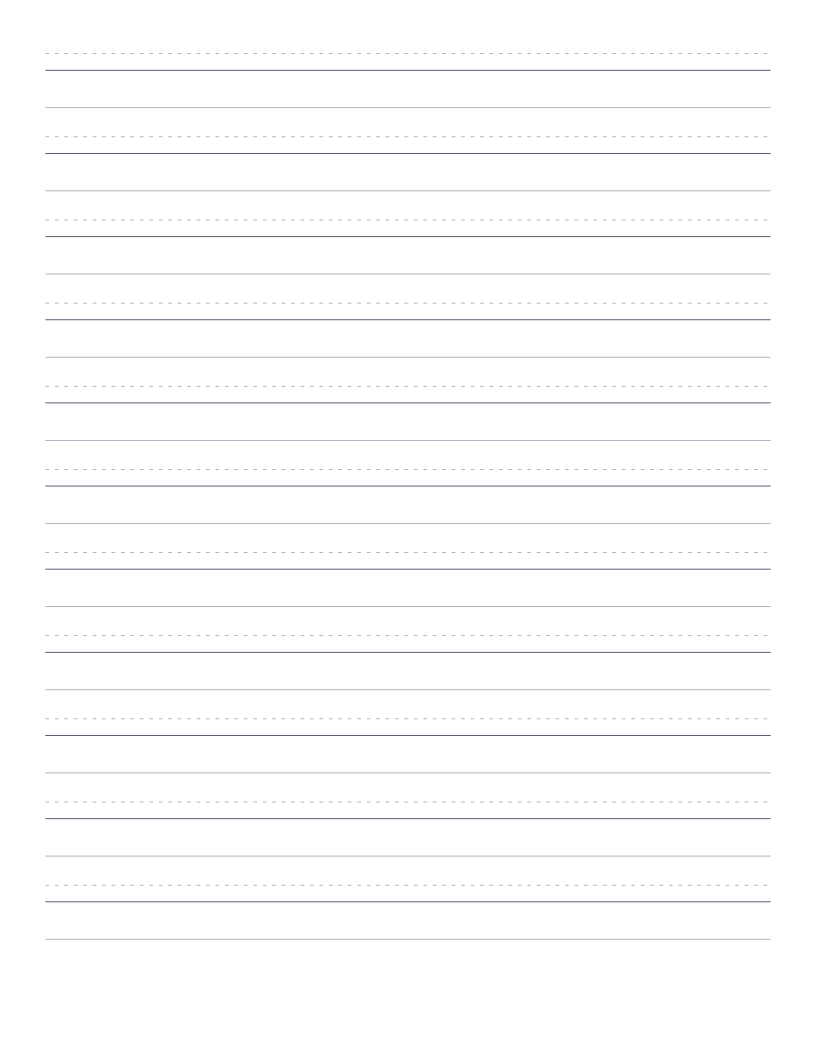
Devanagari Handwriting Practice Paper
Three-line scaffold for Devanagari handwriting practice: ascender, the characteristic heavy shirorekha (top horizontal line), and baseline.