Live preview · Letter (8.5" × 11") · Dark lines
Tianzige Paper (Chinese Character Practice)
Tianzige (田字格, literally 'field-character grid') is the standard Chinese handwriting practice paper used in every Chinese primary school. Each cell is divided into quarters by a dashed cross. The layout is named for its visual resemblance to the character 田 (tián, 'field').
Download generates a crisp vector PDF directly, no print dialog needed.
Choose a different paper size:
Choose a different line color:
Great for
- Chinese hanzi handwriting practice (Simplified or Traditional)
- Mandarin and Cantonese language class assignments
- Calligraphy stroke proportion training
- Pinyin and character worksheet exercises
Tianzige Paper (Chinese Character Practice) at a glance
| What it is | Chinese character practice grid: each cell divided by dashed crosshairs for stroke placement. |
|---|---|
| Category | Language & Script |
| Paper sizes | Letter (8.5" × 11"), A4 (210 × 297 mm), 11" × 17", Legal (8.5" × 14"), A3 (297 × 420 mm), A2 (420 × 594 mm), Poster (18" × 24"), Movie Poster (27" × 40") |
| Line colors | Faint, Light, Gray, Dark, Black, Blue, Green (default: Dark) |
| Format | Vector PDF download at exact physical scale, or print directly from the browser |
| Price & license | Free. No signup or watermark. Printed sheets may be used for personal, classroom and commercial work. |
About tianzige paper (chinese character practice)
Tianzige paper has been the standard tool for teaching Chinese handwriting for over a century. The dashed crosshairs inside each cell aren't decoration. They're a stroke-placement scaffolding that solves a unique problem of Chinese characters. Unlike alphabetic writing where letters have roughly equal complexity, Chinese characters range from one stroke (一) to over thirty (鬱). The challenge for learners is keeping all characters visually balanced within a square, which requires understanding how strokes should distribute across the four quadrants. The crosshairs make this concrete: a teacher can demonstrate that the horizontal stroke of 一 sits in the centre, that the left and right components of 林 each occupy one half, that the top and bottom of 早 split horizontally. By the time a child has filled a few notebooks of tianzige paper, the quadrant logic is internalised, and adult learners benefit from exactly the same scaffolding when learning hanzi from a non-character background.
What's on the page
A grid of 100 large square cells arranged 10 columns × 10 rows. Each cell is bordered by solid lines and divided into four equal quadrants by a dashed cross (one dashed horizontal line, one dashed vertical line). The solid borders give you cell placement; the dashed crosshairs give you stroke balance reference. Dark line colour is the default so the solid borders register clearly, while the dashed reference lines stay perceptible without dominating the page.
How to use it well
Use the crosshairs as proportion guides
Most hanzi are constructed from components that occupy specific quadrants. 木 sits centred, 林 has two equal halves split by the vertical, 早 has top and bottom halves split by the horizontal. Identify the component layout before writing, then place strokes in the correct quadrants.
Don't fill the entire cell
A well-formed hanzi sits inside the cell with a small margin. Typically 10–15 % of the cell width around each edge. Characters that touch the cell border look cramped; characters that fill less than 70 % of the cell look lost in space.
Practice the same character on a single row
Writing the same character ten times across a row gives you immediate feedback on consistency. Compare your first and tenth attempts side-by-side; the visible difference reveals what your hand is still learning.
Move to mizige (米字格) for advanced work
Tianzige has four-quadrant crosshairs. Mizige (米字格, 'rice-character grid') adds two diagonal lines for eight-direction reference. Tianzige is right for beginners and intermediate learners; mizige is right when you're working on calligraphy-quality strokes that need diagonal alignment.
Common mistakes to avoid
- Compressing complex characters by shrinking strokes. Highly complex characters (20+ strokes) sometimes feel like they don't fit. The fix isn't to make individual strokes thinner. It's to redistribute the strokes within the quadrants so the overall character stays balanced. If a character genuinely won't fit, use larger cells.
- Ignoring stroke order. The crosshairs help with placement but not with order. Chinese characters have a strict canonical stroke order (top-to-bottom, left-to-right, horizontal-before-vertical, and so on). Practicing characters in the wrong order will work visually but produces lasting bad habits that show in any cursive or running-script writing.
- Using tianzige for Japanese kanji. Japanese kanji are written in the same style as Chinese hanzi, but Japanese learners typically practice in genkō yōshi (no internal crosshairs) once they're past the first year. Tianzige is specifically for the Chinese learning convention; using it for advanced Japanese practice can produce stiff-looking writing.
FAQ, Tianzige Paper (Chinese Character Practice)
What does 'tianzige' mean?+
田字格 (tiánzìgé) means 'field-character grid'. Named because each cell with its internal crosshairs looks like the character 田 (tián, 'field'). The visual pun is the most common reason students remember the name.
How is this different from genkō yōshi?+
Genkō yōshi (Japanese) has plain square cells with no internal subdivision. Used by Japanese writers who've already learned character forms and just need the cell structure for layout. Tianzige (Chinese) adds dashed crosshairs inside each cell. Used for learning character forms, where the internal references help with stroke placement. They serve different stages of the writing journey.
Does it work for Traditional and Simplified Chinese?+
Yes, both. The grid structure is identical; only the character forms differ. Traditional characters tend to have more strokes and benefit even more from the crosshair guidance, but the paper itself is the same.
What's mizige (米字格)?+
An extended version of tianzige with two diagonal lines added inside each cell, creating eight reference quadrants instead of four. Mizige is used for advanced character practice and calligraphy where diagonal stroke alignment matters; tianzige is the standard for everyday handwriting practice.
What size are the cells?+
20 mm square in our default. Large enough for clear hanzi writing with a pencil or fine pen. For very complex characters or calligraphy practice, scale up to A3 or print individual large cells. For dense writing, scale down, but cells smaller than 15 mm make stroke placement difficult.
Can children use this directly?+
Yes. This is the standard tool in Chinese primary education. Kindergarten and first-grade students start writing on tianzige paper, often with single characters per row to allow repetition. The paper scales naturally as the child progresses from one character per row to dense composition.
Printing tips for best results+
- 1. Click Print above. A new tab opens the template at exact size.
- 2. The print dialog appears automatically. Set Scale to 100%. Never "Fit to page", which silently shrinks every cell.
- 3. Set Margins to None or Minimum so the grid reaches the page edge.
- 4. For a PDF, click Download instead. It generates a vector PDF directly without going through the printer driver.
You might also like
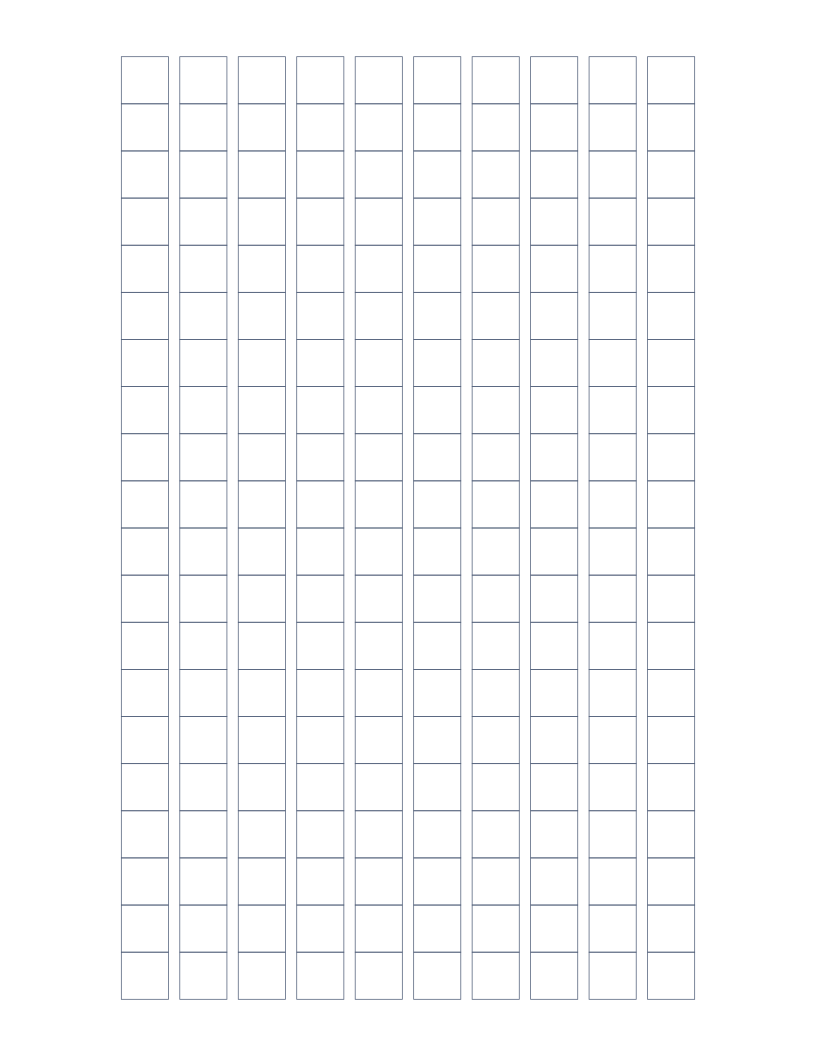
Genkō Yōshi (Japanese Writing Paper)
Traditional Japanese composition paper: 200 character cells per sheet for writing practice.
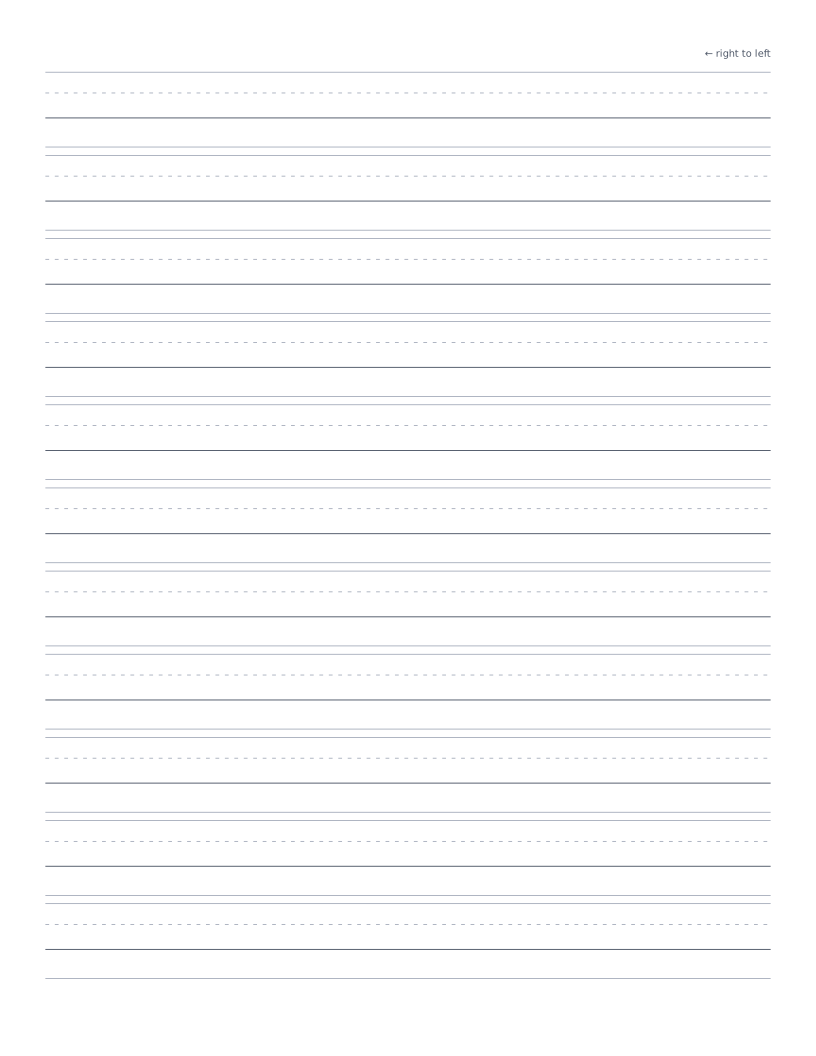
Arabic Handwriting Practice Paper
Four-line scaffold for Arabic handwriting practice: ascender, midline, baseline and descender lines marked right-to-left.
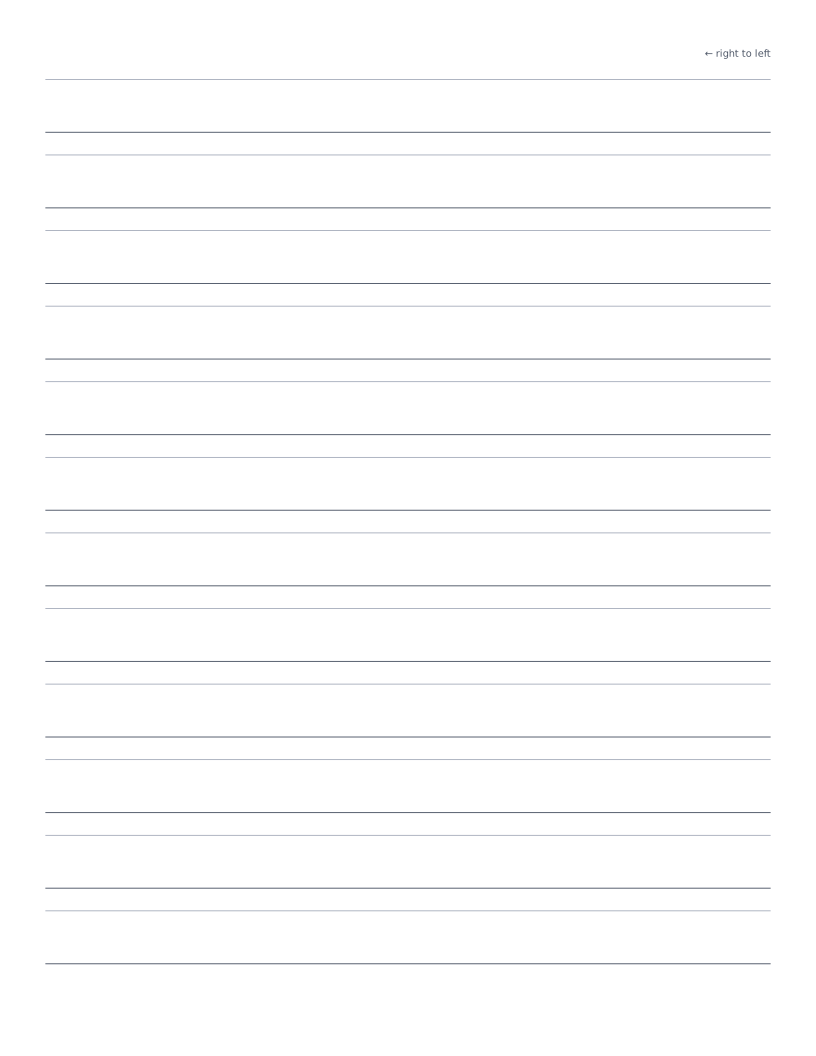
Hebrew Handwriting Practice Paper
Two-line scaffold for Hebrew handwriting practice: head line and baseline with right-to-left direction marker.
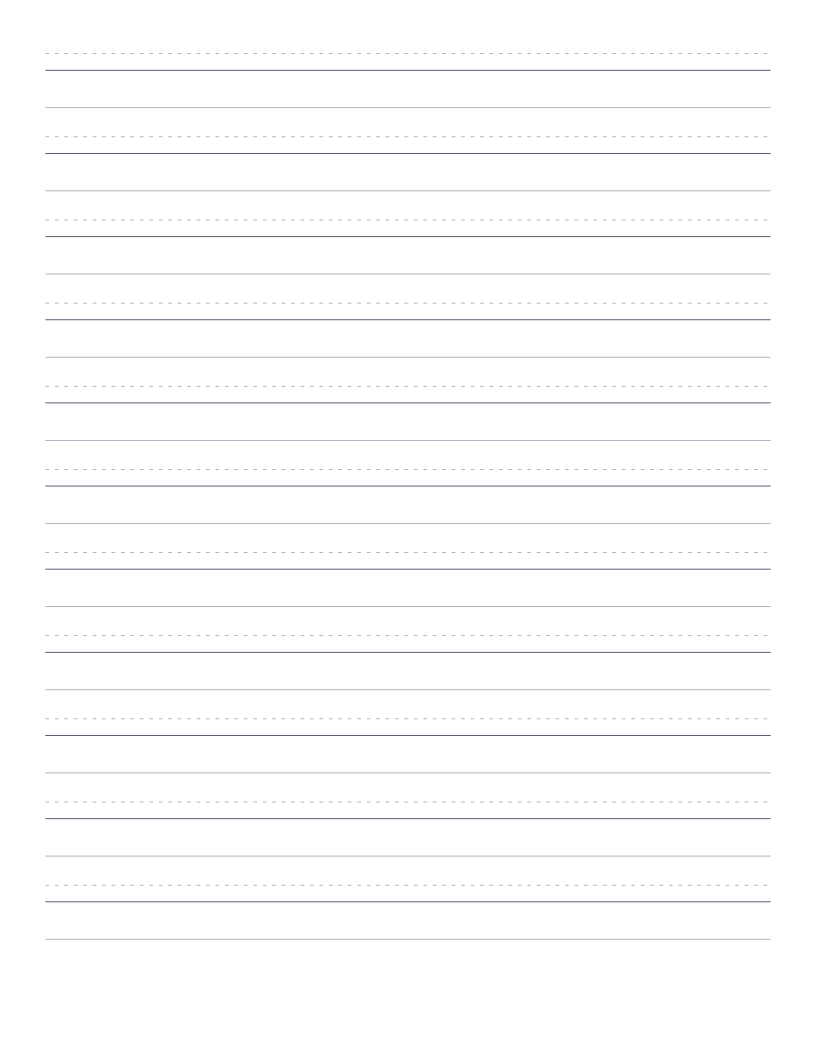
Devanagari Handwriting Practice Paper
Three-line scaffold for Devanagari handwriting practice: ascender, the characteristic heavy shirorekha (top horizontal line), and baseline.