Live preview · Letter (8.5" × 11") · Gray lines
Devanagari Handwriting Practice Paper
Three-line scaffold paper for Devanagari handwriting practice. The defining feature of the script is the shirorekha — a heavy horizontal line that runs along the top of each letter, connecting consonants in a word. The template marks this with a bold line; above it sits a dashed ascender guide (for matras — vowel signs that rise above the shirorekha), below it is the baseline (where most letters end). Used for Hindi, Sanskrit, Marathi, Nepali and other Indo-Aryan languages.
Download generates a crisp vector PDF directly, no print dialog needed.
Choose a different paper size:
Choose a different line color:
Great for
- Learning Hindi, Sanskrit, Marathi or Nepali handwriting
- Practising the consonant base forms and vowel matras
- Children's Hindi medium school practice
- Adult learners of South Asian languages
Devanagari Handwriting Practice Paper at a glance
| What it is | Three-line scaffold for Devanagari handwriting practice: ascender, the characteristic heavy shirorekha (top horizontal line), and baseline. |
|---|---|
| Category | Language & Script |
| Paper sizes | Letter (8.5" × 11"), A4 (210 × 297 mm), 11" × 17", Legal (8.5" × 14"), A3 (297 × 420 mm), A2 (420 × 594 mm), Poster (18" × 24"), Movie Poster (27" × 40") |
| Line colors | Faint, Light, Gray, Dark, Black, Blue, Green (default: Gray) |
| Format | Vector PDF download at exact physical scale, or print directly from the browser |
| Price & license | Free. No signup or watermark. Printed sheets may be used for personal, classroom and commercial work. |
About devanagari handwriting practice paper
Devanagari script is among the most distinctive writing systems in the world, recognisable instantly by the shirorekha — the heavy horizontal line that runs along the top of every letter. Letters hang from the shirorekha rather than sitting on a baseline (the opposite arrangement to most other scripts). Within a word, the shirorekhas of consecutive letters merge into a single continuous line, with the consonants themselves dropping below. Vowel signs (matras) attach above, below, before or after the consonant they modify; matras above the shirorekha extend up into an ascender zone, matras below the baseline drop down. The script is used for Hindi (over 600 million speakers), Marathi, Nepali, Sanskrit, and several other Indo-Aryan languages, with minor variations between language conventions. The shirorekha-first writing order (top line, then the consonant body dropping from it) is unusual and takes practice to master; children learning Devanagari typically learn to draw the shirorekha across the entire word first, then drop the consonant bodies down, then add matras and the diacritical marks. The three-line scaffold supports this: heavy shirorekha as the load-bearing line, a faint ascender line for matra reach, and a baseline below.
What's on the page
Stacked three-line rows at 22 mm pitch. Within each row: a dashed light ascender guide near the top (for matras rising above the shirorekha), a heavy bold shirorekha line (the defining horizontal line of Devanagari), and a lighter baseline below (where most consonant bodies end). Some consonants and matras extend below the baseline; the row's bottom edge accommodates them. The script is left-to-right (no direction marker is needed, unlike Arabic and Hebrew templates). Lines run full-width from margin to margin.
How to use it well
Write the shirorekha last for individual letters, first for words
When practicing single letters, draw the consonant body first and then add the shirorekha across the top. When writing words, the standard order is to write the consonant bodies of all letters in the word first (without shirorekhas), then draw one continuous shirorekha across the top connecting them all. The continuous shirorekha is what gives Devanagari its distinctive visual flow.
Match the shirorekha thickness to the consonant strokes
The shirorekha should be slightly heavier than the consonant strokes — visually 'load-bearing' — but not so heavy that it dominates the page. The bold line on this template is sized to match standard handwriting; trace it cleanly and your letters will inherit its visual weight.
Practice matra placement
Vowel matras attach in different positions: ि (i) before the consonant, ी (ī) after, ा (ā) after, े (e) above, ै (ai) above, ो (o) after with crown, ौ (au) after with double crown, ु (u) below, ू (ū) below. Each has a strict positional rule. Practice these systematically — sloppy matra placement is the most common Devanagari handwriting error.
Conjuncts (yuktākṣaras) compress vertically
Devanagari forms consonant clusters by joining consonants in special conjunct forms (क्ष, त्र, ज्ञ, etc.). These often compress vertically within the same row, with one consonant sitting on top of or behind another. The standard row height accommodates them; don't write conjuncts taller than the row allows.
Common mistakes to avoid
- Drawing the shirorekha as separate segments for each letter. The shirorekha within a word should be one continuous line, not separate lines for each consonant. Beginners often draw it letter-by-letter; train yourself to draw it as one stroke across the whole word.
- Placing matras wrong. Each vowel sign has a specific position relative to the consonant; getting these wrong changes the word's pronunciation. The matras ि (i) and ी (ī) are particularly easy to confuse because they look similar but attach on opposite sides.
- Letting consonant heights drift. Devanagari consonants vary in height within the row; bigger consonants (क, र, श) fill the space; narrower ones (ट, ठ, च) are slightly shorter. Maintain consistent proportions matching the model script.
FAQ, Devanagari Handwriting Practice Paper
What's the shirorekha?+
The heavy horizontal line that runs along the top of every Devanagari letter. The word शिरोरेखा literally means 'head-line' or 'top-line'. It's the script's most distinctive visual feature — letters hang from it rather than sit on a baseline.
Does this paper work for Hindi, Sanskrit and Marathi equally?+
Yes. All three languages use the same Devanagari script with the same shirorekha structure. Minor conventions differ (e.g., Marathi uses some letter shapes that differ slightly from Hindi), but the underlying line scaffold is identical. The paper serves all Devanagari-using languages.
How is this different from [Arabic](/graph-paper/arabic-handwriting-practice) or [Hebrew](/graph-paper/hebrew-handwriting-practice) practice paper?+
Devanagari reads left-to-right (Arabic and Hebrew read right-to-left). Devanagari has the unique shirorekha at the top of letters; Arabic and Hebrew use baseline-oriented scaffolds. Each script has its own line structure matching its letter geometry — they're not interchangeable.
Can children use this for school Devanagari practice?+
Yes. The 22 mm row pitch suits ages 6–10 (early Hindi school practice). For very young children just beginning to form letters, larger rows (28+ mm) help with motor control; for grades 3+, smaller rows (16–18 mm) are typical. This template is a sensible middle ground.
What about Bangla, Gujarati or Punjabi?+
Those use different scripts (Bangla / Gujarati / Gurmukhi), each with its own letter geometry. They share some structural features with Devanagari (a shirorekha-like top line for Bangla and Gurmukhi; matra positions for Gujarati), but the proportions differ enough that script-specific paper is more accurate. We may add separate templates if there's demand.
Printing tips for best results+
- 1. Click Print above. A new tab opens the template at exact size.
- 2. The print dialog appears automatically. Set Scale to 100%. Never "Fit to page", which silently shrinks every cell.
- 3. Set Margins to None or Minimum so the grid reaches the page edge.
- 4. For a PDF, click Download instead. It generates a vector PDF directly without going through the printer driver.
You might also like
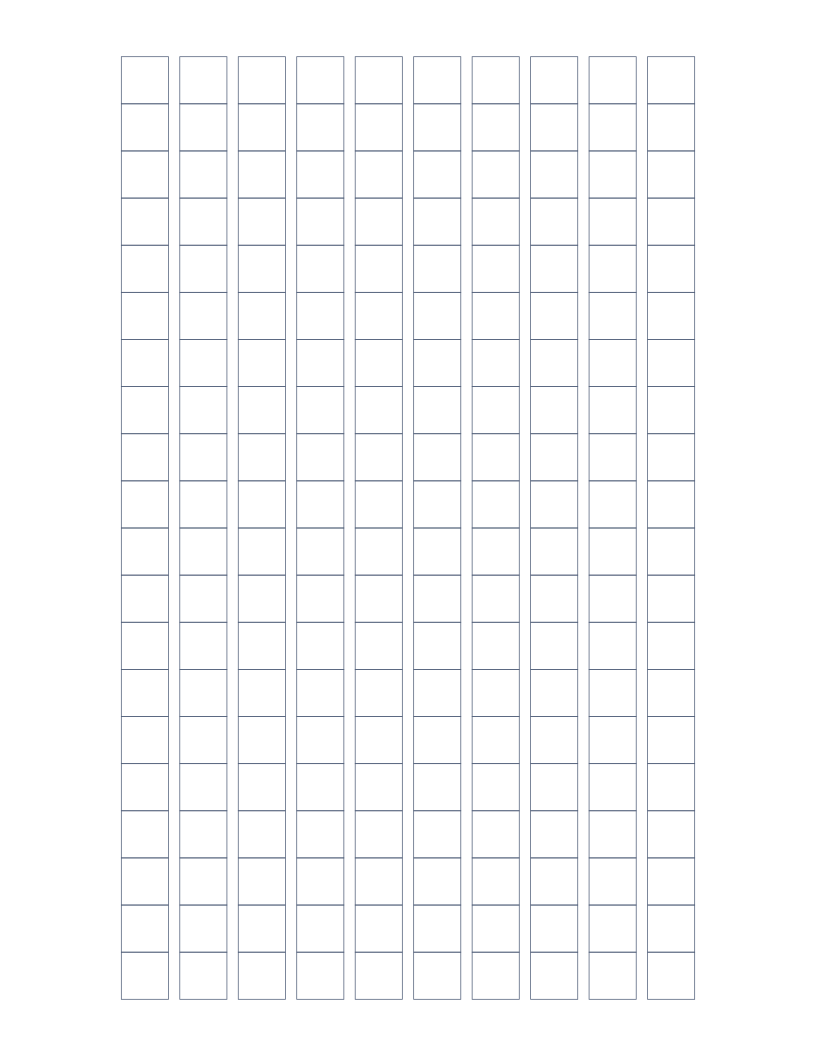
Genkō Yōshi (Japanese Writing Paper)
Traditional Japanese composition paper: 200 character cells per sheet for writing practice.
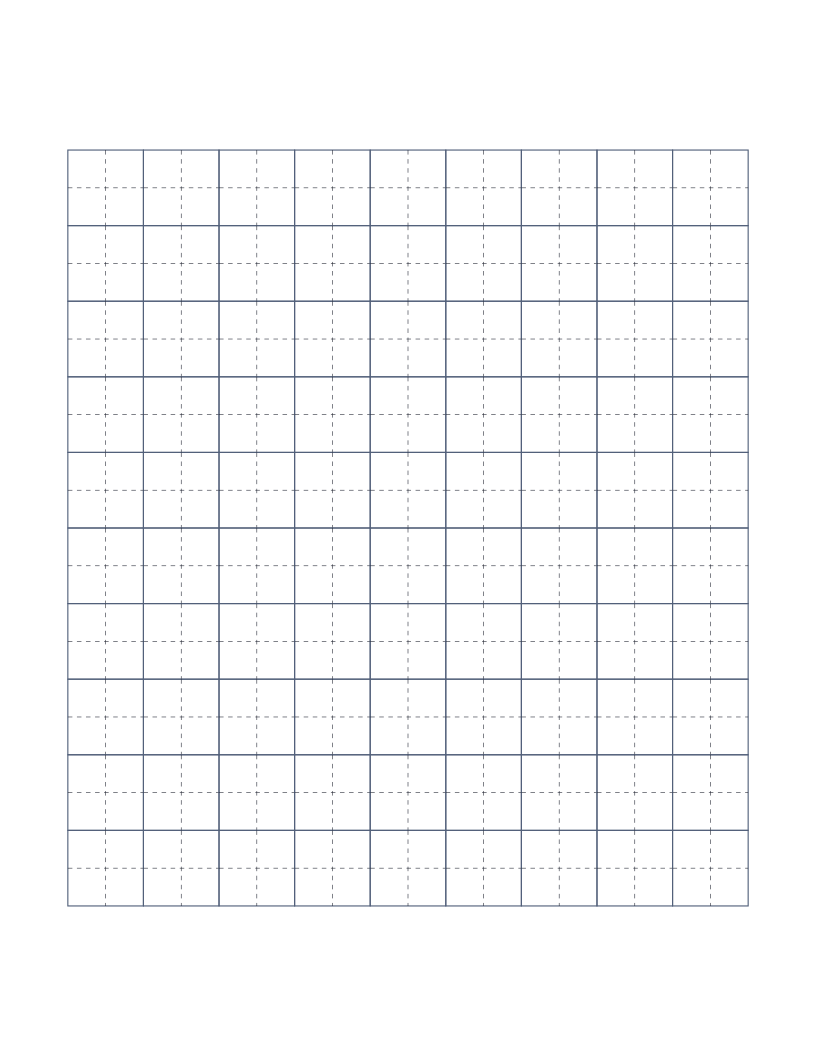
Tianzige Paper (Chinese Character Practice)
Chinese character practice grid: each cell divided by dashed crosshairs for stroke placement.
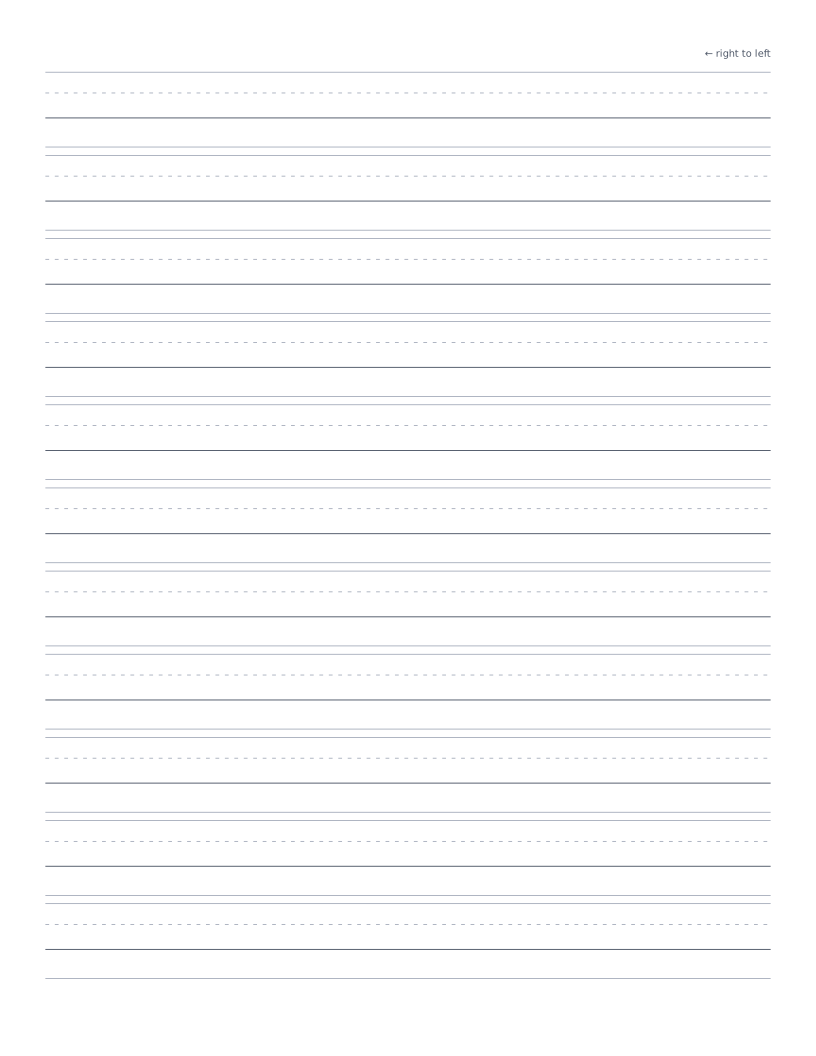
Arabic Handwriting Practice Paper
Four-line scaffold for Arabic handwriting practice: ascender, midline, baseline and descender lines marked right-to-left.
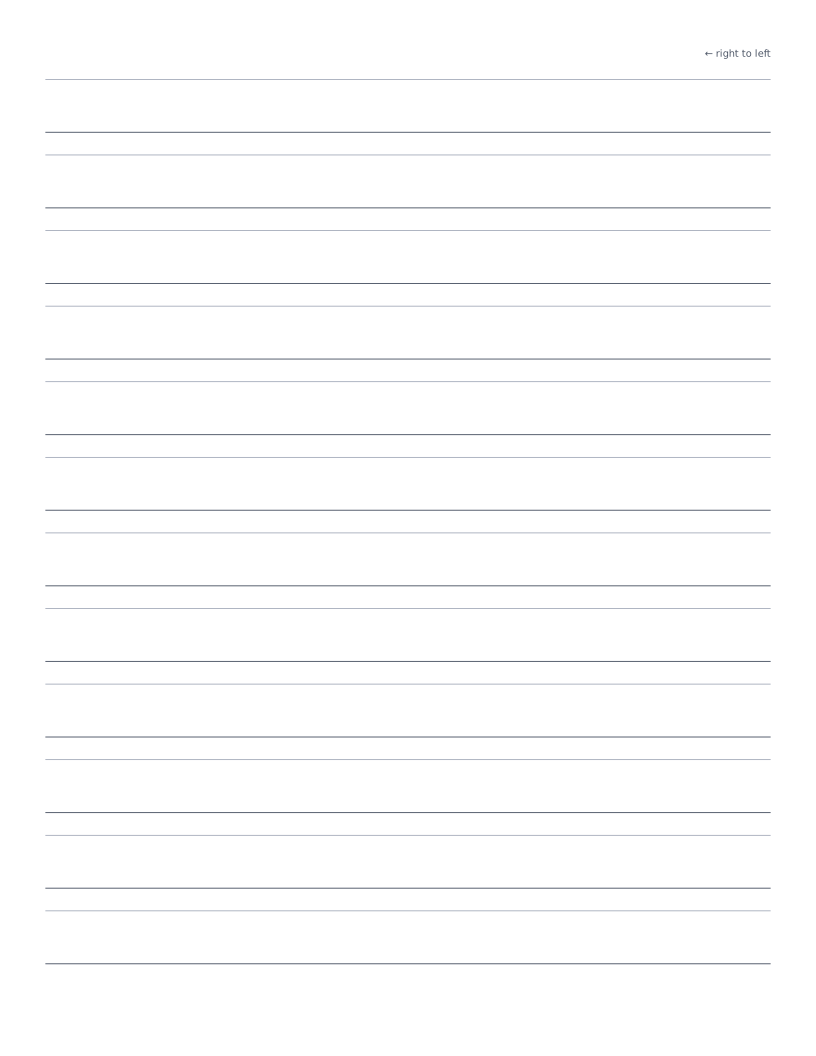
Hebrew Handwriting Practice Paper
Two-line scaffold for Hebrew handwriting practice: head line and baseline with right-to-left direction marker.