Live preview · Letter (8.5" × 11") · Gray lines
Arabic Handwriting Practice Paper
Four-line scaffold paper for Arabic handwriting practice. The baseline (where most letters sit) is the heaviest line; above it sits a dashed midline (for short-letter top), an ascender guide (top of tall letters like ا and ل), and below it a descender guide (for letters whose tails drop below the baseline like ج, ح, خ). A small right-to-left direction marker reminds you which side of the page to start from.
Download generates a crisp vector PDF directly, no print dialog needed.
Choose a different paper size:
Choose a different line color:
Great for
- Learning Arabic letter forms and proportions
- Practising the four positional forms (isolated, initial, medial, final)
- Calligraphy basics for Naskh and Ruq'ah scripts
- Adult Arabic-as-a-second-language handwriting practice
Arabic Handwriting Practice Paper at a glance
| What it is | Four-line scaffold for Arabic handwriting practice: ascender, midline, baseline and descender lines marked right-to-left. |
|---|---|
| Category | Language & Script |
| Paper sizes | Letter (8.5" × 11"), A4 (210 × 297 mm), 11" × 17", Legal (8.5" × 14"), A3 (297 × 420 mm), A2 (420 × 594 mm), Poster (18" × 24"), Movie Poster (27" × 40") |
| Line colors | Faint, Light, Gray, Dark, Black, Blue, Green (default: Gray) |
| Format | Vector PDF download at exact physical scale, or print directly from the browser |
| Price & license | Free. No signup or watermark. Printed sheets may be used for personal, classroom and commercial work. |
About arabic handwriting practice paper
Arabic writing has a more elaborate proportional system than English. Every letter has up to four positional forms (isolated, initial, medial, final) depending on its position in a word, and the proportions of letters relative to a baseline are codified in classical Arabic calligraphy with mathematical precision. The Naskh script (the standard print and handwriting style) uses a four-line guide: the baseline as the primary structural reference, a midline showing the top of short letters (ب, ت, ث, ن, etc.), an ascender line showing the top of tall letters (ا, ل, ك), and a descender line showing how deep letters with descending tails go (ج, ح, خ, ع, غ, ل, م, ن in some positions). Calligraphic traditions specify these proportions in 'dots' (the calligrapher's reed pen makes a square dot of a fixed size; a tall letter is 'seven dots tall', a short letter is 'three dots'). For modern handwriting practice, the four-line scaffold approximates these proportions with sufficient accuracy that students develop good letter sizing habits. Arabic also reads right-to-left, which means the writing hand (right hand, for right-handed writers) drags behind the writing — the opposite of the English-language norm — and the practice paper's direction marker helps reinforce this from the start.
What's on the page
Stacked four-line rows at 22 mm pitch. Within each row: an ascender guide near the top (light), a dashed midline (the top of short letters), a heavy baseline (where most letters sit), and a descender guide near the bottom (light). A small '← right to left' indicator in the top-right corner of the page. The lines extend full-width from margin to margin so students can write entire phrases without breaking at the page edge.
How to use it well
Start from the right side
Arabic is read and written right-to-left. The first letter of a word starts on the right; subsequent letters connect to the left of it. Train yourself to write from right to left from the very first practice session — undoing the left-to-right habit later is harder than learning the correct direction initially.
Letters connect (mostly)
Most Arabic letters connect to the letters before and after them in a word, taking different forms (initial, medial, final) depending on position. A few letters (ا, د, ذ, ر, ز, و) only connect on their right side. Learn the connection rules letter-by-letter; the four-line scaffold helps you maintain consistent sizing as you practice each form.
The baseline is the load-bearing line
In Arabic, most letters sit on the baseline (unlike in English, where letters typically hang from a topline). The baseline is the heavy line on this template; treat it as the primary structural reference for every letter you write.
Practice each letter in all four forms
Most Arabic letters have isolated, initial, medial and final forms. Practice all four for each letter on consecutive lines to internalise the variations. Common letters like ب and م have particularly distinctive form differences worth drilling.
Common mistakes to avoid
- Writing letters too wide. English handwriting tolerates wide letter spacing; Arabic does not — connected letters in a word should sit close together with the connecting line maintaining the baseline rhythm. Aim for proportional spacing matching the model script.
- Ignoring positional forms. Writing every letter in its isolated form (the dictionary form) is a common beginner error. Real Arabic words use the connected positional forms; practising only isolated forms produces unreadable handwriting.
- Treating the descender line as optional. Letters like ج, ح, خ and the descending forms of ن, ل, م extend below the baseline; respecting the descender guide keeps proportions consistent across words and prevents the descenders from crashing into the next row's ascenders.
FAQ, Arabic Handwriting Practice Paper
Which Arabic script is this paper sized for?+
Standard Naskh proportions — the script used in most printed Arabic books, newspapers and digital text. Naskh is the default for Arabic handwriting instruction in nearly all curricula. For other scripts (Ruq'ah, Thuluth, Diwani), the proportions differ; this paper is a good general-purpose starting point but specialised calligraphy may want script-specific guidelines.
How is this different from English [handwriting paper](/graph-paper/handwriting-practice-paper)?+
English handwriting paper has three lines (topline, dashed midline, baseline) and reads left-to-right. Arabic handwriting paper has four lines (ascender, dashed midline, baseline, descender) and reads right-to-left. The extra line accommodates Arabic's descenders; the direction marker is the most visible difference at a glance.
Can children use this for school Arabic practice?+
Yes — this template is suitable for grades 1+. For very young children (kindergarten), taller rows (28+ mm) help with motor control; the 22 mm pitch here suits ages 7+ once basic letter forms are familiar.
Are these lines used in Arabic schools?+
Yes, similar four-line scaffolds are standard in Arabic-language elementary instruction across the Arab world, with small variations in line proportions between curricula. The template here approximates the most common configuration.
What about other right-to-left scripts ([Hebrew](/graph-paper/hebrew-handwriting-practice), Urdu, Farsi)?+
Hebrew has its own template (different letter proportions). Urdu and Farsi use modified Arabic scripts with similar (but not identical) proportions; this paper works reasonably well for both, though specialised Urdu or Farsi paper would be slightly more accurate.
Printing tips for best results+
- 1. Click Print above. A new tab opens the template at exact size.
- 2. The print dialog appears automatically. Set Scale to 100%. Never "Fit to page", which silently shrinks every cell.
- 3. Set Margins to None or Minimum so the grid reaches the page edge.
- 4. For a PDF, click Download instead. It generates a vector PDF directly without going through the printer driver.
You might also like
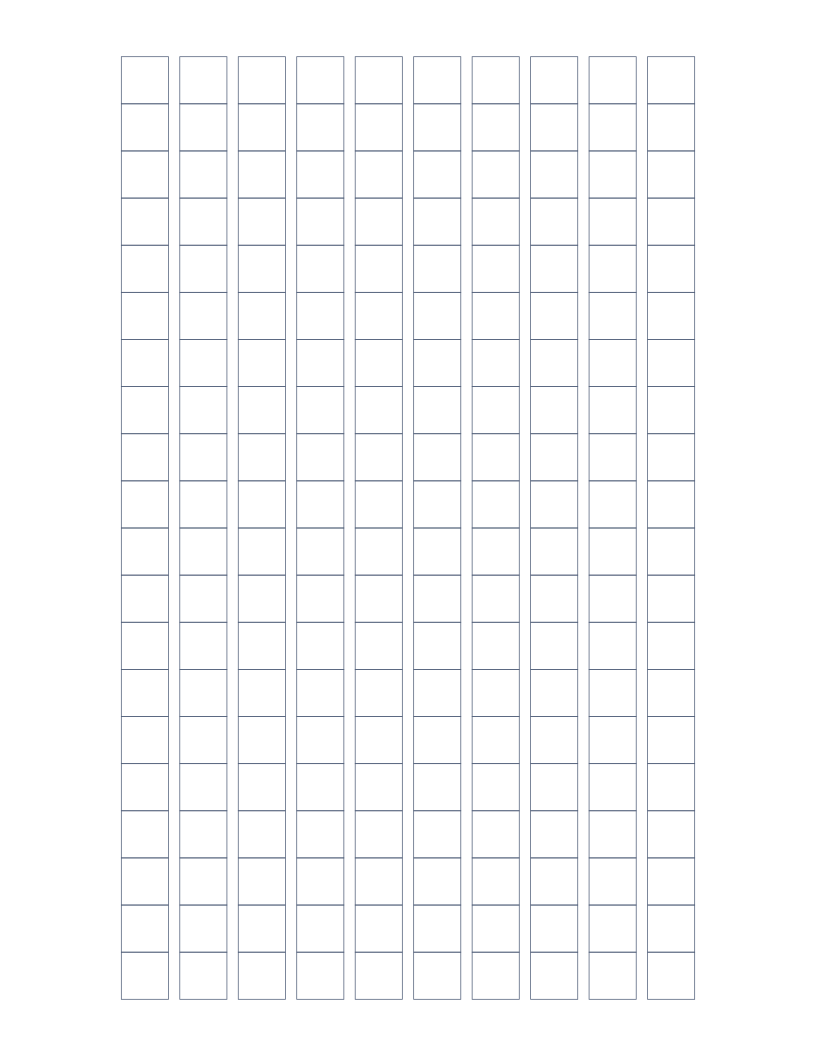
Genkō Yōshi (Japanese Writing Paper)
Traditional Japanese composition paper: 200 character cells per sheet for writing practice.
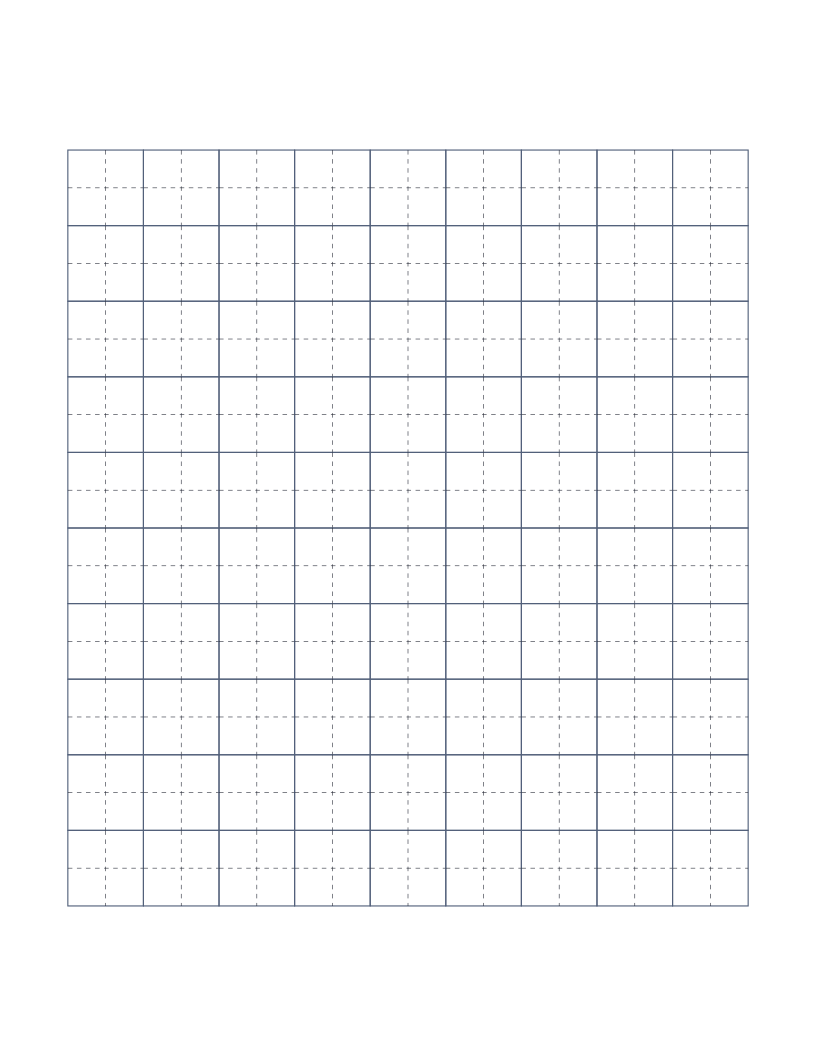
Tianzige Paper (Chinese Character Practice)
Chinese character practice grid: each cell divided by dashed crosshairs for stroke placement.
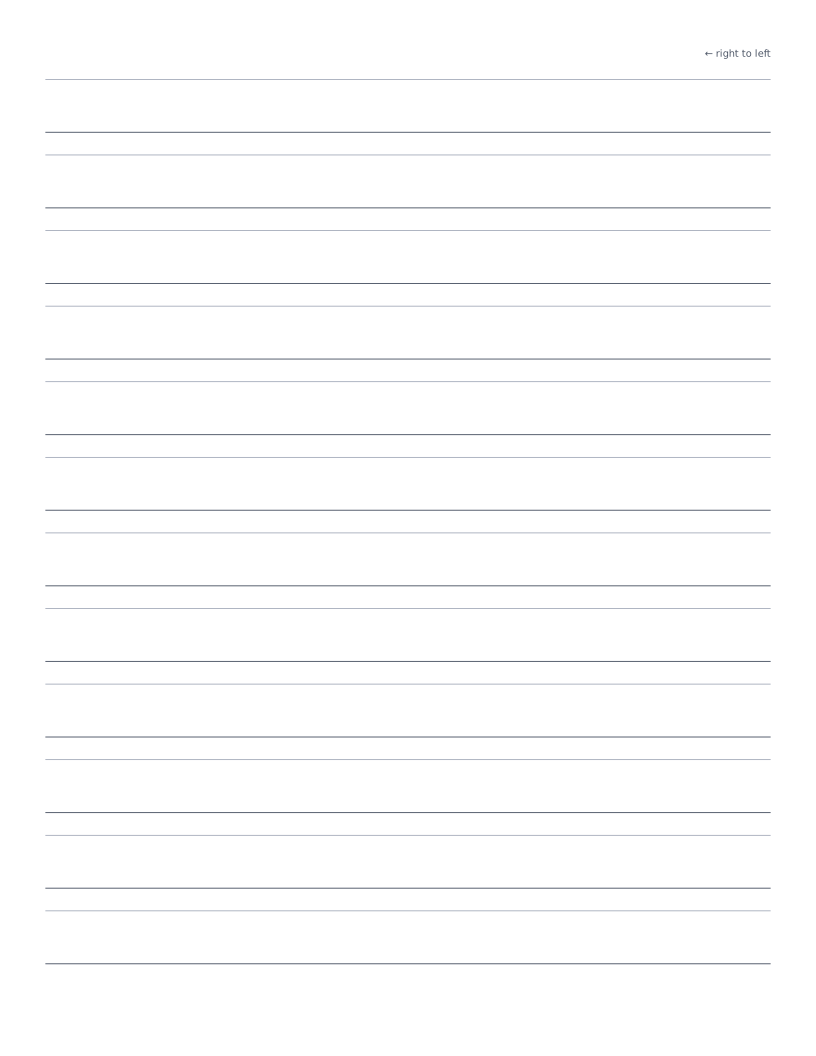
Hebrew Handwriting Practice Paper
Two-line scaffold for Hebrew handwriting practice: head line and baseline with right-to-left direction marker.
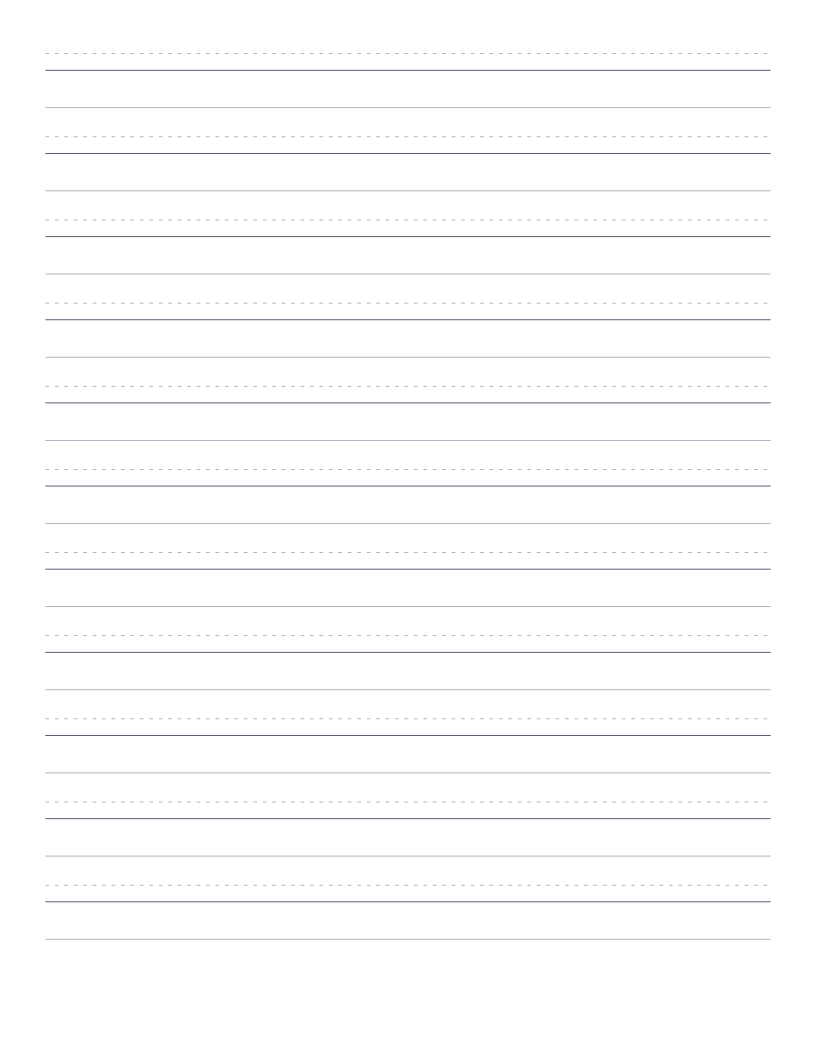
Devanagari Handwriting Practice Paper
Three-line scaffold for Devanagari handwriting practice: ascender, the characteristic heavy shirorekha (top horizontal line), and baseline.