Live preview · Letter (8.5" × 11") · Black lines
Blank Guitar Chord Chart Paper
A page of thirty blank chord boxes for guitar. Each box shows six strings and five frets with a thick line for the nut and a rule above for the chord name, ready for you to add finger dots.
Download saves a vector PDF in the size and color selected below, no print dialog needed.
Other formats:
Direct PDF:Blank Guitar Chord Chart Paper Letter PDFBlank Guitar Chord Chart Paper A4 PDF
Choose a different paper size:
Choose a different line color:
Great for
- Building a personal chord dictionary
- Writing out the chords for a song
- Lesson handouts and practice sheets
- Mapping scale shapes and arpeggios
Blank Guitar Chord Chart Paper at a glance
| What it is | Thirty blank six-string chord boxes per page for writing guitar chord diagrams. |
|---|---|
| Category | Music & Tablature |
| Paper sizes | Letter (8.5" × 11"), A4 (210 × 297 mm), A5 (148 × 210 mm), Half Letter (5.5" × 8.5"), B5 (176 × 250 mm), Legal (8.5" × 14"), 11" × 17", A3 (297 × 420 mm), A2 (420 × 594 mm), Poster (18" × 24"), Movie Poster (27" × 40") |
| Line colors | Faint, Light, Gray, Dark, Black, Blue, Green (default: Black) |
| Format | Vector PDF at exact physical scale (Letter PDF, A4 PDF), PNG or SVG, or print directly from the browser |
| Price & license | Free. No signup or watermark. Printed sheets may be used for personal, classroom and commercial work. |
About blank guitar chord chart paper
A chord diagram is a small picture of the guitar neck seen from the front with the headstock at the top. The vertical lines are the six strings, low E on the left and high E on the right. The horizontal lines are frets, and the thick line at the top is the nut. Dots show where fingers go, an 'o' above a string means play it open and an 'x' means do not play it. Blank chord paper gives you the empty grids so you can record shapes from a teacher, a video or your own experiments, in the same visual form used by every chord book.
What's on the page
Thirty chord boxes in five columns and six rows. Each has six vertical string lines, a thick nut line and five fret lines, giving five fret spaces. A short rule above each box is for the chord name. Lines are solid black by default. There are no printed dots, numbers or labels.
How to use it well
Draw dots in the spaces
A finger dot goes in the space between two fret lines, on the string line, because that is where the fingertip presses. Write the finger number (1 to 4) inside or below the dot.
Mark open and muted strings
Put a small 'o' above the nut for an open string and an 'x' for a string that is not played. Without them a diagram is ambiguous.
Number the fret for chords up the neck
For a chord that starts above the third fret, write the starting fret number beside the first fret space, for example '5fr', and treat the thick top line as an ordinary fret.
Draw barres as a bar
Show a barre as a curved or straight line across all the strings the finger covers, at the fret where it lies.
Common mistakes to avoid
- Putting dots on the fret lines. Dots belong in the spaces between frets.
- Reading the diagram sideways. The left-most line is the thickest, lowest string (low E) for a right-handed player.
- Using it for a four-string instrument without adjusting. For ukulele, use only four of the six lines and cross out the others, or note the tuning clearly.
FAQ, Blank Guitar Chord Chart Paper
How do I read a chord box?+
Vertical lines are strings, low E on the left. Horizontal lines are frets, with the nut at the top. Dots show where to press, 'o' marks an open string and 'x' a string you do not play.
How many chord boxes are on a page?+
Thirty: five across and six down.
How many frets does each box show?+
Five. That is enough for all open chords and any single barre chord shape.
Can I use it for bass or ukulele?+
The boxes have six strings. You can use four of them, but purpose-made four-string diagrams are clearer. For writing out melodies and riffs use ukulele tab or bass tab paper.
Is there paper for tablature too?+
Yes. Guitar tab paper has six-line staves for writing riffs, solos and fingerstyle parts.
Printing tips for best results+
- 1. Click Print above. A new tab opens the template at exact size.
- 2. The print dialog appears automatically. Set Scale to 100%. Never "Fit to page", which silently shrinks every cell.
- 3. Set Margins to None or Minimum so the grid reaches the page edge.
- 4. For a PDF, click Download instead. It generates a vector PDF directly without going through the printer driver.
More detail in the guide to printing graph paper at actual size. Need a spacing that isn’t listed? Use the graph paper generator.
You might also like
Music & Tablature
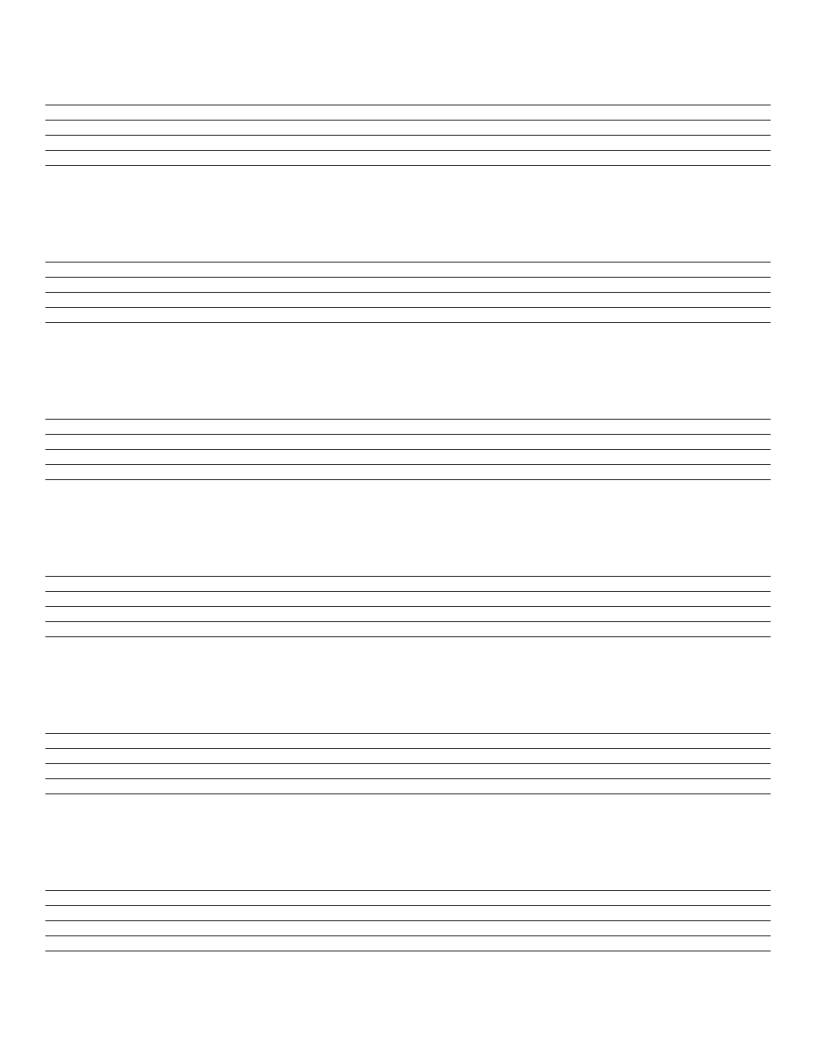
Large Staff Paper
Six extra-large music staves per page for children and beginners.
Music & Tablature
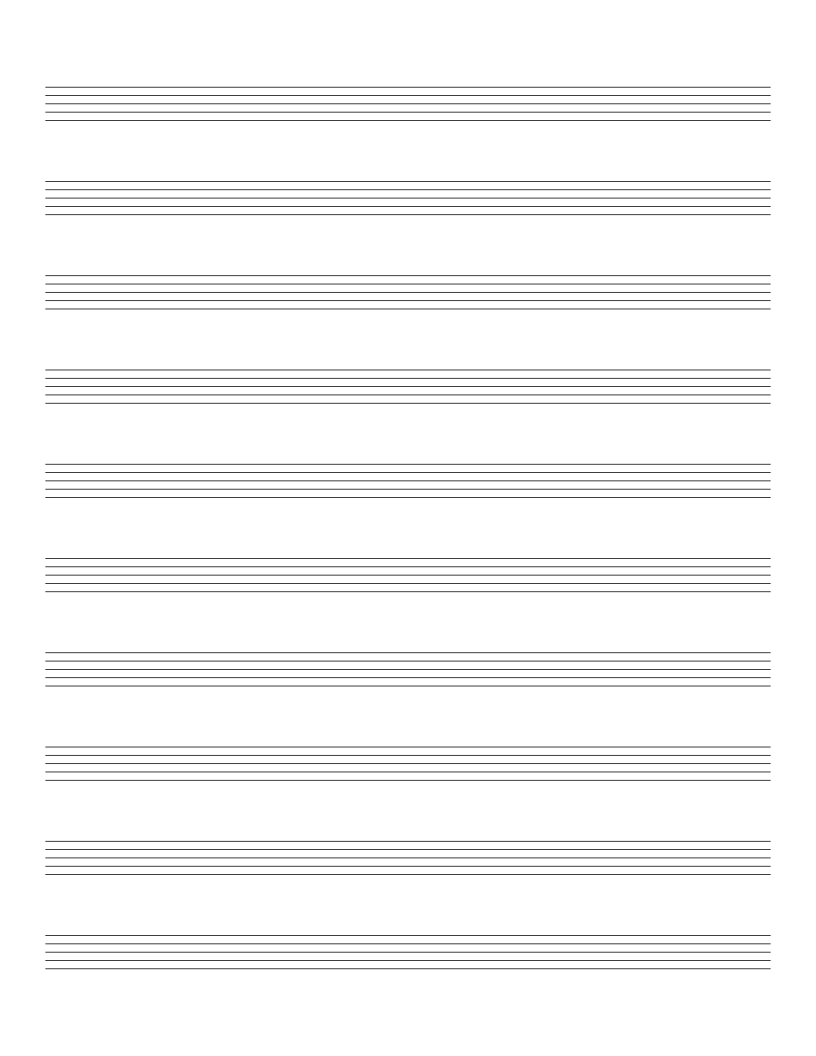
Staff Paper (10 Stave)
Ten music staves per page with extra space between them for lyrics and markings.
Music & Tablature
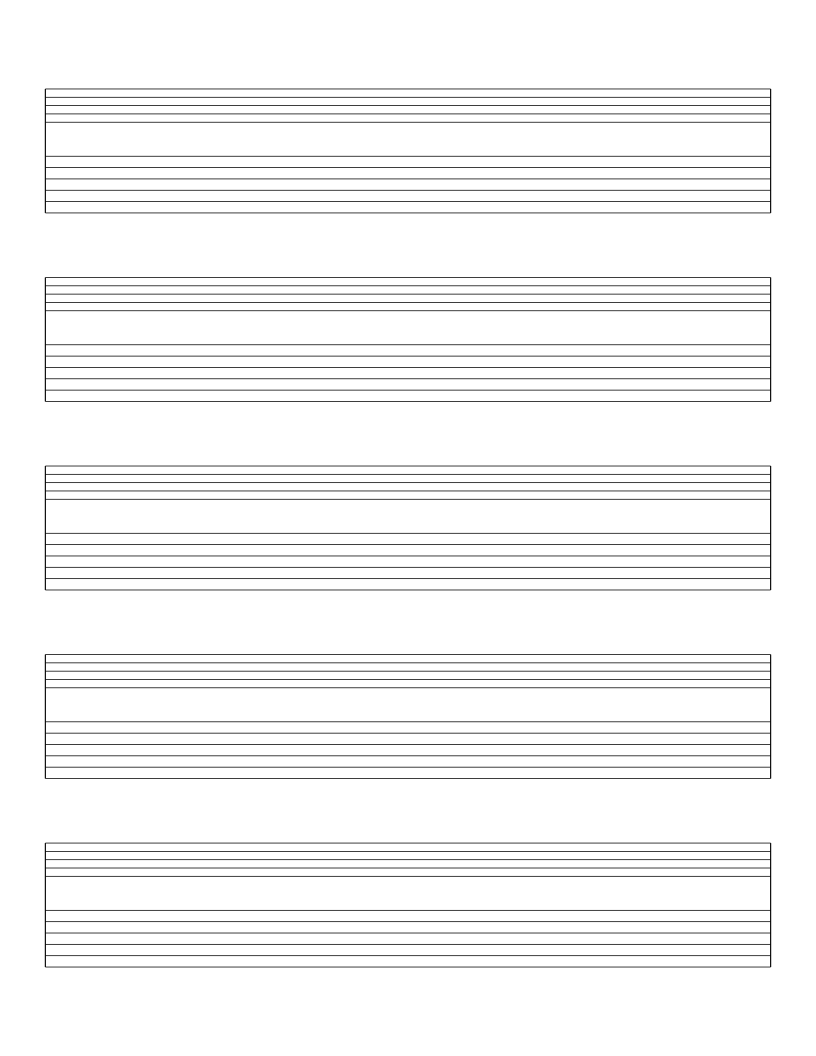
Guitar Tab with Staff Paper
Five systems pairing a standard music staff with a six-line guitar tab staff.
Music & Tablature
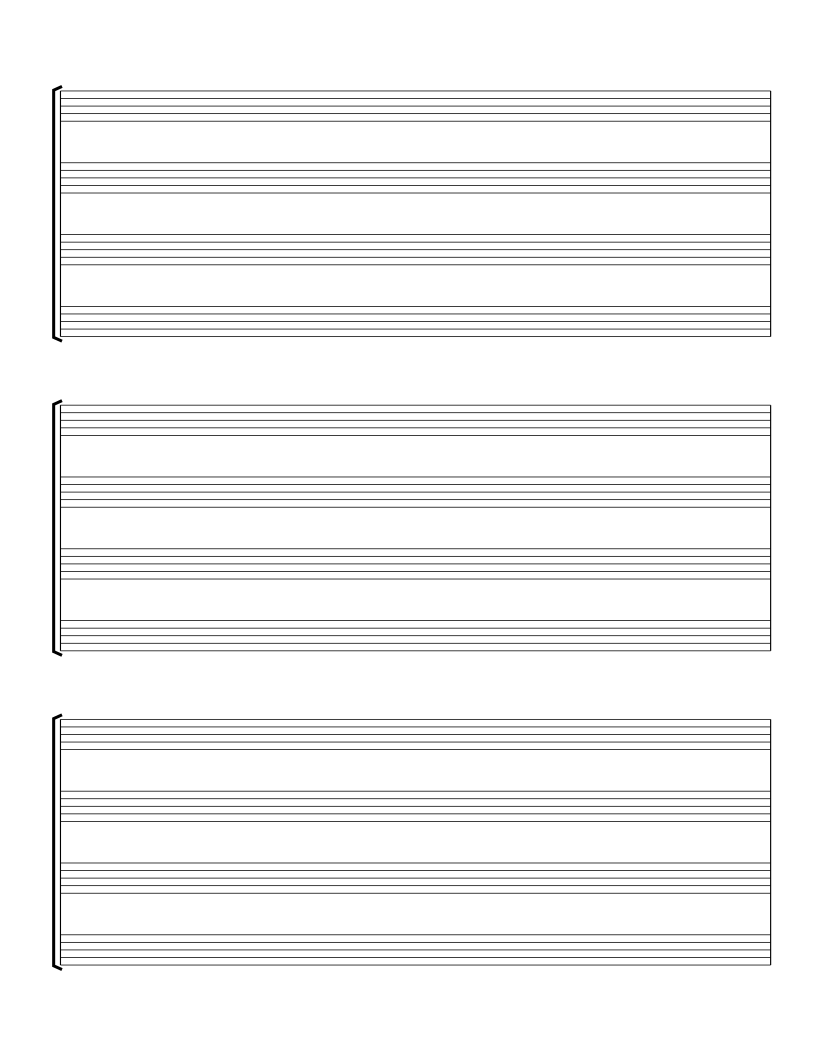
SATB Choral Staff Paper
Three bracketed systems of four staves for soprano, alto, tenor and bass.