Live preview · Letter (8.5" × 11") · Black lines
Bass Tab Paper
Bass tab paper has four horizontal lines, one for each string of a standard 4-string bass. Like guitar tab, you write fret numbers directly on the lines instead of using staff notation. The fastest format for transcribing bass lines by ear.
Download generates a crisp vector PDF directly, no print dialog needed.
Choose a different paper size:
Choose a different line color:
Great for
- Transcribing bass lines from recordings
- Composing original basslines and grooves
- Practice routines and scale work
- Lesson notes and student handouts
Bass Tab Paper at a glance
| What it is | 4-line bass tablature paper: standard layout for 4-string bass guitar. |
|---|---|
| Category | Music & Tablature |
| Paper sizes | Letter (8.5" × 11"), A4 (210 × 297 mm), 11" × 17", Legal (8.5" × 14"), A3 (297 × 420 mm), A2 (420 × 594 mm), Poster (18" × 24"), Movie Poster (27" × 40") |
| Line colors | Faint, Light, Gray, Dark, Black, Blue, Green (default: Black) |
| Format | Vector PDF download at exact physical scale, or print directly from the browser |
| Price & license | Free. No signup or watermark. Printed sheets may be used for personal, classroom and commercial work. |
About bass tab paper
Bass tablature is a four-line version of the same system used for guitar tab. The four lines correspond to the four strings of a standard bass guitar: low E at the bottom, A, D, and G at the top. Fret numbers written on a line tell you to press that fret on that string. The advantage over standard notation is that bass lines are often deeply position-dependent. A phrase that sounds simple to read in standard notation can hide a critical fingering choice (which string to play a note on, when to shift position) that tab makes explicit. The disadvantage is the same as guitar tab: no rhythm information, no dynamics, no articulation. Most working bassists treat tab as a position reference and rely on ear or standard notation for everything else. Tab is also the dominant format on the internet for shared bass arrangements, where it spread in the 1990s for the same reason as guitar tab. It sidesteps the need to learn standard notation.
What's on the page
Twelve four-line tab staves per page with 3.0 mm between adjacent lines (giving a 9 mm tab staff height) and generous spacing between staves for chord names, rhythm marks, and lyrics. The Black line colour is the default for performance-speed reading. The staves run full bleed across the page for room to write multiple measures, repeat marks, and articulation symbols.
How to use it well
Always include rhythm above the tab
Bass lines depend on rhythm even more than guitar parts, a wrong rhythm changes the groove fundamentally. Mark beats and note values above the tab line as stems and flags, or use a dedicated rhythm row above each tab system.
Notate slap and pop articulations
S (slap with thumb), P (pop with finger), X (muted note) are the standard symbols. Write them between fret numbers as needed. Without these marks, slap-bass transcription becomes unreadable to anyone who didn't learn the part first.
Mark ghost notes and dead notes
Bass grooves are full of percussive non-pitched hits. Write them as X on the appropriate string. A bassline tabbed without ghost notes always sounds thinner than the original.
Pencil first, ink finalised versions
Bass transcription is iterative. You'll revise fingerings, swap octaves, and recompose phrases as you go. Pencil drafts let you erase cleanly; reserve ink for the final clean copy you intend to keep.
Common mistakes to avoid
- Confusing 4-line bass tab with 5-line music staves. They look superficially similar but mean entirely different things. Bass tab lines = strings; music staff lines = pitches. Don't write tab numbers on staff paper or notes on tab paper.
- Writing only fret numbers without timing context. A page of bare fret numbers can't be played back without already knowing the song. At minimum, mark bar lines, time signature, and beat divisions so the transcription stands alone.
- Forgetting alternative tunings. If you're transcribing a song with the bass tuned to drop D (D, A, D, G) or BEAD (B, E, A, D), label the tuning at the top of every page. Anyone reading without the tuning header will play wrong pitches.
FAQ, Bass Tab Paper
Which line is which string?+
From bottom to top: low E (4th string), A (3rd), D (2nd), G (1st). The bottom line is the lowest-pitched string. This convention matches guitar tab (where the bottom line is also the lowest string), just with two fewer lines.
What if I'm playing a 5-string or 6-string bass?+
For 5-string, add a line below the bottom and label it 'B' (the fifth string, tuned a fourth below low E). For 6-string, also add a high C line above the top G. Most printed bass tab paper only covers 4-string by default. Extended-range bassists usually print custom paper or annotate manually.
Why fewer lines than guitar tab?+
Because a standard bass has four strings, not six. Five-string and six-string basses exist but the 4-string is by far the most common, and tab paper conventions follow the typical instrument rather than the maximum case.
How is bass tab different from standard notation?+
Tab shows you where to put your fingers, string and fret. Standard notation shows you what pitch to play but leaves the fingering choice to you. For bass, where the same pitch can be played at many positions and the choice of position changes the sound, tab is often more informative than standard notation for transcription work.
Can I use it for upright bass?+
Not really. Upright bass doesn't use frets, so 'fret number' notation has no meaning. Upright bass players use standard notation almost exclusively. For electric bass and bass guitar, tab works as well as it does for guitar.
How do I notate slap bass?+
Use S above the staff for slap (thumb hit on a string), P for pop (finger snap-pluck), X for dead/muted notes, and arrows for slides. Add the dynamic context the player needs ('loud thumb hit', 'tight pop') in margin notes. The basic symbols only convey the technique, not the intensity.
Printing tips for best results+
- 1. Click Print above. A new tab opens the template at exact size.
- 2. The print dialog appears automatically. Set Scale to 100%. Never "Fit to page", which silently shrinks every cell.
- 3. Set Margins to None or Minimum so the grid reaches the page edge.
- 4. For a PDF, click Download instead. It generates a vector PDF directly without going through the printer driver.
You might also like
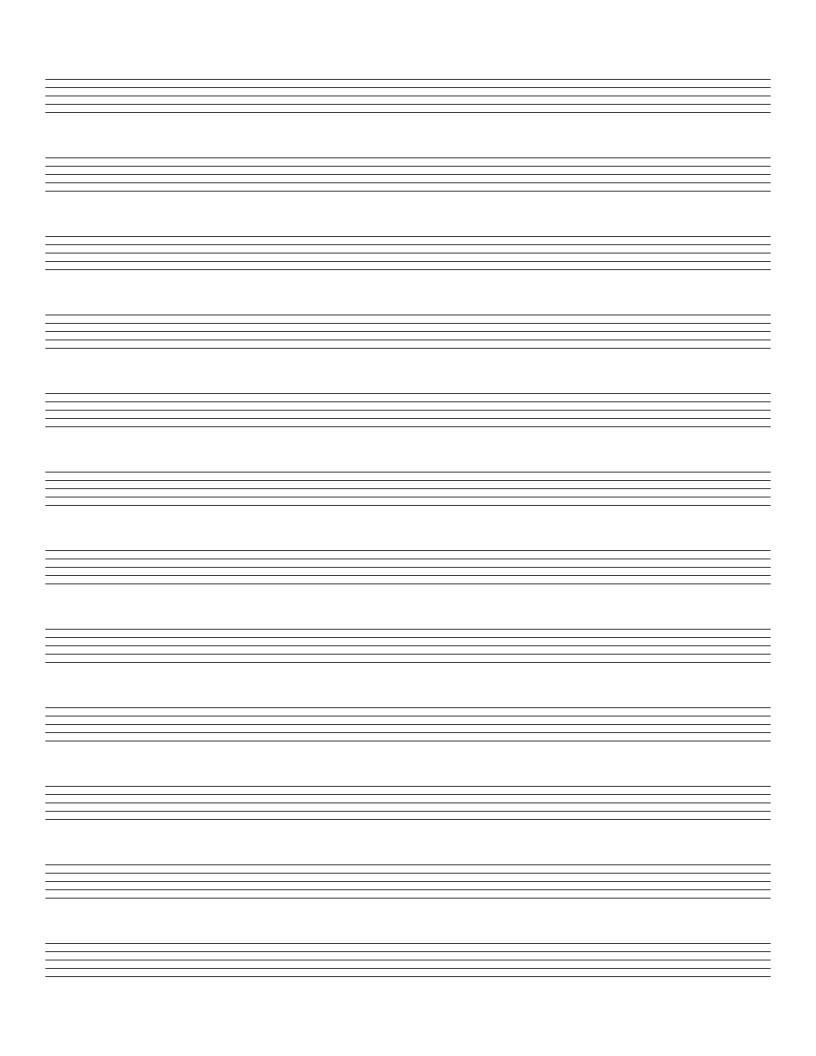
Music Staff Paper
Blank 5-line staff paper: for composition, transcription and music theory.
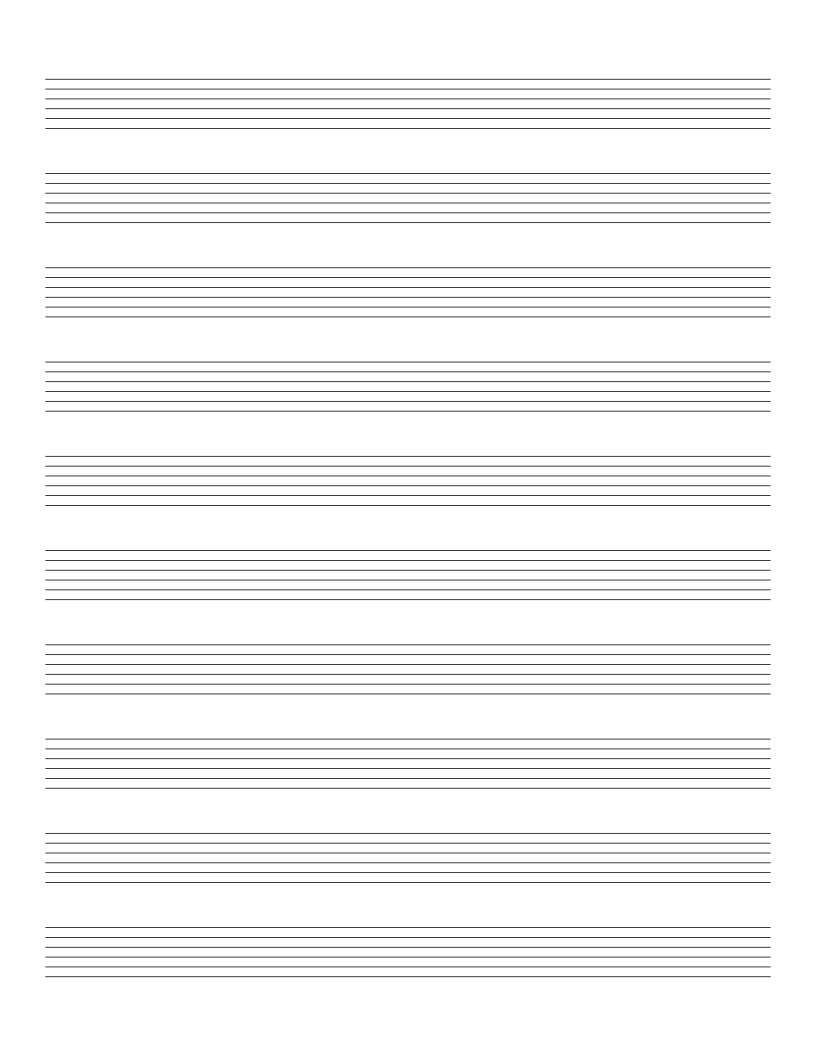
Guitar Tab Paper
6-line guitar tablature paper: for writing out riffs, songs and exercises.
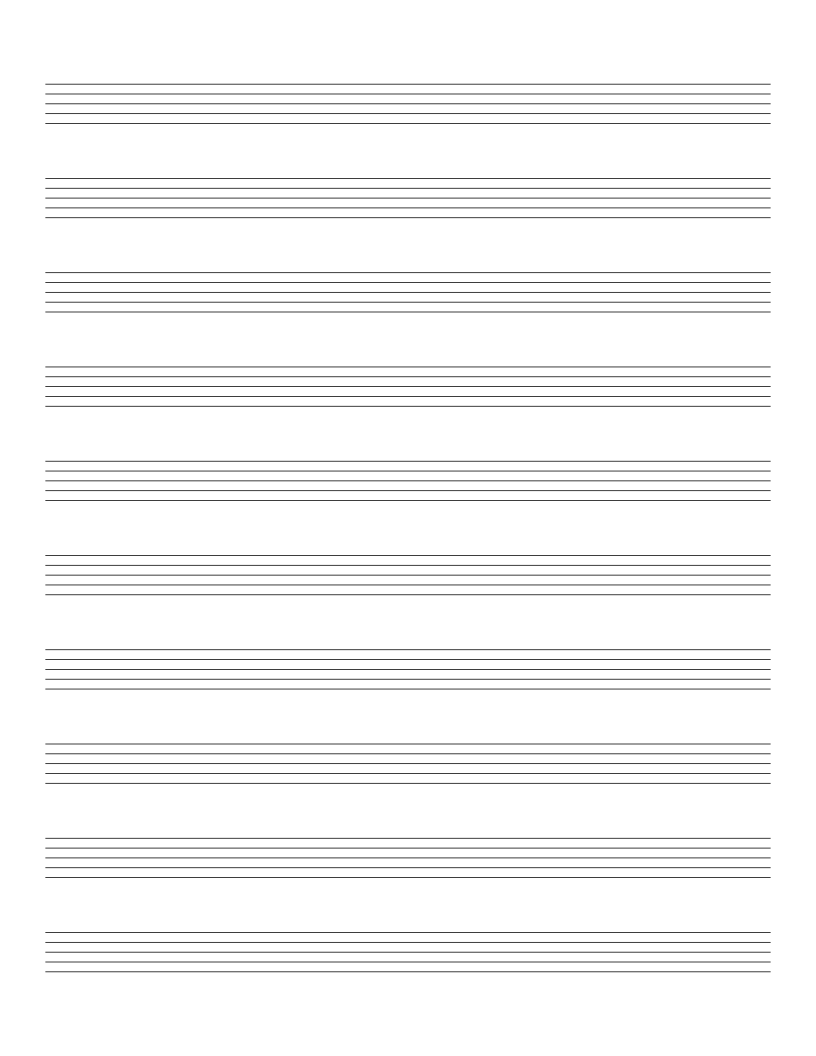
Drum Tab Paper
5-line drum tablature paper: for writing out drum patterns.
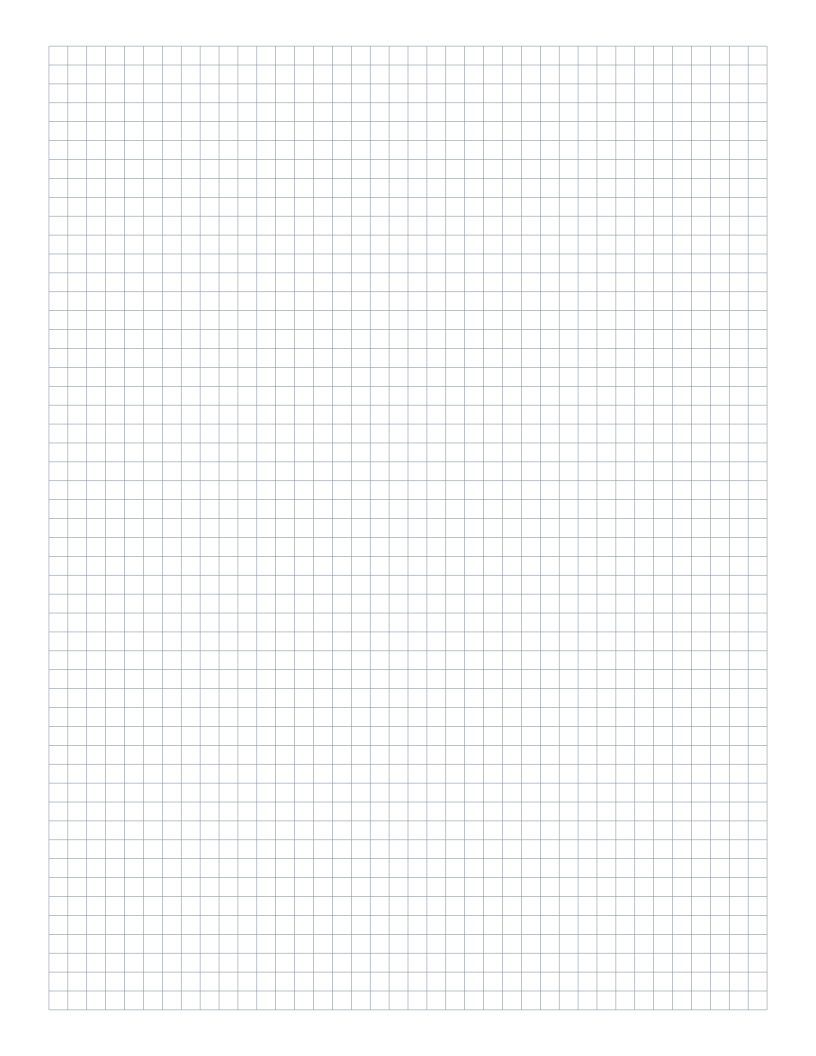
5mm Graph Paper
Standard 5mm square grid: the most popular spacing for math, engineering and general use.