Live preview · Letter (8.5" × 11") · Black lines
Guitar Tab Paper
Guitar tab paper has six horizontal lines, one per string. You write fret numbers on the lines instead of notes on a staff. Making it possible to transcribe and read guitar music without knowing standard notation.
Download generates a crisp vector PDF directly, no print dialog needed.
Choose a different paper size:
Choose a different line color:
Great for
- Transcribing songs by ear
- Composing original riffs and parts
- Writing out lesson exercises and scales
- Practice journals and woodshedding notes
Guitar Tab Paper at a glance
| What it is | 6-line guitar tablature paper: for writing out riffs, songs and exercises. |
|---|---|
| Category | Music & Tablature |
| Paper sizes | Letter (8.5" × 11"), A4 (210 × 297 mm), 11" × 17", Legal (8.5" × 14"), A3 (297 × 420 mm), A2 (420 × 594 mm), Poster (18" × 24"), Movie Poster (27" × 40") |
| Line colors | Faint, Light, Gray, Dark, Black, Blue, Green (default: Black) |
| Format | Vector PDF download at exact physical scale, or print directly from the browser |
| Price & license | Free. No signup or watermark. Printed sheets may be used for personal, classroom and commercial work. |
About guitar tab paper
Guitar tablature is one of the oldest forms of music notation still in use. Renaissance lutenists were writing in tab in the 1500s, when the system was already centuries old. The modern six-line version came back into mass use in the 1970s with the rise of self-taught rock guitarists who needed a way to share parts without going through standard notation. The trade-off is famously stark: tab tells you exactly where to put your fingers, but tells you nothing about rhythm, dynamics, or articulation. Standard notation tells you what to play but leaves the fingering up to you. Most working guitarists end up using both. Tab for the position information, ear or standard notation for the rhythm. The six lines map directly to the six strings of a standard-tuned guitar: low E at the bottom, A, D, G, B, and high E at the top. Numbers on a line mean 'press that fret on that string'.
What's on the page
Ten six-line tab staves per page with 2.6 mm between adjacent lines (giving a 13 mm tab staff height) and roughly 12 mm of space between staves for chord names, lyrics, and rhythm notation. The Black line colour is the default because tab notation is read at performance speed and needs to register clearly. Lines run cleanly from edge to edge so you have room for bar lines, repeat marks, and full measures of fret numbers.
How to use it well
Add rhythm above the tab
Pure tab leaves rhythm undefined. The fix is to write rhythmic notation (stems and flags) above each tab line, anchored to the fret numbers below. Even rough rhythm marks make the difference between unreadable and readable tab.
Use chord names for accompaniment parts
Write the chord name (G, Am7, D/F#) above each measure for rhythm-guitar parts where the fingering is implied by the chord. This is the standard convention for songbook lead sheets and avoids transcribing every single fret position.
Mark techniques with symbols
Standard tab uses h (hammer-on), p (pull-off), b (bend), / (slide up), \ (slide down), v (vibrato), and ~ (let ring). Add these between or after fret numbers as needed; without them the tab loses crucial expression detail.
Leave whitespace between phrases
Tab gets dense fast. Leave a clear blank space between musical phrases rather than packing fret numbers wall-to-wall. The eye needs visual breaks to follow the flow at playing speed.
Common mistakes to avoid
- Writing tab numbers without spacing them out. '3 5 7' is readable; '357' is not. Use deliberate spacing between fret numbers so it's clear where one note ends and the next begins, especially in fast passages with double-digit fret numbers.
- Ignoring rhythm. Tab without rhythm is half-notation. The reader has to guess at timing, which means anything they play sounds different from your intent. At minimum, mark beats with vertical tick marks above the staff.
- Treating tab as a substitute for standard notation. Tab is great for fingering, terrible for ensemble work, sight-reading, and music that crosses instruments. For anything beyond solo guitar parts, learn standard notation in parallel.
FAQ, Guitar Tab Paper
Which line is which string?+
From bottom to top: low E (6th string), A (5th), D (4th), G (3rd), B (2nd), high E (1st). The bottom line is the lowest-pitched string, which is the opposite of how strings are physically ordered when you look at the guitar from the front. It's drawn this way because it's how the guitar looks from the player's perspective.
How do I write rhythm in tab?+
Add stems and flags above the tab numbers, the same way you'd notate rhythm on a standard staff. Quarter note stems point down, eighth notes get flags or beams. Some tab notations use a separate single-line rhythm staff above each tab system instead.
What if I'm in a non-standard tuning?+
Write the tuning at the top of the page (e.g., 'Drop D' or 'DADGAD'). The lines still represent the six strings in the same order, but the pitches they represent change. Most software-generated tab includes a tuning header for exactly this reason.
Can I use it for 7-string or 8-string guitar?+
Not directly, this paper has six lines. For 7-string, add a line below the bottom by hand and label it 'B' (the seventh string, tuned a fifth below the low E). For 8-string and bass-VI guitars, you may need to print custom paper or work on staff paper with handwritten tab lines.
Why are there 10 staves and not 12?+
Tab staves need more vertical space between them than standard music staves because each row contains both the tab itself and (typically) rhythm notation, chord names, or lyrics above it. Ten staves gives you room to add that information without crowding.
What's the difference between tab and standard notation?+
Tab tells you where to put your fingers (which string, which fret) but not the pitch or rhythm directly. Standard notation tells you the pitch and rhythm but leaves fingering to the player. Tab is faster to read for guitarists; standard notation is more complete and portable across instruments.
Printing tips for best results+
- 1. Click Print above. A new tab opens the template at exact size.
- 2. The print dialog appears automatically. Set Scale to 100%. Never "Fit to page", which silently shrinks every cell.
- 3. Set Margins to None or Minimum so the grid reaches the page edge.
- 4. For a PDF, click Download instead. It generates a vector PDF directly without going through the printer driver.
You might also like
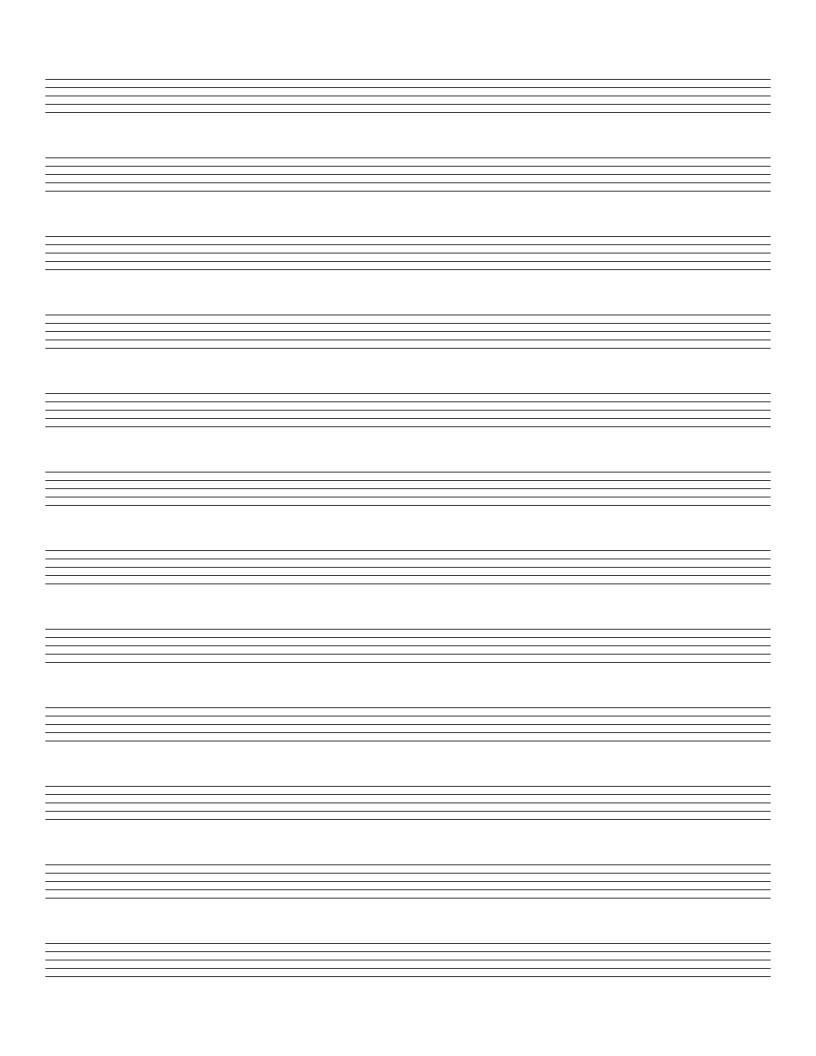
Music Staff Paper
Blank 5-line staff paper: for composition, transcription and music theory.
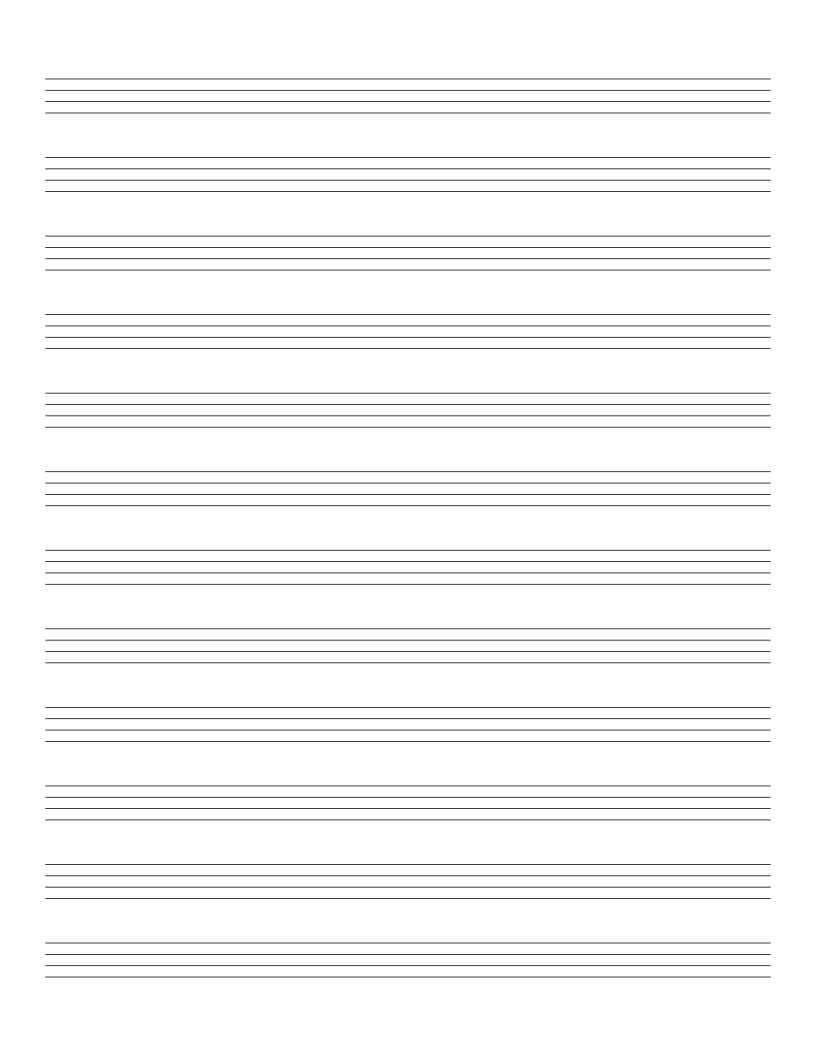
Bass Tab Paper
4-line bass tablature paper: standard layout for 4-string bass guitar.
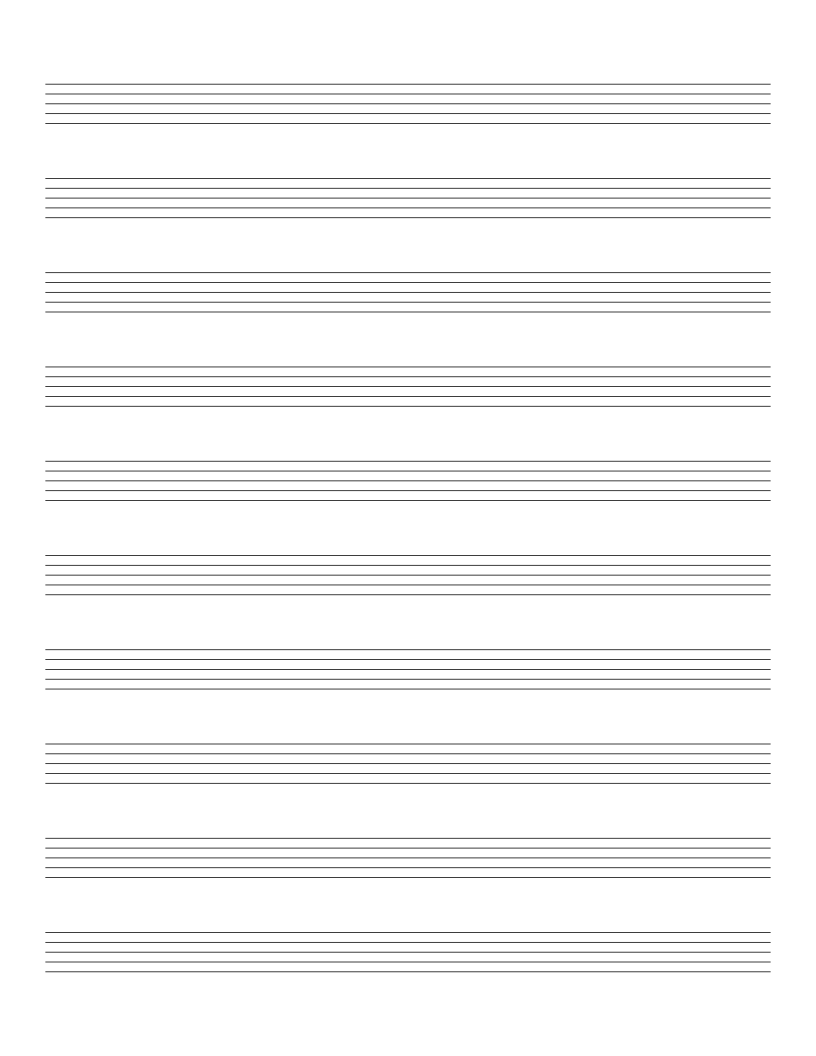
Drum Tab Paper
5-line drum tablature paper: for writing out drum patterns.
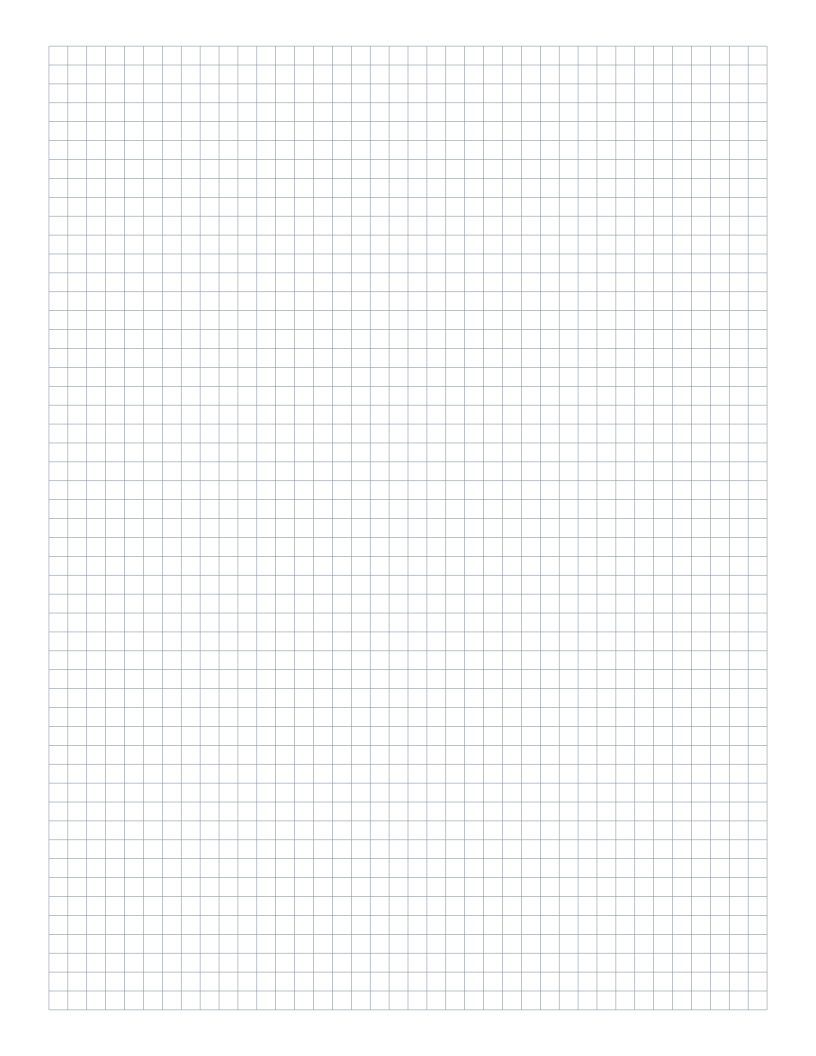
5mm Graph Paper
Standard 5mm square grid: the most popular spacing for math, engineering and general use.