Live preview · Letter (8.5" × 11") · Dark lines
20×20 Grid Paper
A 20×20 grid gives you 400 squares in one block, with a heavier line every five squares to make counting quick. It is large enough for multiplication up to 20 × 20, small coordinate pictures and puzzle grids.
Download saves a vector PDF in the size and color selected below, no print dialog needed.
Other formats:
Direct PDF:20×20 Grid Paper Letter PDF20×20 Grid Paper A4 PDF
Choose a different paper size:
Choose a different line color:
Great for
- Multiplication arrays and area models to 20 × 20
- Coordinate and mystery-picture colouring
- Small pixel art and mosaic designs
- Nonograms, word searches and crosswords
20×20 Grid Paper at a glance
| What it is | A single 20 by 20 grid of 400 squares with heavier lines every 5, for arrays, graphs and puzzles. |
|---|---|
| Category | Math & Learning |
| Paper sizes | Letter (8.5" × 11"), A4 (210 × 297 mm), A5 (148 × 210 mm), Half Letter (5.5" × 8.5"), B5 (176 × 250 mm), Legal (8.5" × 14"), 11" × 17", A3 (297 × 420 mm), A2 (420 × 594 mm), Poster (18" × 24"), Movie Poster (27" × 40") |
| Line colors | Faint, Light, Gray, Dark, Black, Blue, Green (default: Dark) |
| Format | Vector PDF at exact physical scale (Letter PDF, A4 PDF), PNG or SVG, or print directly from the browser |
| Price & license | Free. No signup or watermark. Printed sheets may be used for personal, classroom and commercial work. |
About 20×20 grid paper
Where the 10×10 grid models hundredths, the 20×20 grid is a general-purpose counted block. Its 400 squares hold area models for two-digit multiplication, such as 14 × 17 split into tens and ones, and it is a common size for teacher-made mystery pictures, where students colour squares by coordinate to reveal an image. The fixed count matters for these activities: everyone in the class has the same number of rows and columns regardless of which paper they printed on, which is not true of ordinary graph paper that simply fills the page.
What's on the page
One square block of 20 rows and 20 columns, centred on the page, with a heavy outer border and a bolder line every fifth square that divides the block into sixteen 5 × 5 sections. Squares measure 9.5 mm on US Letter and 9 mm on A4. No numbers are printed, so you can label the edges 1 to 20, A to T, or as coordinate axes.
How to use it well
Use the bold lines to count
Each bold section is 5 squares wide. To find column 13, jump two sections to 10 and count three more.
Split multiplication into parts
For 14 × 17, outline a 14 by 17 rectangle and cut it at 10 in both directions. The four pieces are 100, 70, 40 and 28, which add to 238.
Label edges for coordinate art
Write letters across the top and numbers down the side, then give instructions such as 'colour C7 red'. It is a gentle introduction to coordinates.
Place axes on the middle bold lines
Thicken the two centre lines by hand and you have a four-quadrant plane running from -10 to 10.
Common mistakes to avoid
- Assuming the squares are exactly 1 cm. They are 9.5 mm on Letter and 9 mm on A4. Use 1 cm graph paper when the size itself matters.
- Using it for long data plots. For graphs that need more than 20 units, a full-page 5 mm grid gives far more range.
- Printing with 'Fit to page' and expecting the stated square size. Scaling shrinks every square by about 4 percent.
FAQ, 20×20 Grid Paper
How many squares are in a 20×20 grid?+
400. There are 20 rows of 20 squares.
How big are the squares?+
9.5 mm on US Letter and 9 mm on A4. They grow on larger paper, for example 12.5 mm on 11×17.
Why are some lines bolder?+
Every fifth line is heavier so you can count in fives instead of one square at a time. The sections are 5 × 5 squares.
Can I use it as a coordinate plane?+
Yes. Use the left and bottom borders as axes for a first-quadrant grid from 0 to 20, or the two centre lines for a four-quadrant grid from -10 to 10. For pre-numbered axes use first quadrant graph paper or the coordinate plane.
Is there a smaller version?+
Yes, the 10×10 grid has 100 larger squares.
Printing tips for best results+
- 1. Click Print above. A new tab opens the template at exact size.
- 2. The print dialog appears automatically. Set Scale to 100%. Never "Fit to page", which silently shrinks every cell.
- 3. Set Margins to None or Minimum so the grid reaches the page edge.
- 4. For a PDF, click Download instead. It generates a vector PDF directly without going through the printer driver.
More detail in the guide to printing graph paper at actual size. Need a spacing that isn’t listed? Use the graph paper generator.
You might also like
Math & Learning
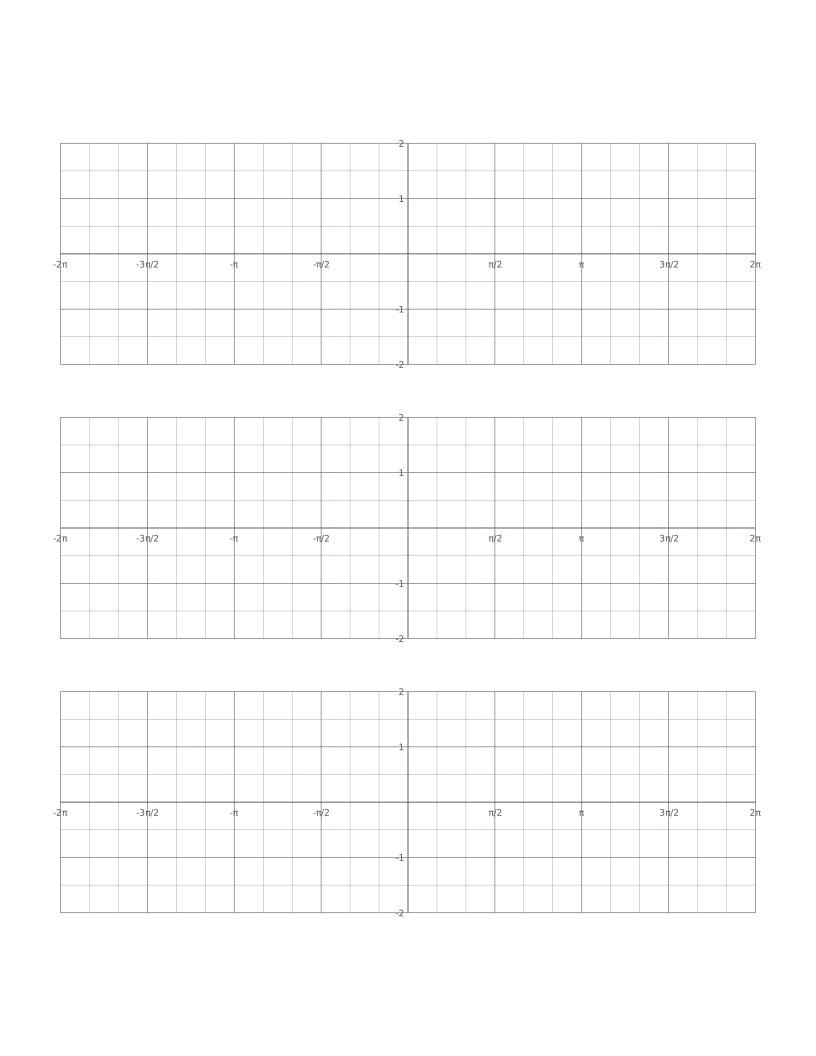
Trigonometry Graph Paper
Axes marked in radians from -2π to 2π for graphing sine, cosine and tangent.
Math & Learning
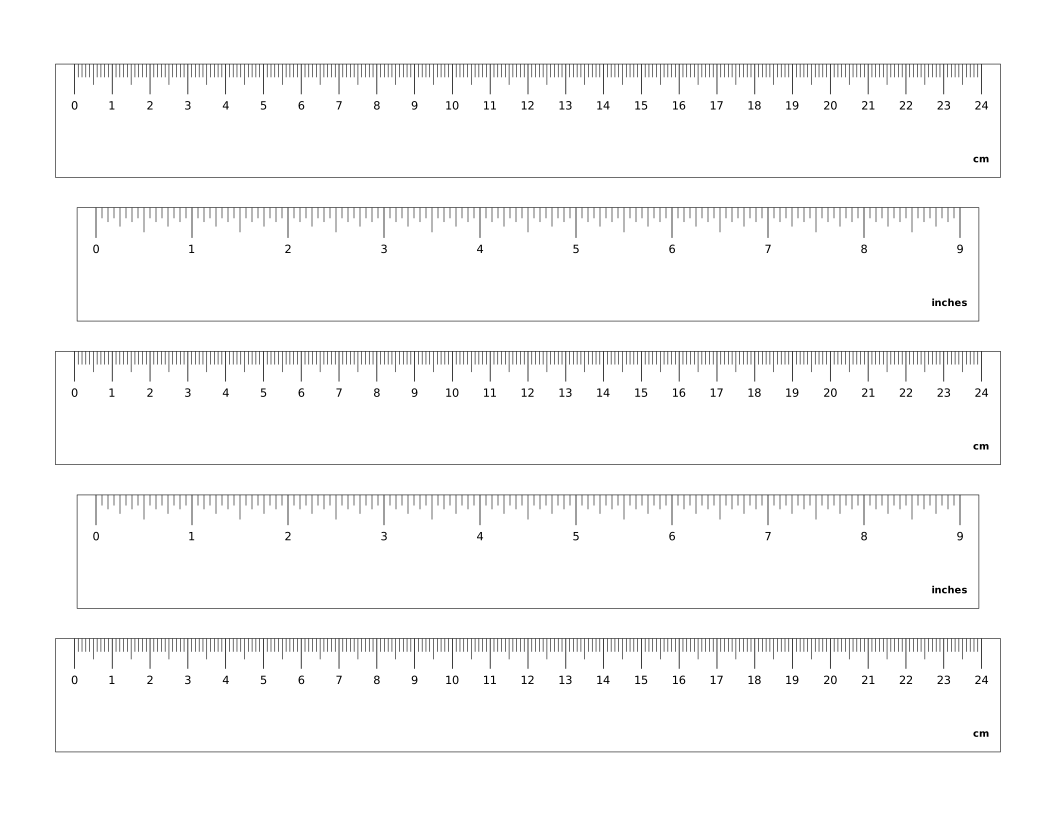
Printable Ruler
Cut-out paper rulers in centimeters and inches, accurate when printed at 100 percent.
Math & Learning
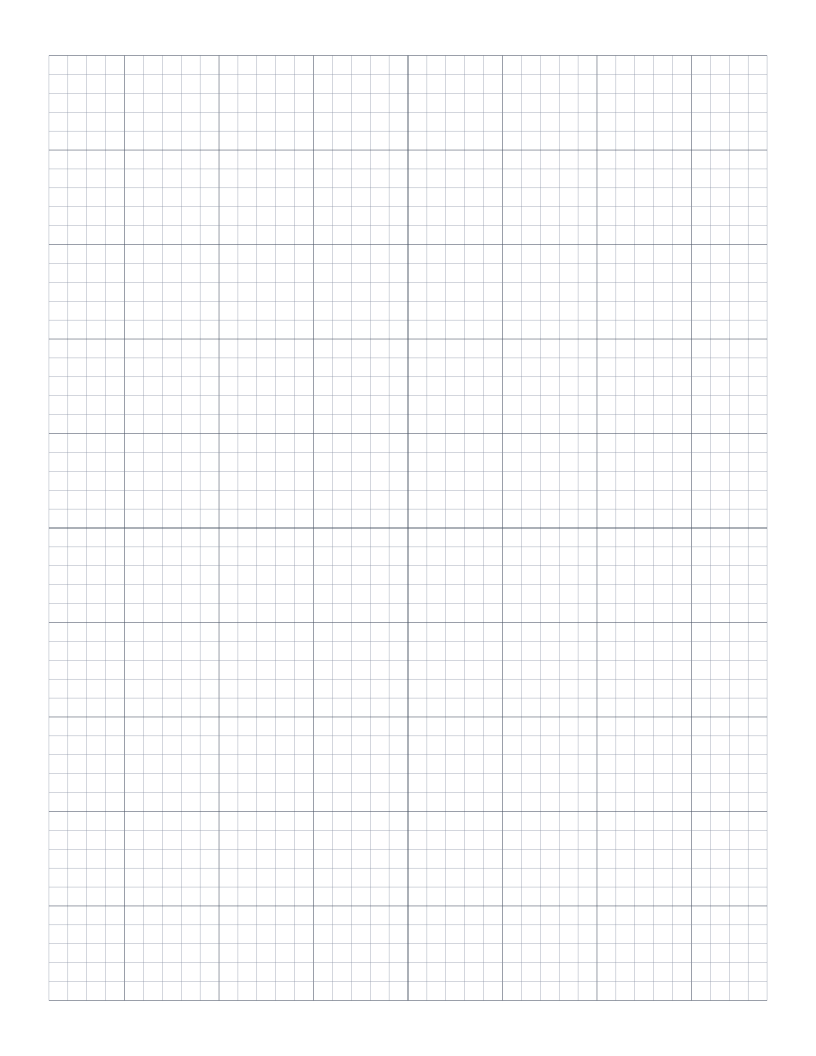
Blank Coordinate Plane
Four-quadrant coordinate plane with axes but no numbers, so you set the scale.
Math & Learning
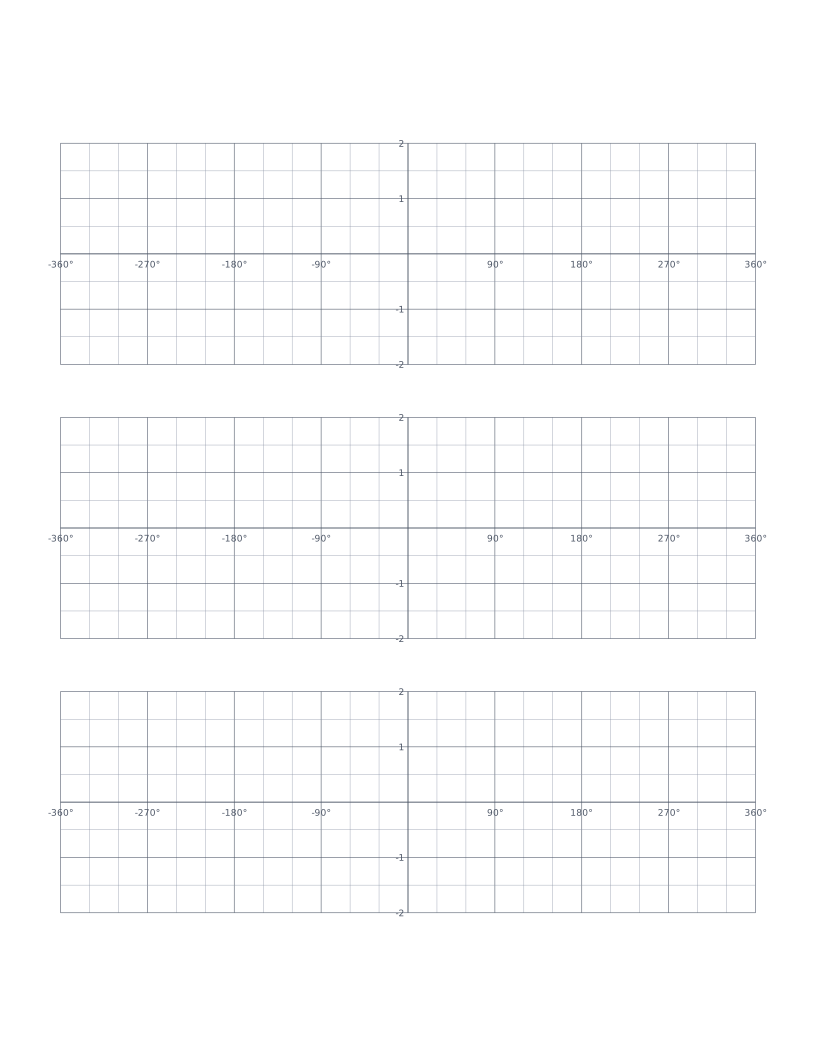
Trigonometry Graph Paper (Degrees)
Axes marked in degrees from -360° to 360° for graphing sine, cosine and tangent.