Live preview · Letter (8.5" × 11") · Gray lines
Loom Beading Paper
Loom beading paper is a regular square grid (rows and columns align orthogonally with no offset), matching the warp-and-weft structure of a bead loom. Each cell represents one bead held between two warp threads; the resulting fabric is a rectangular weave that suits flat strap-style projects.
Download generates a crisp vector PDF directly, no print dialog needed.
Choose a different paper size:
Choose a different line color:
Great for
- Bracelet and watchband loom beadwork
- Headband and choker designs
- Rectangular pictorial pieces and signs
- Native American loom beadwork patterns
Loom Beading Paper at a glance
| What it is | Regular square grid for loomed beadwork: rows and columns align orthogonally with no offset, matching the warp-and-weft of a bead loom. |
|---|---|
| Category | Specialty |
| Paper sizes | Letter (8.5" × 11"), A4 (210 × 297 mm), 11" × 17", Legal (8.5" × 14"), A3 (297 × 420 mm), A2 (420 × 594 mm), Poster (18" × 24"), Movie Poster (27" × 40") |
| Line colors | Faint, Light, Gray, Dark, Black, Blue, Green (default: Gray) |
| Format | Vector PDF download at exact physical scale, or print directly from the browser |
| Price & license | Free. No signup or watermark. Printed sheets may be used for personal, classroom and commercial work. |
About loom beading paper
Loom beading uses an external frame (the loom) that holds parallel 'warp' threads under tension. The beader weaves a 'weft' thread under and over the warps, threading one bead onto the weft between each pair of warps. The result is a rectangular fabric of beads where each bead sits in a grid cell defined by its two adjacent warps and the weft rows. Because the warps and wefts are perpendicular, the bead grid is orthogonal — no offset between rows or columns. This is what distinguishes loomed beadwork from off-loom techniques like peyote and brick stitch, where the offset geometry produces a denser but less rectangular fabric. Loom beadwork has been practiced in dozens of cultures — Plains Indian belts, African bead aprons, Victorian fancywork — and remains popular today for bracelet bands and watchstraps where straight rectangular strips are needed. The chart paper is the simplest of the beading papers: just a square grid, because loomed beads sit in straight rows and columns.
What's on the page
A regular square grid of 4 mm × 4 mm cells covering the printable area, with heavier accent lines every ten rows and columns. No offset — every cell aligns perfectly above and beside its neighbours. The grid is centred on the page. Letter portrait holds roughly 47 columns × 62 rows.
How to use it well
Match the chart width to your warp count
Decide the bracelet or band width first (typically 8–20 beads wide for bracelets). Mark off that many cells across the chart; ignore the rest of the page width. The remaining unused columns are just margin.
Symmetric designs work especially well
Loomed bracelets are typically symmetric about the long centre line. Sketch the left half of the design, then mirror to the right. The orthogonal grid makes the mirroring exact.
Use the heavier accent lines for repeats
Many loom designs are repeating patterns 10–20 beads long. The accent lines every 10 cells let you mark out the repeat unit and confirm it tiles evenly along the band's length.
Plan the ends carefully
Loom beadwork often has special end-treatments (fringes, closures, button loops). The chart should account for the beaded portion only; ends are managed by hand after the loom is unwarped.
Common mistakes to avoid
- Confusing loom with off-loom stitches. Loom produces a strict rectangular grid; peyote and brick produce offset fabrics. Patterns designed for loom won't bead correctly in off-loom stitches, and vice versa.
- Forgetting to count selvedge beads. The edge beads at the start and end of each row are visible on both faces of the finished band; design them deliberately rather than treating them as 'just edges'.
- Using square graph paper without warp count. The cells are uniform, but the chart needs to be sized to the warp count of the actual loom. Designs that don't match the warp count will be off by one or more beads when woven.
FAQ, Loom Beading Paper
Why is loom paper a regular grid when [peyote](/graph-paper/peyote-beading-paper) and [brick](/graph-paper/brick-beading-paper) are offset?+
Because loom-woven beads sit in straight rows and columns held by perpendicular warp and weft threads. There's no offset structure to compensate for. Peyote and brick are off-loom stitches where each bead sits between two neighbours from the previous row — that's where the offset comes from.
What's the difference between this and a [cross-stitch chart](/graph-paper/cross-stitch-paper)?+
Both are regular grids. The functional difference is cell size and accent convention: cross-stitch typically uses 2.5 mm cells with bold 10-cell blocks (because cross-stitch fabric counts work that way); loom beading uses 4 mm cells matching seed bead size. You could chart on either, but the bead-sized cells match the visual scale of the finished work.
How wide can a loomed bracelet be?+
Up to whatever your loom's warp count allows. Typical commercial bead looms hold 20–30 warps; some hold more. The chart can be much wider than any single loom, in which case you'd weave multiple sections and join them, or weave on a wider loom.
Can I use this for tapestry-style pictorial pieces?+
Yes. Larger pictorial loomed pieces (wall hangings, framed works) are charted on this same orthogonal grid. The grid size doesn't change; only the dimensions of the design and the warp count change.
What seed bead size does this paper match?+
The 4 mm cell size matches roughly an 11/0 round seed bead or a 10/0 cylindrical bead. Larger 8/0 beads need wider cells (~5 mm); smaller 15/0 beads need narrower cells (~3 mm). For unusual bead sizes, you'd want a custom-sized paper; we may add variants if there's demand.
Printing tips for best results+
- 1. Click Print above. A new tab opens the template at exact size.
- 2. The print dialog appears automatically. Set Scale to 100%. Never "Fit to page", which silently shrinks every cell.
- 3. Set Margins to None or Minimum so the grid reaches the page edge.
- 4. For a PDF, click Download instead. It generates a vector PDF directly without going through the printer driver.
You might also like
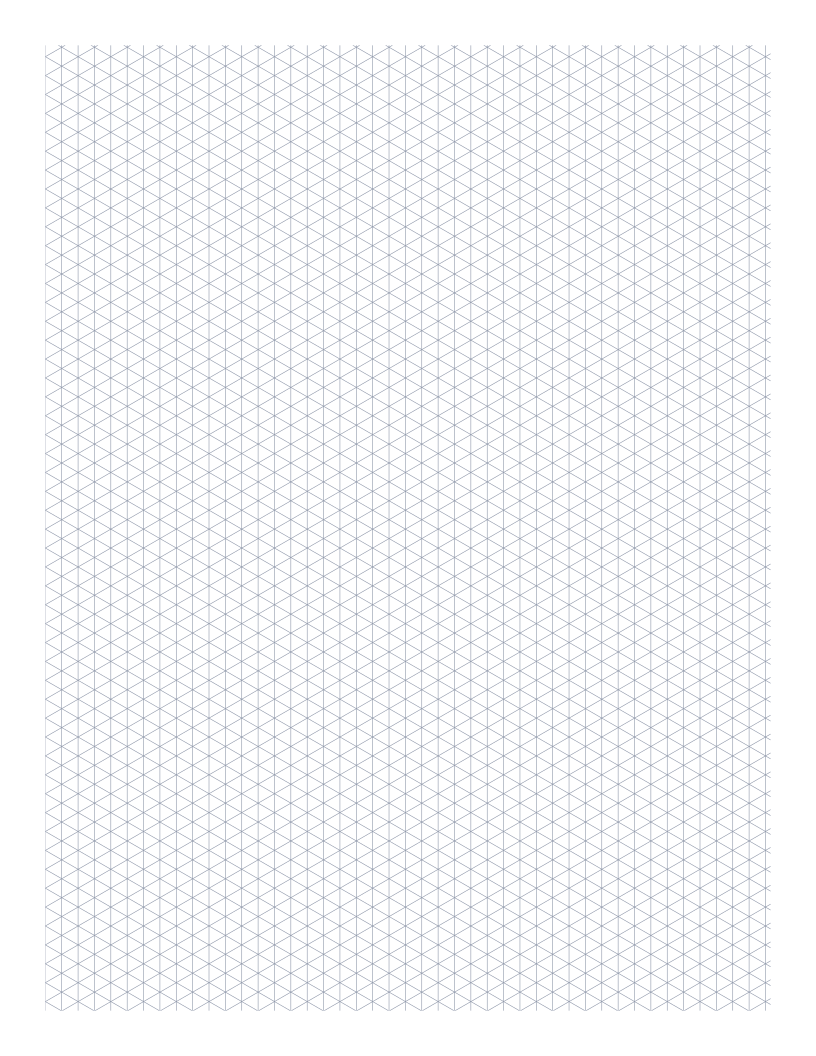
Isometric Graph Paper
Triangular 30°/60° grid for 3D drawings, technical sketches and Minecraft-style design.
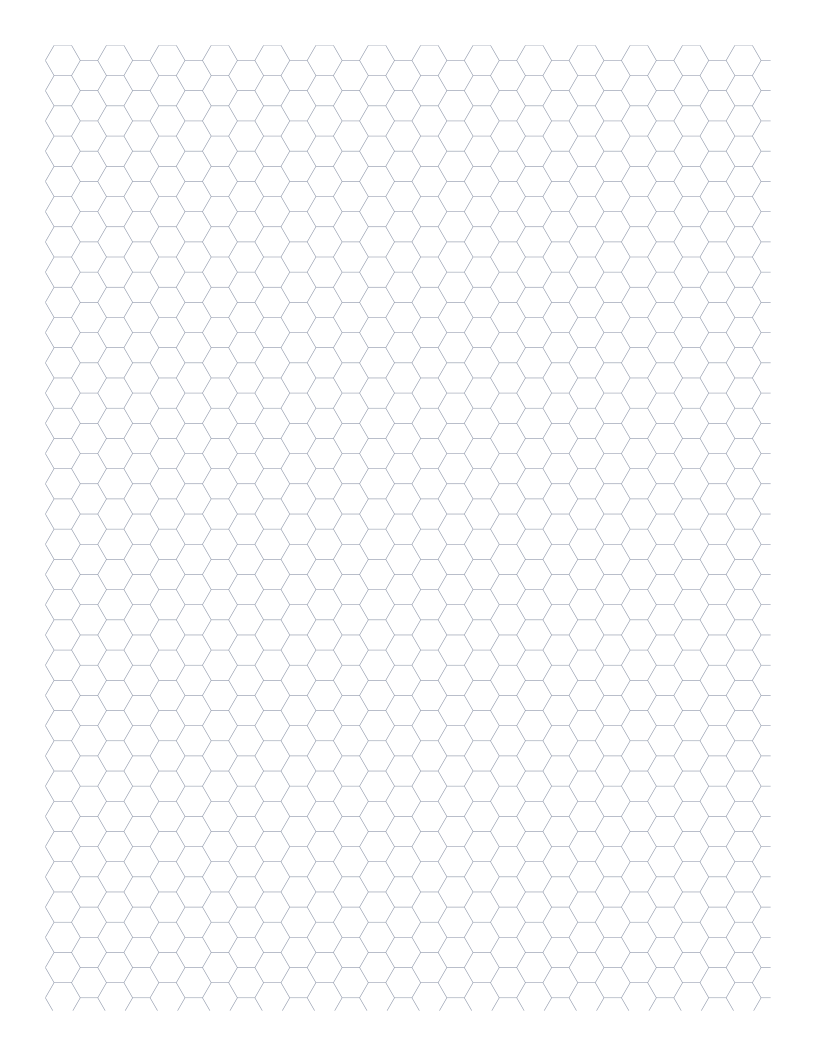
Hexagonal Graph Paper
Hexagonal tessellation: perfect for tabletop wargaming, organic chemistry and tile-based games.
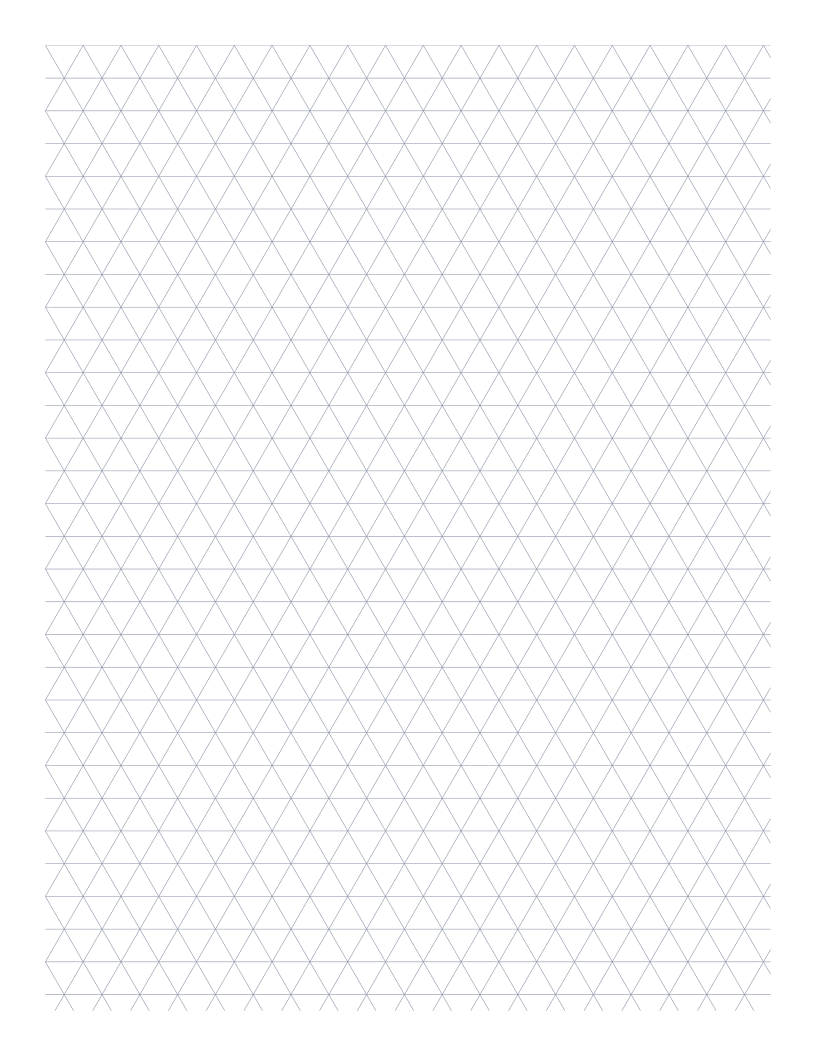
Triangular Graph Paper
Equilateral triangle grid: useful for ternary diagrams and tessellation art.
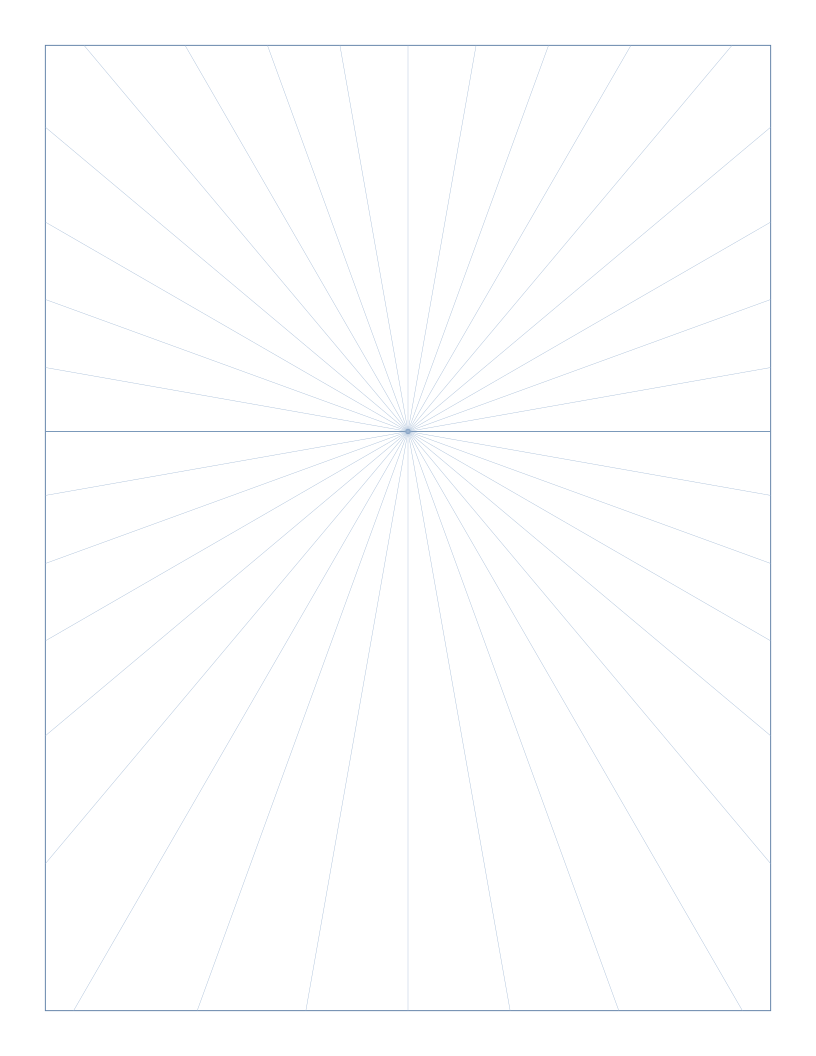
1-Point Perspective Grid
Single vanishing point on the horizon with radiating guides: the classic setup for hallways, rooms and street scenes.