Live preview · Letter (8.5" × 11") · Gray lines
Brick Stitch Beading Paper
Brick stitch beading paper has wide rectangular cells with alternate rows offset by half a bead, like courses in a brick wall. Each cell represents one bead lying on its side, the orientation produced by brick stitch. Designs charted on this paper match the woven appearance of brick-stitched beadwork.
Download generates a crisp vector PDF directly, no print dialog needed.
Choose a different paper size:
Choose a different line color:
Great for
- Charting brick-stitch earrings, pendants and pictorial pieces
- Native American-style beadwork patterns (florals, geometrics)
- Adapting cross-stitch designs for brick-stitch
- Triangular or asymmetric beaded shapes
Brick Stitch Beading Paper at a glance
| What it is | Offset rectangular cells matching the brick-stitch bead geometry: alternate rows shift by half a bead like a brick wall, the standard chart for brick-stitch beadwork. |
|---|---|
| Category | Specialty |
| Paper sizes | Letter (8.5" × 11"), A4 (210 × 297 mm), 11" × 17", Legal (8.5" × 14"), A3 (297 × 420 mm), A2 (420 × 594 mm), Poster (18" × 24"), Movie Poster (27" × 40") |
| Line colors | Faint, Light, Gray, Dark, Black, Blue, Green (default: Gray) |
| Format | Vector PDF download at exact physical scale, or print directly from the browser |
| Price & license | Free. No signup or watermark. Printed sheets may be used for personal, classroom and commercial work. |
About brick stitch beading paper
Brick stitch shares its name with the masonry pattern it resembles: each bead sits like a brick, lying horizontally with the next row's beads offset by half a bead so they straddle the gap between two beads below. Structurally it's nearly identical to peyote stitch — both are 'off-loom' stitches where each bead is supported by half of two neighbours from the previous row — but the beads are oriented sideways (long axis horizontal) rather than vertically. This produces a subtly different fabric: brick stitch is slightly stiffer and works particularly well for stiff shapes like geometric earrings and triangular pendants. The charting convention differs from peyote: where peyote columns shift up/down, brick rows shift left/right. The same logical pattern looks like a rotated version on the two papers, and patterns are not directly interchangeable between the two stitches. Brick stitch has particularly strong associations with Plains Indian beadwork (where it has been practiced for at least 200 years), and the bold geometric designs of that tradition translate especially well to the brick-stitch chart format.
What's on the page
Rectangular cells (5 mm wide × 4 mm tall) arranged in staggered rows. Even rows align with the left edge of the grid; odd rows shift right by half a cell width (2.5 mm). Heavier accent lines mark every tenth row for counting reference. The grid is centred on the page. Letter portrait holds roughly 38 columns × 60 rows of brick-stitch pattern.
How to use it well
Count by rows
Brick stitch is built one row at a time, each new bead straddling two beads of the row below. Rows are straight on the chart, so count rows first and beads within the row second; columns zigzag because of the half-bead offset.
Triangular and asymmetric shapes shine in brick
Brick stitch handles tapered and pointed shapes (earring tips, pendant points) better than peyote because adding or dropping beads at row ends is straightforward. Design with these shape options in mind.
Watch the starting row direction
The first row determines whether the next row steps in to the left or to the right. Mark the starting bead and the first-row direction clearly on any pattern you draw; mirror images are common errors.
Pair with [peyote paper](/graph-paper/peyote-beading-paper) for related projects
Many beading patterns work in both peyote and brick stitches with adjusted aspect ratios. Designing in both formats on parallel pages reveals which technique suits the design best.
Common mistakes to avoid
- Confusing brick with peyote stitch. The papers look like rotated versions of each other; the stitches produce visually similar fabric but are not interchangeable. Picking the wrong chart paper for the stitch means the design distorts when beaded.
- Using square graph paper. As with all bead patterns, square cells don't match real-world bead geometry. Brick beads are wider than tall (5:4 typical); square cells will distort the design.
- Counting in the wrong direction. Brick stitch rows are offset, so counting straight down a column (as you would on cross-stitch paper) drifts half a bead every row. Count along the rows instead.
FAQ, Brick Stitch Beading Paper
How is brick stitch different from [peyote stitch](/graph-paper/peyote-beading-paper)?+
Brick beads lie horizontally (long axis sideways); peyote beads stand vertically (long axis up). The fabrics look similar but feel different — brick is slightly stiffer and tapers more easily. The chart papers differ in which direction the offset goes (brick: rows shift sideways; peyote: columns shift up and down).
Can I convert a peyote pattern to brick stitch?+
Rotate the pattern 90°. A peyote chart turned sideways reads correctly as a brick-stitch chart, and vice versa — as long as the bead aspect ratio is consistent. In practice, the conversion is a useful design exercise but the visual feel of the finished beadwork differs because the beads themselves are oriented differently.
What's the relationship between brick stitch and ladder stitch?+
Ladder stitch is often used to make the first row of brick stitch (a ladder of side-by-side beads). Once that base is in place, brick stitch builds rows by adding beads that straddle each pair of base beads. The two stitches are commonly used together at the start of a brick-stitch project.
What size beads is this paper sized for?+
The 5×4 mm cells match Miyuki Delica 11/0 beads (the most common cylindrical seed bead) when used in brick orientation. Other brands and sizes have slightly different aspect ratios; for precise design work, verify your specific beads' dimensions before committing to a large pattern.
Is this related to [loom beading paper](/graph-paper/loom-beading-paper)?+
Tangentially. Loom beading uses a regular grid because loomed beads sit orthogonally (no offset). Brick is off-loom with offset rows. They're different stitch families that happen to use rectangular grids in different configurations.
Printing tips for best results+
- 1. Click Print above. A new tab opens the template at exact size.
- 2. The print dialog appears automatically. Set Scale to 100%. Never "Fit to page", which silently shrinks every cell.
- 3. Set Margins to None or Minimum so the grid reaches the page edge.
- 4. For a PDF, click Download instead. It generates a vector PDF directly without going through the printer driver.
You might also like
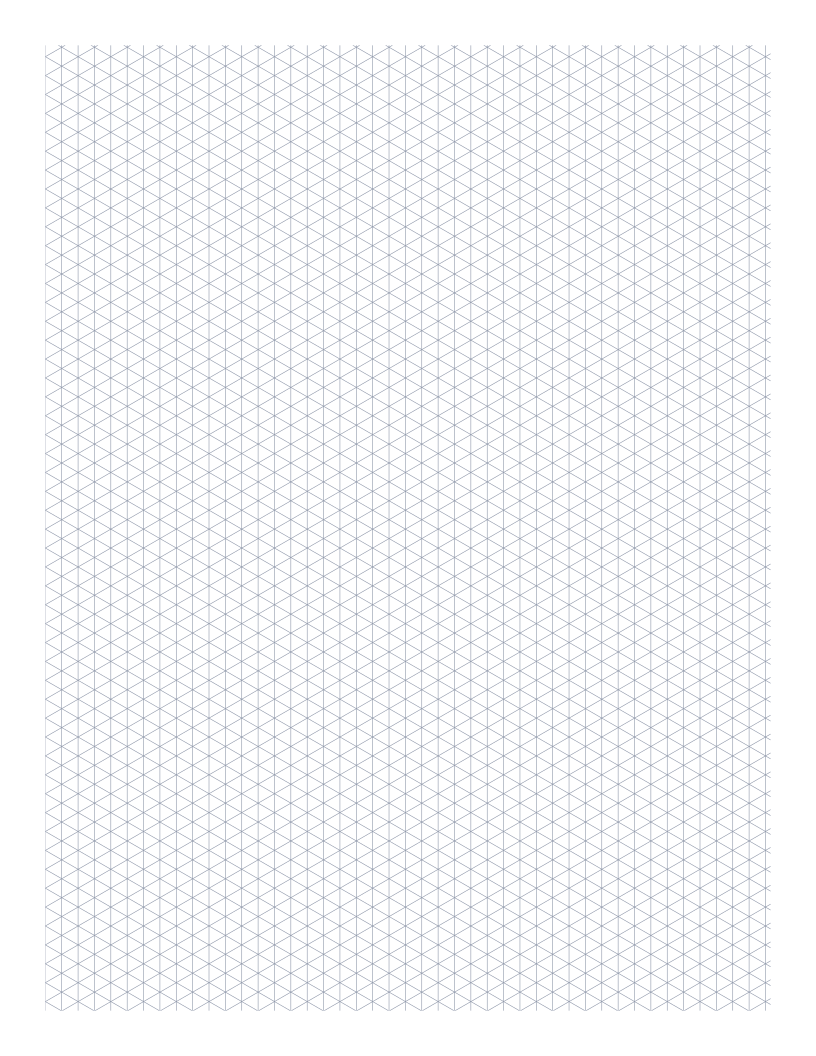
Isometric Graph Paper
Triangular 30°/60° grid for 3D drawings, technical sketches and Minecraft-style design.

Hexagonal Graph Paper
Hexagonal tessellation: perfect for tabletop wargaming, organic chemistry and tile-based games.
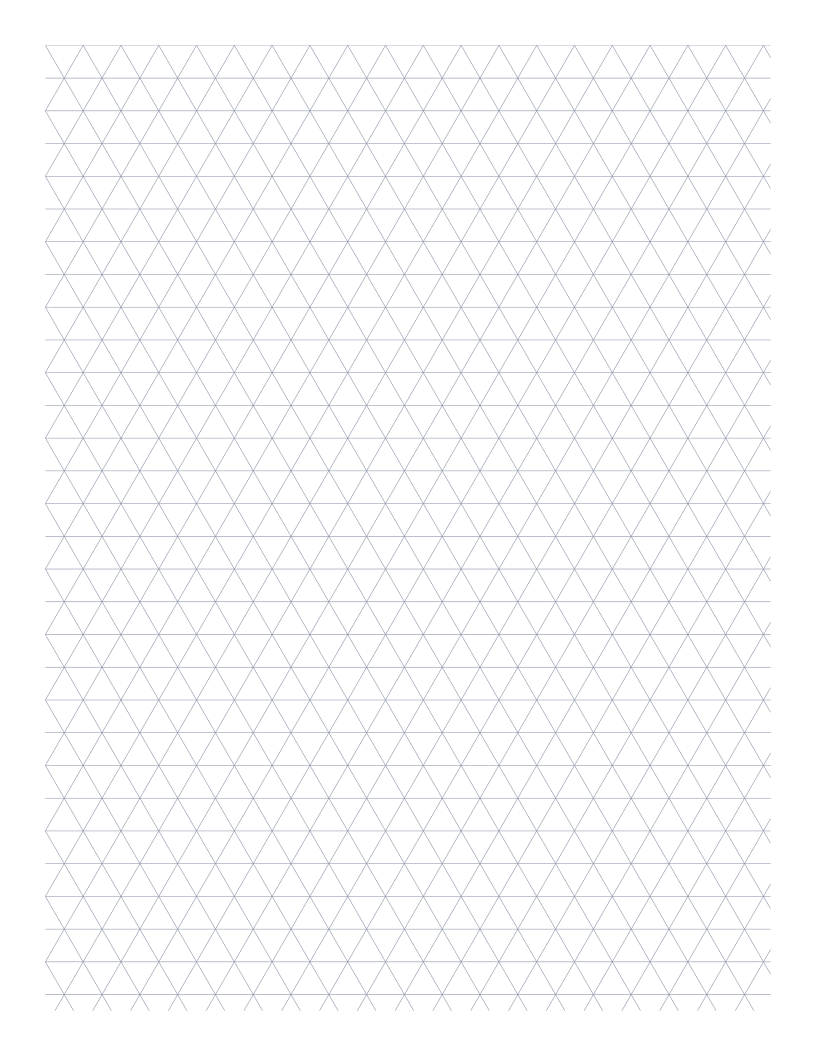
Triangular Graph Paper
Equilateral triangle grid: useful for ternary diagrams and tessellation art.
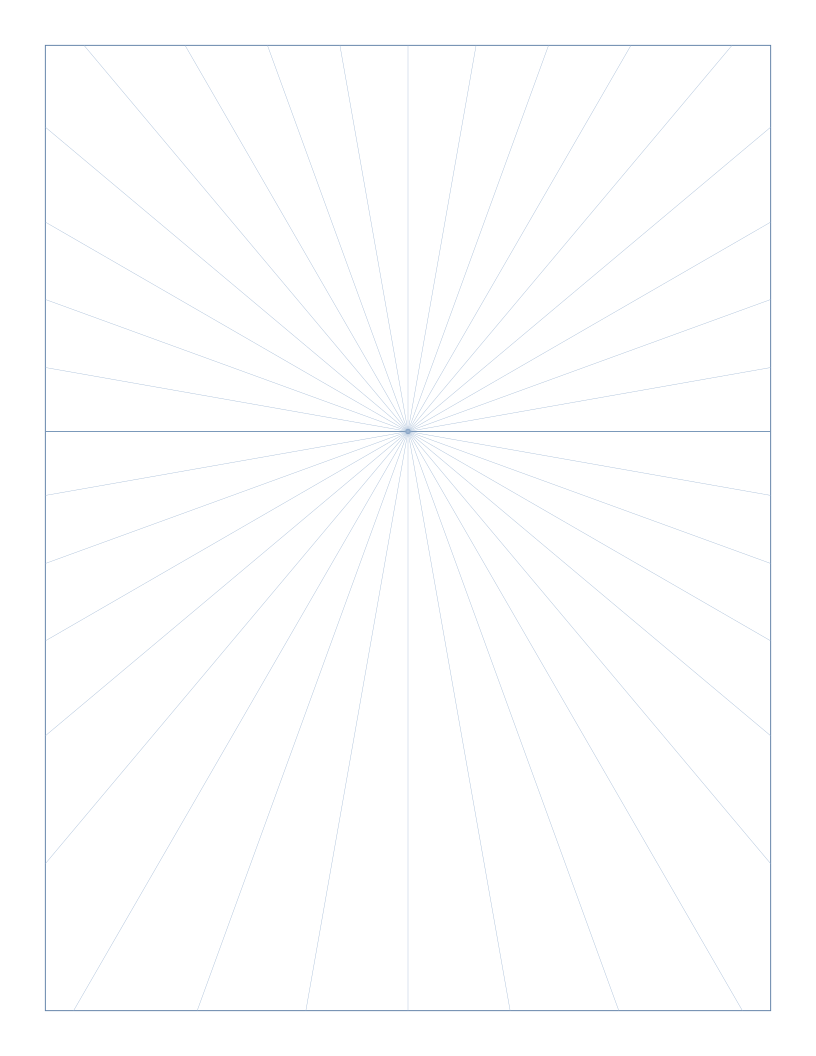
1-Point Perspective Grid
Single vanishing point on the horizon with radiating guides: the classic setup for hallways, rooms and street scenes.