Live preview · Letter (8.5" × 11") · Gray lines
Peyote Stitch Beading Paper
Peyote beading paper has upright rectangular cells with alternate columns offset by half a bead — the 'up bead, down bead' geometry of peyote stitch. Each cell represents one bead; charts on this paper produce designs that look correct when stitched, unlike square graph paper, which distorts the offset structure.
Download generates a crisp vector PDF directly, no print dialog needed.
Choose a different paper size:
Choose a different line color:
Great for
- Charting peyote-stitch beadwork patterns (cuffs, bracelets, amulet bags)
- Word charts (peyote works especially well for letter shapes)
- Adapting cross-stitch or pixel-art designs for peyote
- Designing geometric repeating patterns for delica seed beads
Peyote Stitch Beading Paper at a glance
| What it is | Offset rectangular cells matching the peyote-stitch bead geometry: alternate columns drop by half a bead, the standard chart format for peyote beadwork. |
|---|---|
| Category | Specialty |
| Paper sizes | Letter (8.5" × 11"), A4 (210 × 297 mm), 11" × 17", Legal (8.5" × 14"), A3 (297 × 420 mm), A2 (420 × 594 mm), Poster (18" × 24"), Movie Poster (27" × 40") |
| Line colors | Faint, Light, Gray, Dark, Black, Blue, Green (default: Gray) |
| Format | Vector PDF download at exact physical scale, or print directly from the browser |
| Price & license | Free. No signup or watermark. Printed sheets may be used for personal, classroom and commercial work. |
About peyote stitch beading paper
Peyote stitch is one of the oldest off-loom beading techniques, named for its use in regalia by the Native American Church but practiced for centuries before by many indigenous peoples of the Americas. The structure: each new bead sits in the gap between two 'up' beads of the previous row, so neighbouring beads alternate high and low by half a bead. The result is a flexible fabric with a zigzag top edge, where every bead is held by the two beads beside it. Modern peyote beading has expanded far beyond ceremonial use, particularly with the introduction of cylindrical 'delica' seed beads in the 1980s, which sit so uniformly that elaborate pictorial designs become possible. The geometry — taller-than-wide beads in half-offset columns — means standard square graph paper distorts any charted design. Peyote beading paper compensates by making the cells the same aspect ratio as a delica bead (roughly 4 wide × 5 tall, though the ratio varies by manufacturer) and dropping alternate columns by half a bead. A design that looks right on the paper looks right on the bead fabric.
What's on the page
Rectangular cells (4 mm wide × 5 mm tall) arranged in staggered columns. Even columns align with the top of the grid; odd columns drop by half a cell height (2.5 mm). Heavier accent lines mark every tenth column for counting reference. The grid is centred horizontally and vertically. Letter portrait holds roughly 45×50 cells of peyote pattern.
How to use it well
Count rows along the zigzag
In peyote, columns are straight but a stitched row zigzags: it takes every other bead across the chart (all the up beads, then all the down beads). Count columns for position and follow the zigzag when reading a row, or mark rows with a highlighter before you start.
Charts read top to bottom, beadwork is built top to bottom
Unlike knitting (which is read bottom-up), peyote charts are conventionally read top-to-bottom — matching the order in which the beadwork is constructed. Row 1 of the chart is the first row stitched.
Use the offset for letter shapes
Letters render unusually well in peyote because the half-bead offset creates natural slope steps that approximate diagonal strokes. Letters that look blocky on square graph paper come out smoother on peyote charts.
Test your bead aspect ratio before committing
The 4:5 ratio matches Miyuki Delica 11/0 beads, the most common cylindrical seed bead. Other brands (Toho Treasures, vintage rocailles) have slightly different ratios. For precise design work, swatch first and measure your specific beads.
Common mistakes to avoid
- Charting on square graph paper. The most common mistake. Square cells don't capture the peyote offset, so designs are squashed in one direction when beaded. Always use offset paper for peyote work.
- Confusing peyote with brick stitch. They're related but different: peyote columns offset vertically (columns shift up/down); brick rows offset horizontally (rows shift left/right, like a brick wall). The charts look like rotated versions of each other, and patterns are not interchangeable between the two stitches.
- Forgetting that the first row sets the offset. The very first row determines which columns sit high ('up beads') and which sit low. Charts should mark the starting bead clearly; some patterns are mirror-flipped between left-handed and right-handed beaders.
FAQ, Peyote Stitch Beading Paper
Is peyote stitch the same as 'gourd stitch'?+
Yes — 'gourd stitch' is the more historically accurate English name for the same technique, since it was used to bead gourd rattles long before the term 'peyote stitch' became common. Modern beading literature uses both interchangeably.
What's the difference between flat and tubular peyote?+
Flat peyote produces a rectangular sheet of beads (cuffs, bracelets); tubular peyote produces a cylinder (amulet bags, vessels). The chart paper is the same — the difference is whether you join the ends of the rows after each row (tubular) or leave them open (flat).
How is this different from [brick stitch paper](/graph-paper/brick-beading-paper)?+
Peyote and brick stitch produce similar-looking fabrics, but the bead orientation differs: peyote beads sit vertically (tall axis up); brick beads sit horizontally (wide axis up). The offset direction in the charts reflects this — peyote columns shift up and down; brick rows shift sideways. Patterns are not generally interchangeable.
What about [loom beading paper](/graph-paper/loom-beading-paper)?+
Loom beading uses a regular rectangular grid (no offset) because loom-woven beads sit in straight rows and columns. Peyote and brick are 'off-loom' stitches with offset geometry; loom is on-loom and orthogonal.
How big a pattern fits on one page?+
On Letter portrait at 4×5 mm cells, you get roughly 45 columns × 50 rows of pattern. For larger patterns, print tabloid (about 65×75 cells) or tile multiple pages along the accent lines (every 10 rows/columns).
Printing tips for best results+
- 1. Click Print above. A new tab opens the template at exact size.
- 2. The print dialog appears automatically. Set Scale to 100%. Never "Fit to page", which silently shrinks every cell.
- 3. Set Margins to None or Minimum so the grid reaches the page edge.
- 4. For a PDF, click Download instead. It generates a vector PDF directly without going through the printer driver.
You might also like
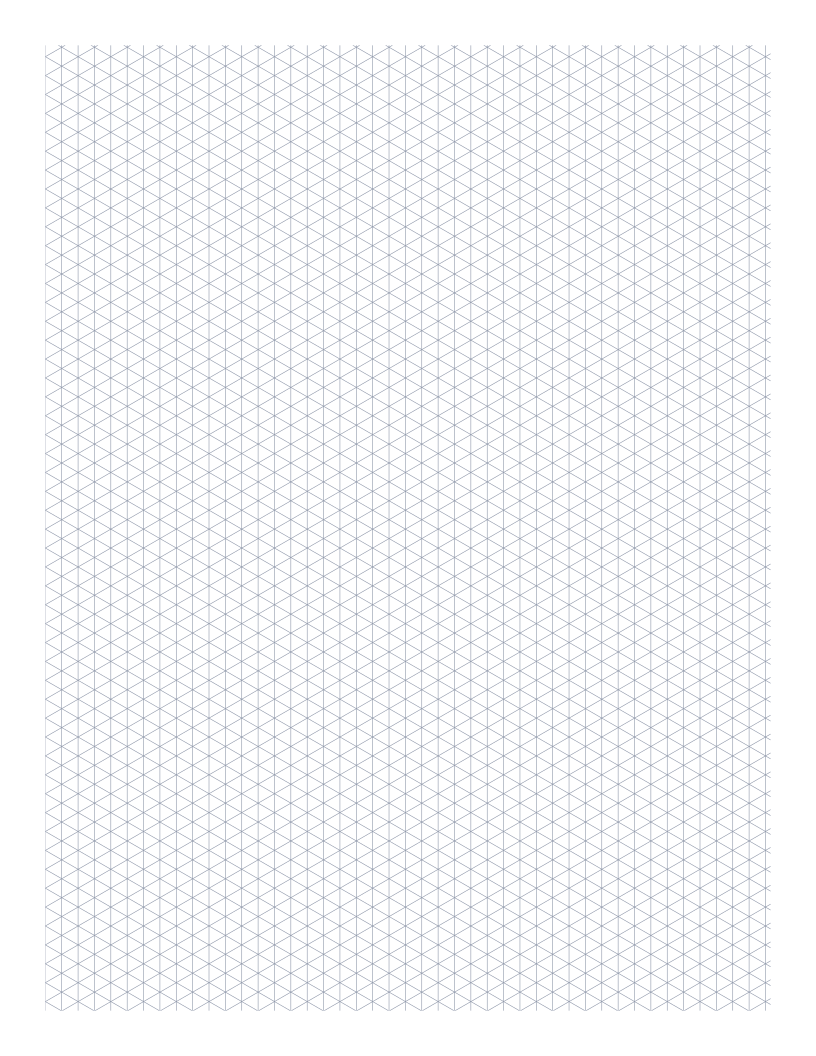
Isometric Graph Paper
Triangular 30°/60° grid for 3D drawings, technical sketches and Minecraft-style design.
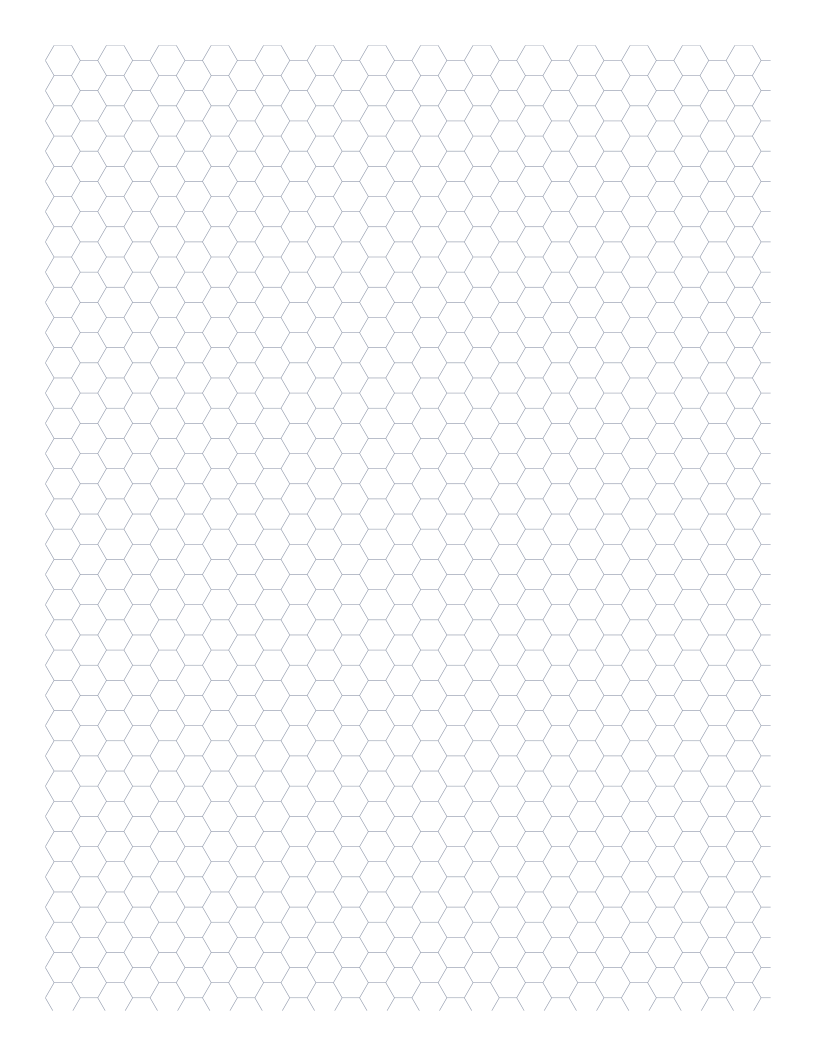
Hexagonal Graph Paper
Hexagonal tessellation: perfect for tabletop wargaming, organic chemistry and tile-based games.
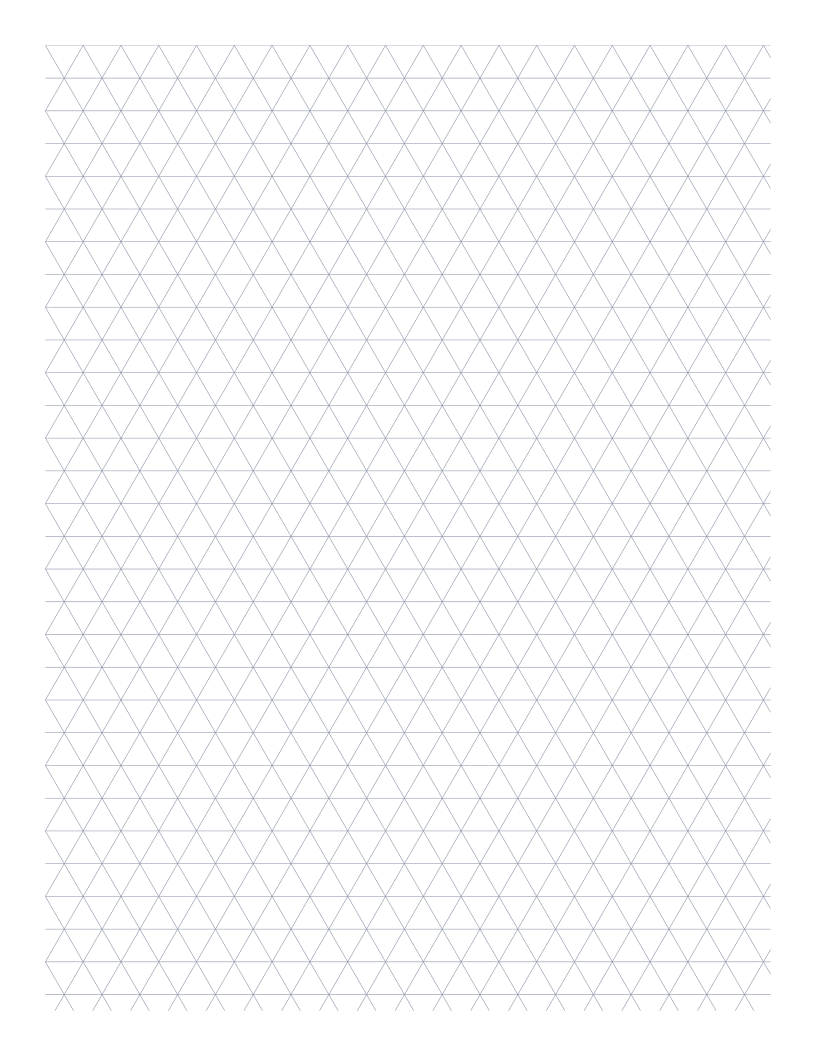
Triangular Graph Paper
Equilateral triangle grid: useful for ternary diagrams and tessellation art.
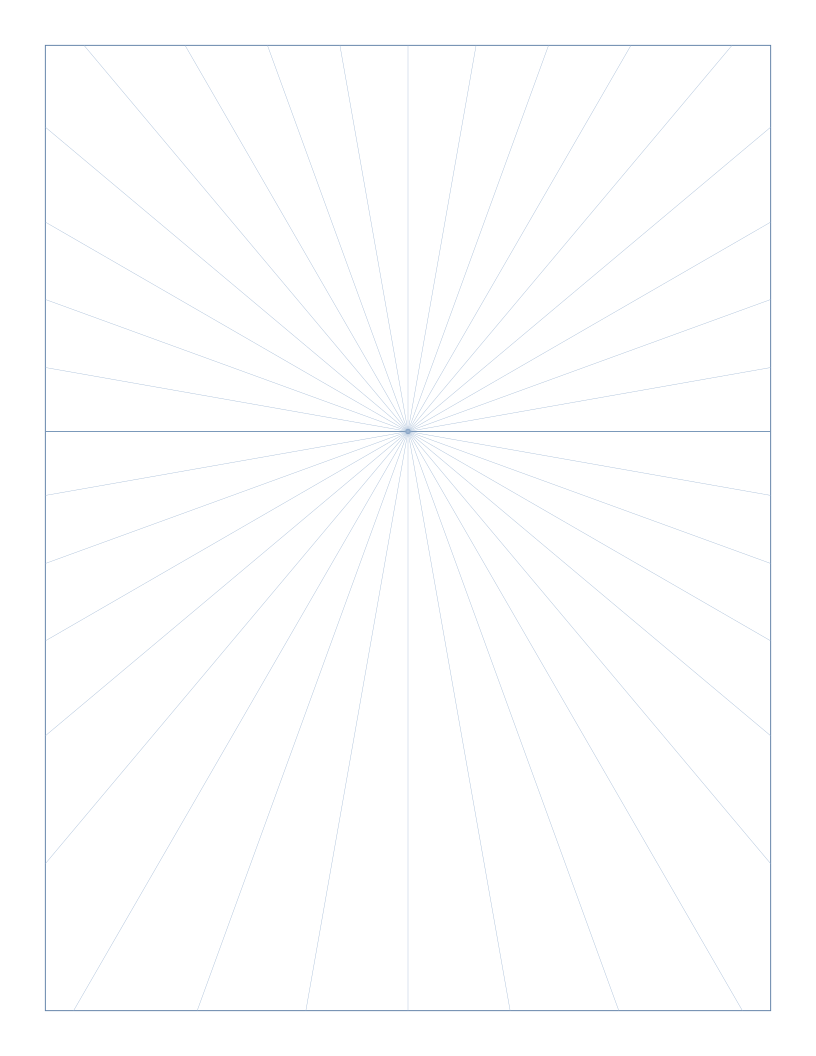
1-Point Perspective Grid
Single vanishing point on the horizon with radiating guides: the classic setup for hallways, rooms and street scenes.