Live preview · Letter (8.5" × 11") · Dark lines
SMART Goal Worksheet
A SMART goal worksheet. Write the goal at the top, walk through each of the five SMART criteria, list concrete action steps, and set a deadline. The single-page format keeps the entire exercise on one sheet so you can pin it up and refer back without searching through a notebook.
Download generates a crisp vector PDF directly, no print dialog needed.
Choose a different paper size:
Choose a different line color:
Great for
- Annual planning and quarterly goal-setting
- Coaching and accountability sessions
- Self-development and habit formation
- Project initiation and team kickoffs
SMART Goal Worksheet at a glance
| What it is | Single-page SMART goal worksheet: define the goal, walk through each SMART criterion, list action steps and set a deadline. |
|---|---|
| Category | Planning & Productivity |
| Paper sizes | Letter (8.5" × 11"), A4 (210 × 297 mm), 11" × 17", Legal (8.5" × 14"), A3 (297 × 420 mm), A2 (420 × 594 mm), Poster (18" × 24"), Movie Poster (27" × 40") |
| Line colors | Faint, Light, Gray, Dark, Black, Blue, Green (default: Dark) |
| Format | Vector PDF download at exact physical scale, or print directly from the browser |
| Price & license | Free. No signup or watermark. Printed sheets may be used for personal, classroom and commercial work. |
About smart goal worksheet
The SMART framework — Specific, Measurable, Achievable, Relevant, Time-bound — was first articulated in print by George Doran in a 1981 *Management Review* article and has become the default vocabulary for goal-setting in nearly every modern coaching and management context. The framework's appeal is that it converts vague aspirations ('get healthier', 'be more productive') into actionable specifications that can be tested. 'Get healthier' fails three of the five criteria immediately; 'run a 5K in under 30 minutes by June 1' passes all five. The work of converting one into the other is what the worksheet exists to facilitate. Each SMART letter is its own prompt with its own writing area, so the user has to articulate each dimension separately rather than handwaving past it. The action-steps section converts the SMART criteria into the first few concrete moves; the deadline forces a date commitment. The whole format takes about 15 minutes to fill out properly, and that 15-minute investment is the most reliable predictor of whether the goal actually gets pursued. People who write down SMART goals achieve them at meaningfully higher rates than people who just keep them in their heads — the difference isn't motivation, it's specificity.
What's on the page
Sections from top to bottom: a GOAL header with two writing lines for the goal statement; five SMART subsections (S/M/A/R/T) each with the criterion name, a short prompt, and two writing lines for the response; an ACTION STEPS section with three numbered lines for the first concrete moves; and a DEADLINE line at the bottom for the target date. The whole worksheet fits on a single page so you can pin it up or fold it into a binder without losing pieces.
How to use it well
Spend the most time on Specific
Most goals fail at the Specific step. 'Get better at piano' is vague; 'practice scales 20 minutes a day, five days a week' is specific. The other SMART criteria flow more easily once the Specific section is genuinely concrete. If you're stuck, ask 'what would a video of me doing this look like?' — concrete actions show up on video, vague intentions don't.
Make Measurable a number, not an adjective
'Lose weight' is not measurable. 'Lose 10 pounds' is. 'Read more' is not measurable. '24 books this year' is. Pin down the unit (kilograms, books, hours, dollars) and the target number. Without a number, you can't tell whether you're winning.
Set the deadline first, then work backward
The 'T' (time-bound) often gets filled in last as an afterthought, which makes it weak. Instead, set the deadline first, then work backward: if the goal is due by December 31 and today is March 1, that's 10 months. What needs to be true by July to be on track? By April? The deadline anchors the planning.
Review weekly, not annually
A SMART goal worksheet that's never re-read is useless. Pin it where you'll see it daily, and review it weekly. The weekly review takes five minutes (compare current state to the deadline plan) and prevents the goal from quietly drifting into 'not actually doing it'.
Common mistakes to avoid
- Setting too many goals at once. A SMART worksheet per goal forces focus, but the temptation is to fill out five worksheets for five goals. Research and practice agree: people pursuing one or two major goals at a time achieve them at much higher rates than people pursuing five or more.
- Writing aspirations as goals. 'Be a better parent' isn't a goal; it's an aspiration. The SMART criteria don't apply to it. Convert aspirations into goals by picking a concrete behaviour that would demonstrate progress ('have one one-on-one dinner per week with my eldest'). The aspiration becomes the *why* on the worksheet, but the behaviour is the goal.
- Treating the deadline as flexible. The 'T' loses its power if missing the deadline has no consequence. Even an arbitrary consequence ('I owe my coach £20 if I miss it') is enough to keep the deadline binding. Otherwise the goal just shifts a month every time you're behind.
FAQ, SMART Goal Worksheet
Does the SMART framework actually work?+
Modestly, yes — though it's less a magic system than a forcing function for clearer thinking. Multiple studies (Locke and Latham's body of goal-setting research, much of which precedes SMART itself) show that specific, measurable, time-bound goals produce higher achievement than vague ones. The framework codifies what good intentions look like; it doesn't generate motivation by itself.
What does 'Achievable' mean in practice?+
Reachable with stretch but not fantasy. A goal that's too easy ('lose 1 pound this year') doesn't motivate; one that's too hard ('lose 50 pounds in 30 days') discourages and is unsafe. The Achievable check asks: given my current state and the time available, is this plausibly within reach with sustained effort? Honest answers prevent both under- and over-ambition.
How is this different from a [weekly planner](/graph-paper/weekly-planner)?+
A weekly planner is a tactical scheduler — what gets done this week. A SMART goal worksheet is a strategic document — what you're trying to achieve over a longer horizon. They complement each other: the goal worksheet sets direction; the weekly planner translates direction into this week's actions. People who use both report better follow-through than people who use either alone.
Can I use this for team or family goals?+
Yes. The same framework applies to multi-person goals, with the addition that the 'A' (Achievable) check should consider the team's collective capacity rather than one person's. Some practitioners also recommend adding 'who owns each action step' for team versions; the worksheet's three action lines can each be annotated with an owner name.
What if my goal isn't measurable in numbers?+
Push harder on the Measurable section. Many goals seem unmeasurable but become measurable with the right reformulation. 'Improve my marriage' becomes 'have one weekly date night that we both rate 4+ out of 5'. The measurable version is more useful even if it doesn't capture everything you mean by the original. If genuinely no measurement is possible, the goal may be an aspiration rather than a goal — see the pitfall above.
Printing tips for best results+
- 1. Click Print above. A new tab opens the template at exact size.
- 2. The print dialog appears automatically. Set Scale to 100%. Never "Fit to page", which silently shrinks every cell.
- 3. Set Margins to None or Minimum so the grid reaches the page edge.
- 4. For a PDF, click Download instead. It generates a vector PDF directly without going through the printer driver.
You might also like
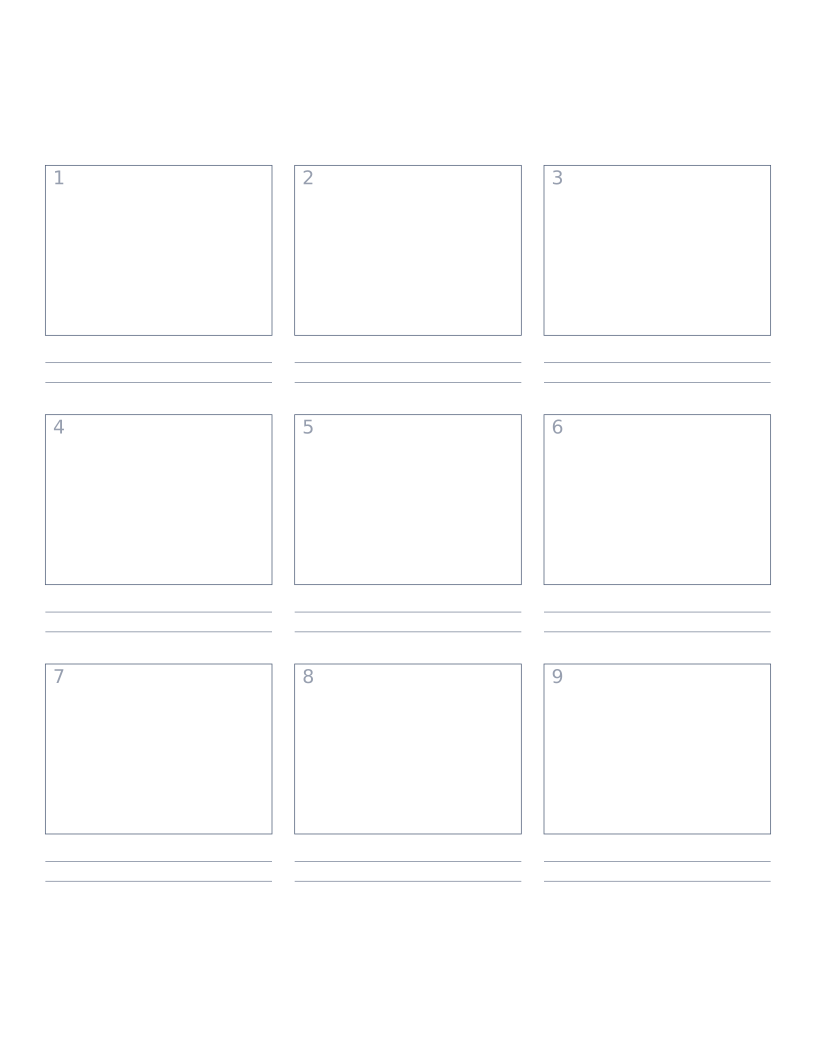
Storyboard Paper (3×3)
Nine-panel storyboard layout with caption space: for filmmakers, animators and UX designers.
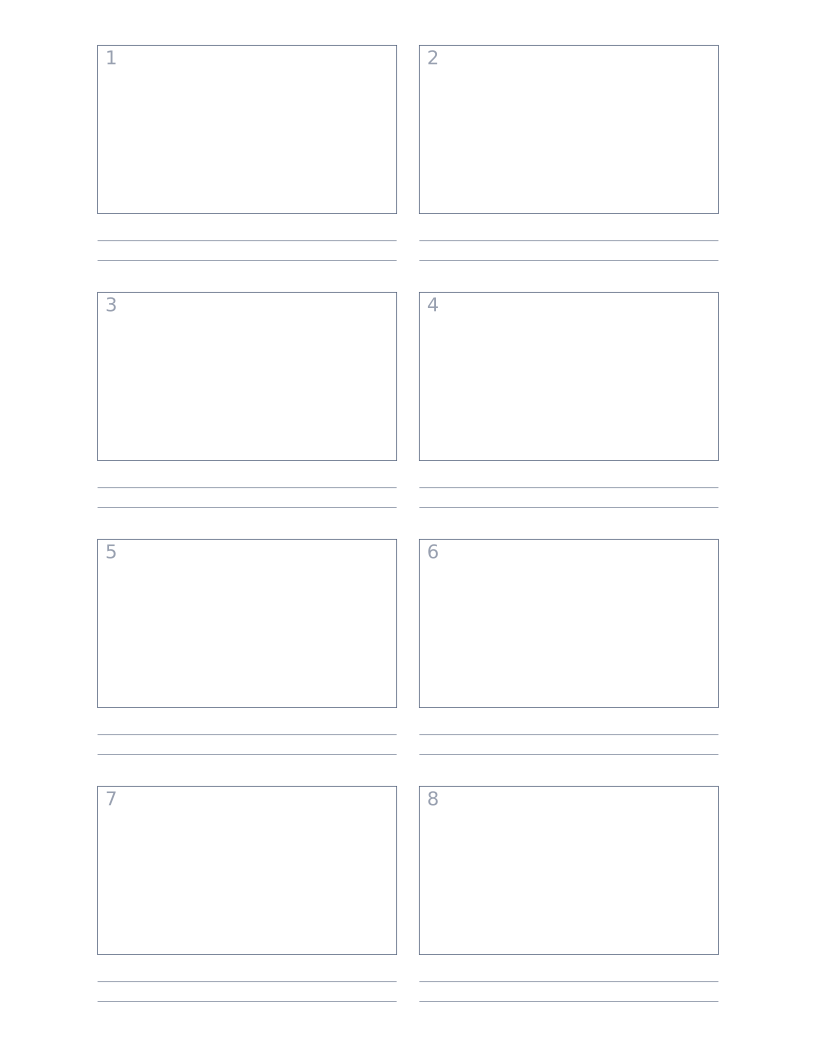
Storyboard Paper (2×4)
Eight-panel storyboard with widescreen 16:9 frames for video and film work.
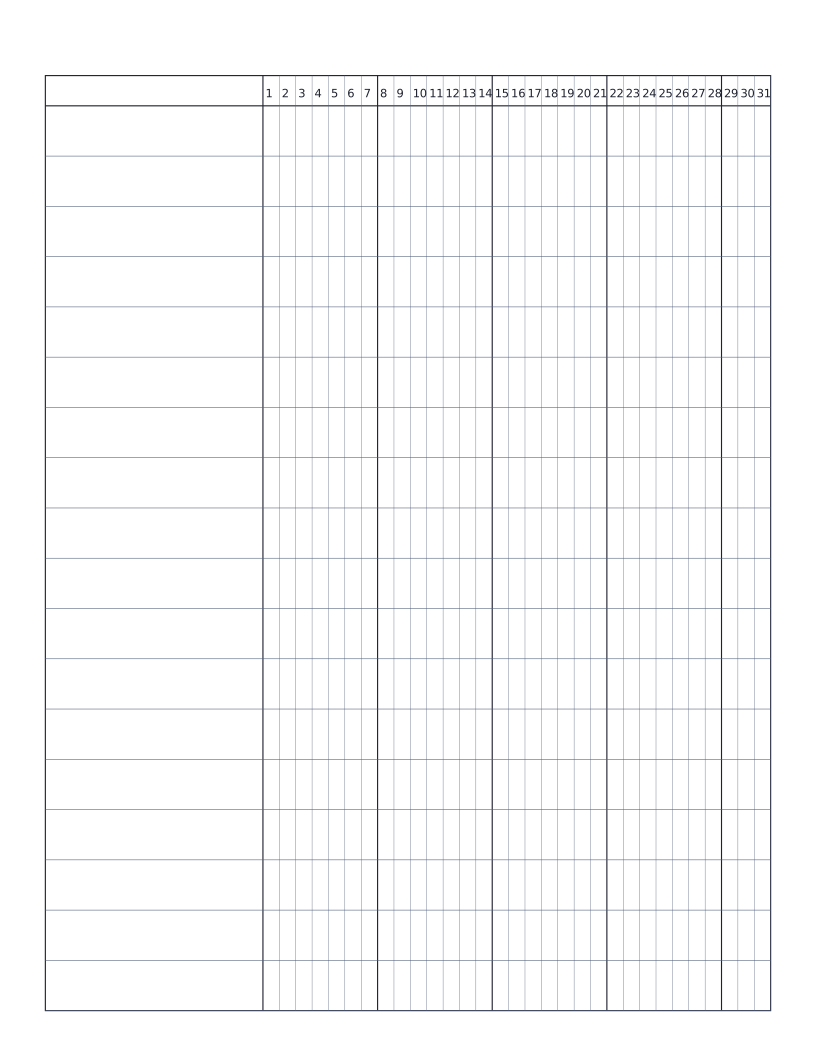
Habit Tracker (Monthly)
Monthly habit tracker: name column plus 31-day grid for marking off daily habits.
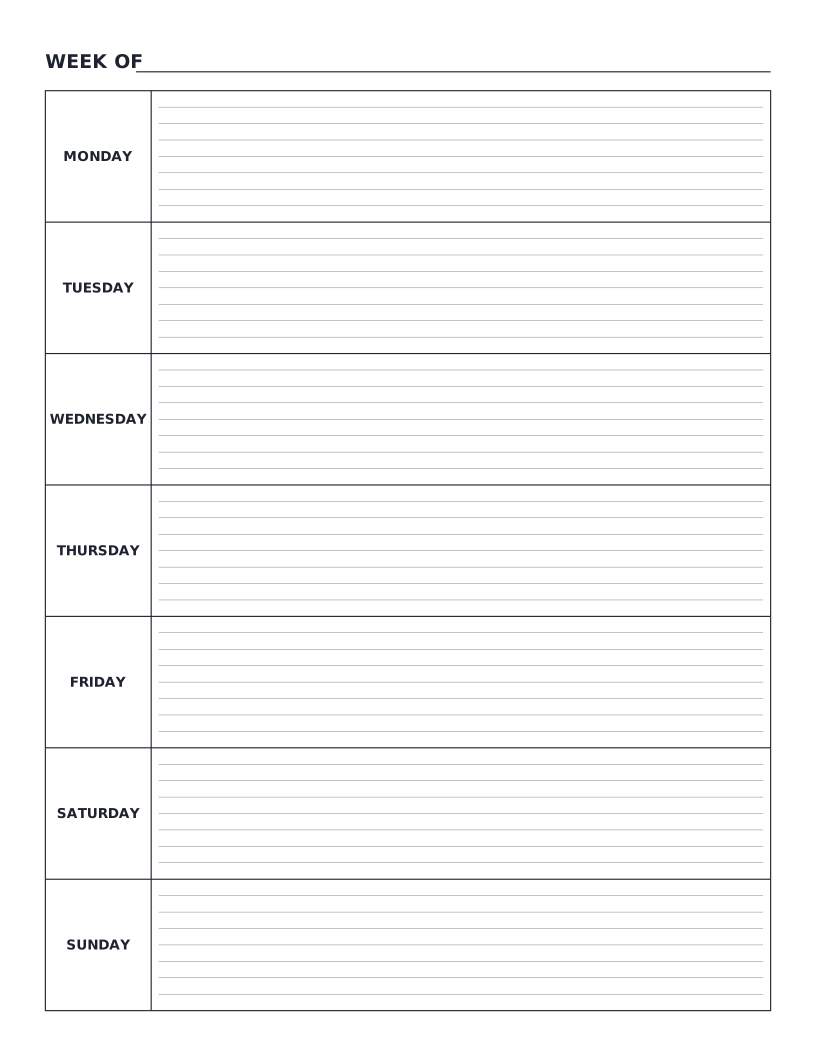
Weekly Planner
Monday-to-Sunday weekly planner: seven labelled day rows with writing lines for tasks, notes and appointments.