Live preview · Letter (8.5" × 11") · Dark lines
Habit Tracker (Monthly)
A monthly habit tracker. Habit names down the left column, day numbers across the top, one tick per day per habit. The simplest possible system for making invisible patterns visible: did you really exercise four times this week, or just twice?
Download generates a crisp vector PDF directly, no print dialog needed.
Choose a different paper size:
Choose a different line color:
Great for
- Building or breaking individual habits
- Bullet journal monthly inserts
- Personal goal and project tracking
- Mood, sleep, and routine logging
Habit Tracker (Monthly) at a glance
| What it is | Monthly habit tracker: name column plus 31-day grid for marking off daily habits. |
|---|---|
| Category | Planning & Productivity |
| Paper sizes | Letter (8.5" × 11"), A4 (210 × 297 mm), 11" × 17", Legal (8.5" × 14"), A3 (297 × 420 mm), A2 (420 × 594 mm), Poster (18" × 24"), Movie Poster (27" × 40") |
| Line colors | Faint, Light, Gray, Dark, Black, Blue, Green (default: Dark) |
| Format | Vector PDF download at exact physical scale, or print directly from the browser |
| Price & license | Free. No signup or watermark. Printed sheets may be used for personal, classroom and commercial work. |
About habit tracker (monthly)
Habit trackers became culturally prominent through two parallel movements: bullet journaling (which adopted them as a standard monthly spread around 2014) and the books of James Clear and BJ Fogg (which popularised the underlying psychology in the late 2010s). The principle is older than both. Benjamin Franklin kept a daily virtue tracker in the 1730s using the same essential format. What works about the format is its honesty. Memory exaggerates good behaviours and minimises bad ones; the tracker doesn't lie. You see across a month exactly how many days you exercised, meditated, called your mother, or stayed off your phone before bed. The single most consistent finding in habit research is that the act of tracking itself improves compliance. Not because of any reward mechanism, but because the visible blank cell at the end of each day is a tiny accountability prompt. The cells don't motivate; the empty cells do.
What's on the page
A grid with 18 rows for habit names and 31 columns for day numbers. The left column is wide enough to write habit names (typically 8–25 characters); the right grid has narrow square cells sized for ticks or X-marks. Day numbers can be filled in by hand for the specific month, so the page works for any month of any year. Dark line colour is the default so cell borders register clearly under marks and ticks.
How to use it well
Start with 3–5 habits, not 18
The 18 rows are a maximum, not a target. Research on habit formation consistently shows that tracking too many habits at once dilutes attention and produces lower compliance than focusing on a few. Use the extra rows only after the first ones are stable.
Choose binary habits, not numeric ones
'Exercise' (did / didn't) is easier to track than 'exercise for 30+ minutes' (which becomes a partial-credit judgment call every day). Binary habits map cleanly to the tick-or-blank tracker format; complex habits need a different system.
Use a marking system you can read at a glance
Solid fill for done, blank for not done, dot for partial. Pick a system before the month starts and use it consistently. Mixing tick-styles ('sometimes X, sometimes solid, sometimes star') makes the month-end review harder than it needs to be.
Review at the end of each week
Daily marking captures the data; weekly review extracts the insight. Five minutes on Sunday to look at the previous week's pattern reveals trends that are invisible day-to-day. That your habits collapse on weekends, or that one habit is dragging the others down by burning willpower.
Common mistakes to avoid
- Treating the tracker as the goal. The tracker is feedback, not the habit itself. People sometimes optimise for filling cells (exercise for 30 seconds to get the tick) rather than for the underlying behaviour. If you notice this happening, redesign the habit to be more meaningful and harder to fake.
- Skipping bad days. The most common mistake is leaving a row blank when you fall behind, then mentally abandoning the habit. Mark every day, including the misses. The breaks in the pattern are themselves valuable data about what disrupted the habit.
- Tracking everything at once. Eighteen habits sounds achievable on day one and overwhelming by day fifteen. Start with three to five high-value habits, prove the system works, then add more.
FAQ, Habit Tracker (Monthly)
How many habits should I track?+
Research and practice both suggest three to five habits at once for most people. The page accommodates up to 18 because some people use it for low-effort tracking (mood, sleep hours) plus a smaller set of active habits. Pick the smaller list for active habit formation; use the extra rows for passive logging.
How do I mark partial completions?+
Pick a system before you start and stay consistent. Common conventions: solid fill = full, half-fill = partial, blank = miss, X = skipped deliberately. Avoid mixing conventions mid-month or the month-end review becomes unreliable.
Should I track on paper or in an app?+
There's no consistent evidence either is better for compliance, but paper has two advantages: the page is always visible without unlocking a phone, and the act of writing creates a small ritual that reinforces the habit. Apps have the advantage of statistics and reminders. Pick the one you'll actually use.
What if I miss several days in a row?+
Don't try to backfill from memory. Your recall is unreliable for things that didn't form strong memories. Mark today and move on. The point of the tracker is to make today's decision visible, not to be a comprehensive log of the past.
Does habit tracking actually work?+
Yes, modestly. Self-monitoring is one of the most consistently effective behaviour-change interventions in psychology research. The effect isn't dramatic, but it's reliable: people who track their behaviour are more likely to maintain it than people who don't, even when nothing else changes.
Can I use this for non-habit tracking?+
Yes. Mood tracking (one cell per day, three-colour code for good/neutral/bad), sleep tracking (hours slept written in each cell), or symptom tracking (presence/absence of a symptom) all use the same grid structure. The page is flexible. The habit-tracker framing is just the most common use case.
Printing tips for best results+
- 1. Click Print above. A new tab opens the template at exact size.
- 2. The print dialog appears automatically. Set Scale to 100%. Never "Fit to page", which silently shrinks every cell.
- 3. Set Margins to None or Minimum so the grid reaches the page edge.
- 4. For a PDF, click Download instead. It generates a vector PDF directly without going through the printer driver.
You might also like
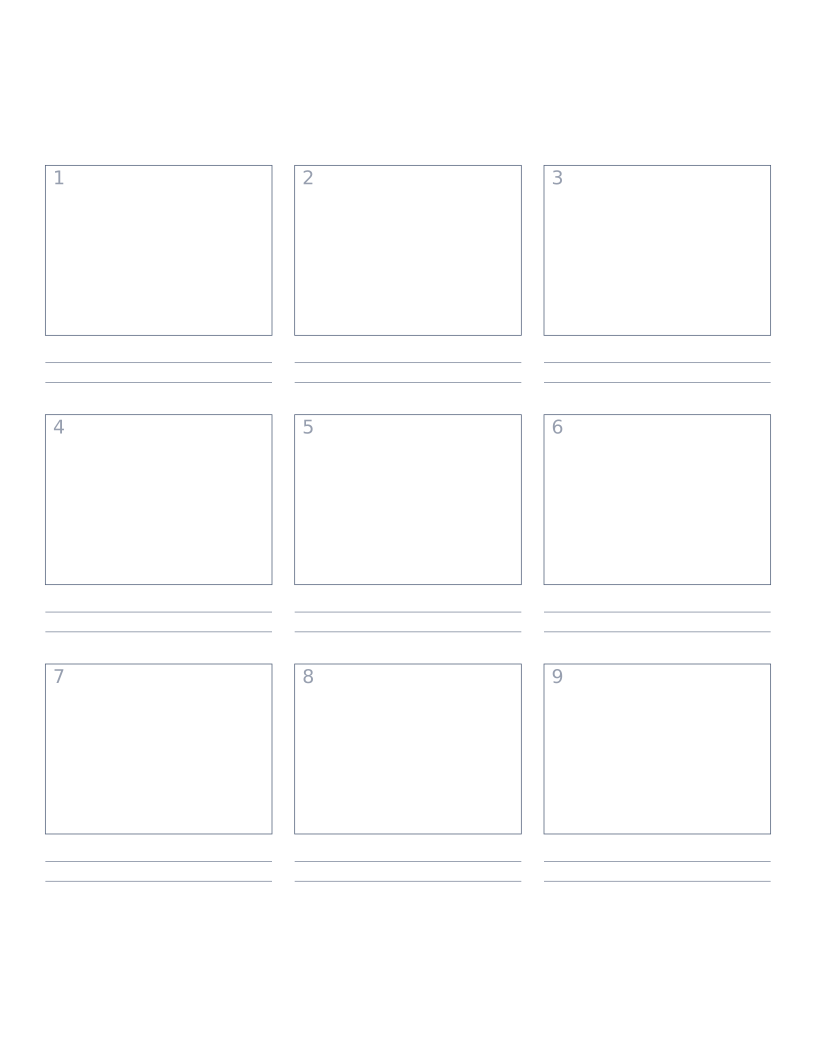
Storyboard Paper (3×3)
Nine-panel storyboard layout with caption space: for filmmakers, animators and UX designers.
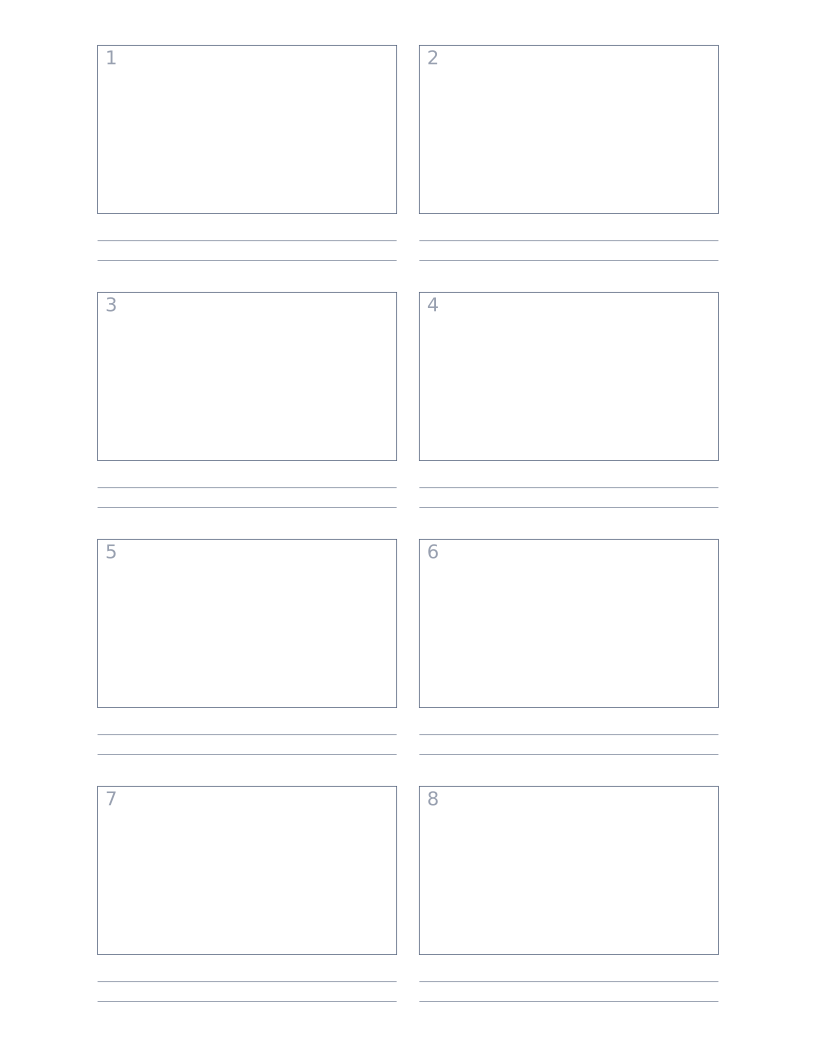
Storyboard Paper (2×4)
Eight-panel storyboard with widescreen 16:9 frames for video and film work.
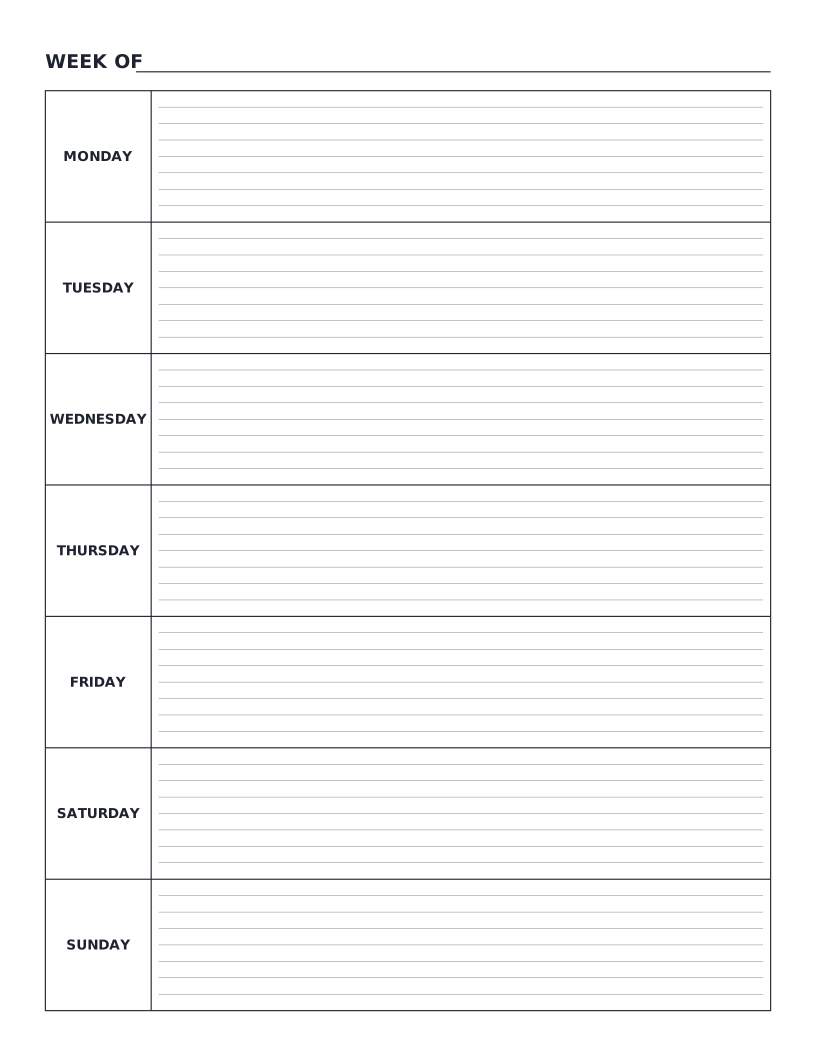
Weekly Planner
Monday-to-Sunday weekly planner: seven labelled day rows with writing lines for tasks, notes and appointments.
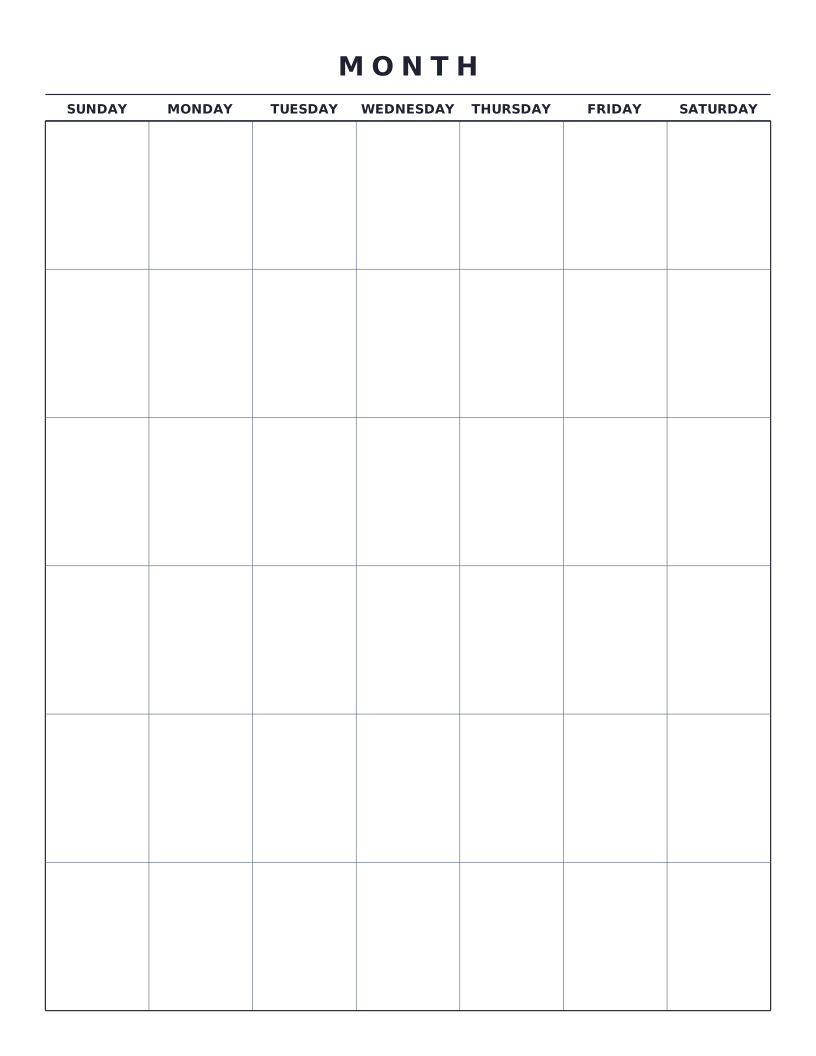
Monthly Calendar
Blank monthly calendar grid: six weeks × seven days, ready to fill in for any month of any year.