Live preview · Letter (8.5" × 11") · Dark lines
Storyboard Paper (3×3)
A nine-panel storyboard layout. Three columns by three rows. With a caption band below each frame for shot description, dialogue, or timing notes. Frames are roughly 4:3 aspect, the format you want for square-ish work like comics, animation rough boards, and UX wireframes.
Download generates a crisp vector PDF directly, no print dialog needed.
Choose a different paper size:
Choose a different line color:
Great for
- Film and video shot planning (4:3 frame work)
- Animation rough boards and animatic planning
- Comic and manga panel layouts
- UX wireframes and user flow sketches
Storyboard Paper (3×3) at a glance
| What it is | Nine-panel storyboard layout with caption space: for filmmakers, animators and UX designers. |
|---|---|
| Category | Planning & Productivity |
| Paper sizes | Letter (8.5" × 11"), A4 (210 × 297 mm), 11" × 17", Legal (8.5" × 14"), A3 (297 × 420 mm), A2 (420 × 594 mm), Poster (18" × 24"), Movie Poster (27" × 40") |
| Line colors | Faint, Light, Gray, Dark, Black, Blue, Green (default: Dark) |
| Format | Vector PDF download at exact physical scale, or print directly from the browser |
| Price & license | Free. No signup or watermark. Printed sheets may be used for personal, classroom and commercial work. |
About storyboard paper (3×3)
Storyboarding as a discipline came out of Disney in the 1930s. Animators were pinning rough sketches to corkboard walls to plan films sequence by sequence, and the format became standardised when Walt Disney made the practice a formal department in 1933. The basic principle hasn't changed since: you sketch the most important moment of each shot, write a caption below describing what happens, and lay them out in reading order to see the whole sequence at once. The 3×3 grid is the workhorse format because nine panels reads as one cohesive page. Enough to show a complete scene beat without subdivision, few enough that each frame stays readable at thumbnail size. Beyond film and animation, the same format works for any sequential planning where you need to think in fixed-shape units: comic page roughs, app screen flows, training-video shot lists, even infographic sequencing. Each panel is small enough to sketch in a few minutes, large enough to communicate.
What's on the page
Nine equal-size frames arranged in a 3×3 grid, each with a caption band beneath occupying about a quarter of the total cell height (roughly a third of the frame height above it). Frames are roughly 4:3 aspect, which suits square-ish work like comics and TV-era video. Dark line colour is the default so frame borders and caption lines register clearly under sketching. The grid is symmetrically centred on the page with even margins on all sides.
How to use it well
Sketch loosely, then iterate
First-pass storyboards should be rough, stick figures, blobs, arrows showing motion. Detail comes later. The point of the first pass is to see the sequence, not to make finished art.
Write the caption first sometimes
If you know what should happen in a beat but not what it looks like, start with the caption ('CHARACTER WALKS IN, NOTICES DOOR') and sketch to match. Working from caption to image is how professional film boards often start.
Use the captions for shot type
Add shot abbreviations to the caption: WS (wide), MS (medium), CU (close-up), POV (point of view). Even a quick mark like 'WS ←' (wide shot, camera moves left) tells the next reader most of what they need.
Number the frames
Pencil sequential numbers in the corner of each frame so when pages get shuffled or pinned up, you can reassemble them in order. For multi-page sequences, write 'page 2 of 4' at the top.
Common mistakes to avoid
- Polishing every panel. Storyboards are throwaway thinking tools, the value is in iteration, not finish. Pages that take an hour each won't get redrawn when the plan changes, and the plan always changes.
- Using 3×3 boards for widescreen video. 16:9 video doesn't fit cleanly in our 4:3-ish frames. Vertical headroom is wasted and the framing decisions don't translate. Use the 2×4 storyboard template instead for 16:9 work.
- Ignoring the captions. Frames without captions are half-communication. The image shows what's on screen; the caption tells the reader what's happening, who's speaking, and what comes next. Both are needed to make the page legible to anyone but the artist.
FAQ, Storyboard Paper (3×3)
Why 3×3 and not some other layout?+
Nine frames fits one storyboarding 'breath'. About the length of a single scene beat in film, or a single comic page. More than nine starts to feel overwhelming as a single page; fewer leaves usable space empty. 3×3 also has the advantage of working in either reading direction (left-to-right or top-to-bottom).
What's the right aspect ratio for film storyboards?+
Match your final delivery format. 4:3 (the 3×3 template) is right for square-ish work like comics, classic TV, and many UX wireframes. 16:9 (the 2×4 storyboard template) is right for modern widescreen film and video. Drawing in the wrong aspect ratio makes framing decisions during storyboarding meaningless.
Can I use it for UX wireframing?+
Yes, especially for screen-flow planning where each frame represents one screen state. The 4:3 frames suit landscape tablet or desktop layouts; for mobile (typically 9:16 portrait) it's a poor fit; use a dedicated mobile wireframe sheet instead.
How do I draw camera moves?+
Use arrows inside the frame to indicate camera direction (pan, tilt, zoom). For complex moves (track, dolly, crane) use multiple frames showing the move's start and end positions, or add a small inset diagram in the caption showing the camera path.
Do I need a separate animatic step?+
If you're planning animation or video, yes. Storyboards show key frames, animatics add timing by holding each frame for the duration of the shot. Storyboard panels are static snapshots; animatics are the same panels played back with timing. Both stages benefit from a fresh storyboard print as the source.
Printing tips for best results+
- 1. Click Print above. A new tab opens the template at exact size.
- 2. The print dialog appears automatically. Set Scale to 100%. Never "Fit to page", which silently shrinks every cell.
- 3. Set Margins to None or Minimum so the grid reaches the page edge.
- 4. For a PDF, click Download instead. It generates a vector PDF directly without going through the printer driver.
You might also like
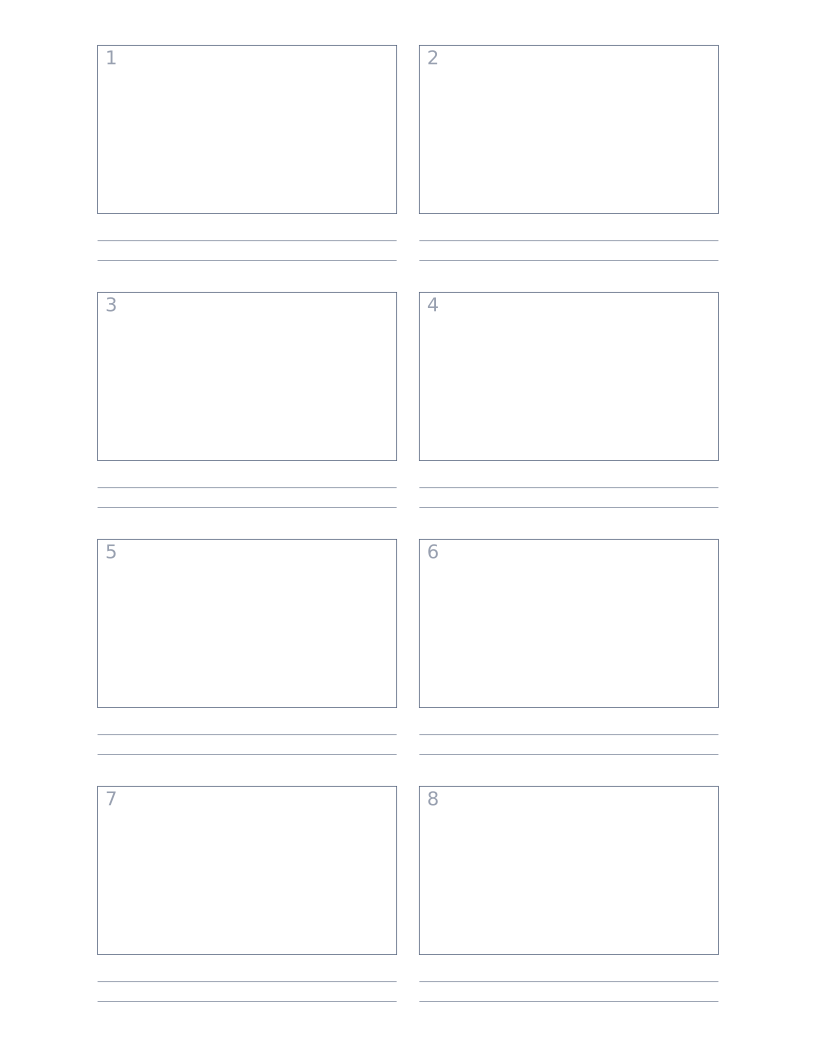
Storyboard Paper (2×4)
Eight-panel storyboard with widescreen 16:9 frames for video and film work.
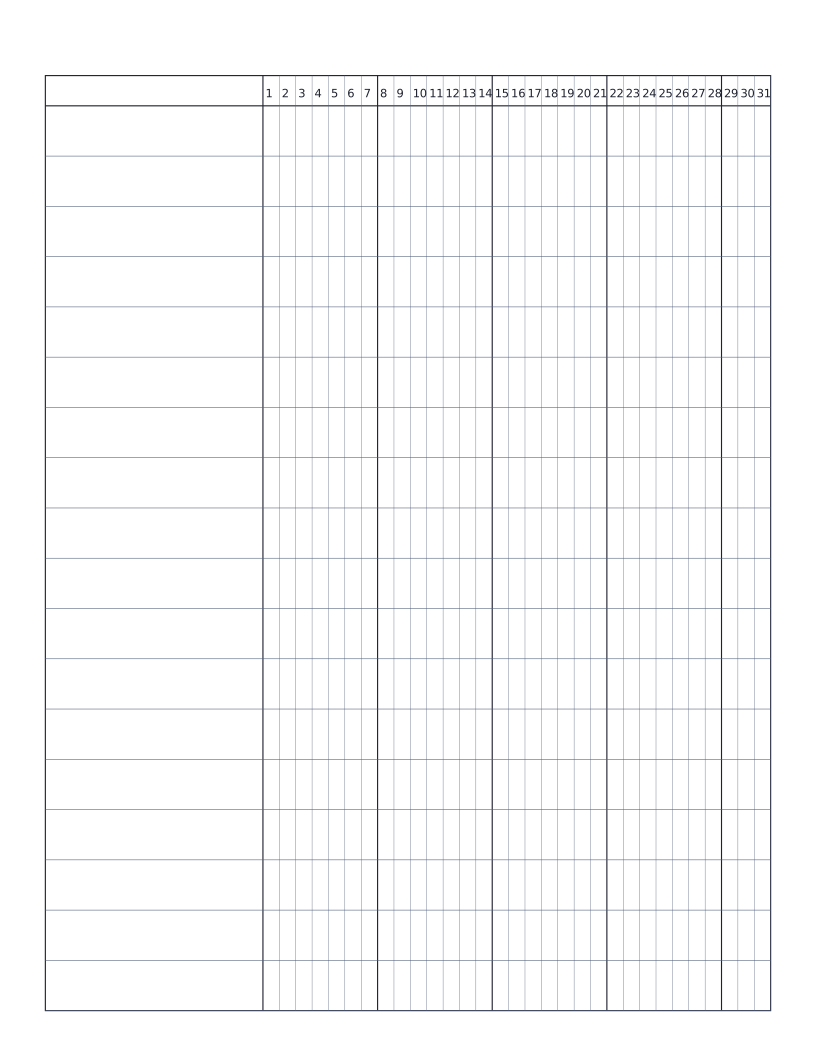
Habit Tracker (Monthly)
Monthly habit tracker: name column plus 31-day grid for marking off daily habits.
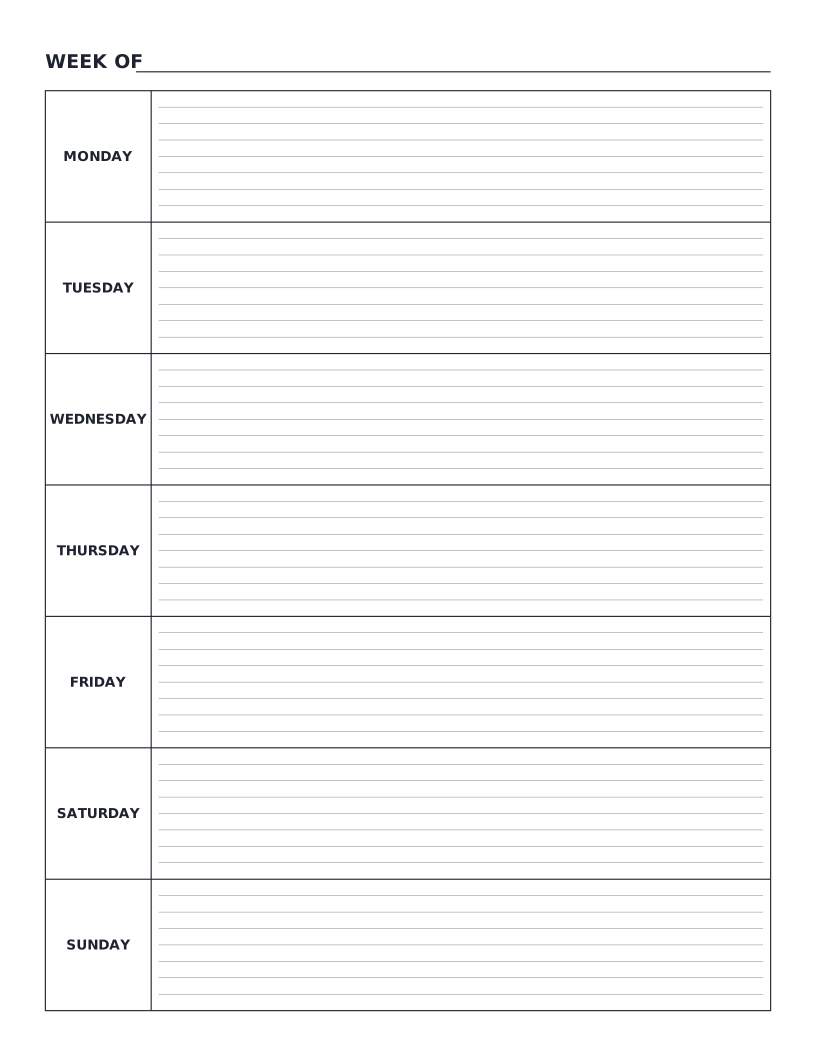
Weekly Planner
Monday-to-Sunday weekly planner: seven labelled day rows with writing lines for tasks, notes and appointments.
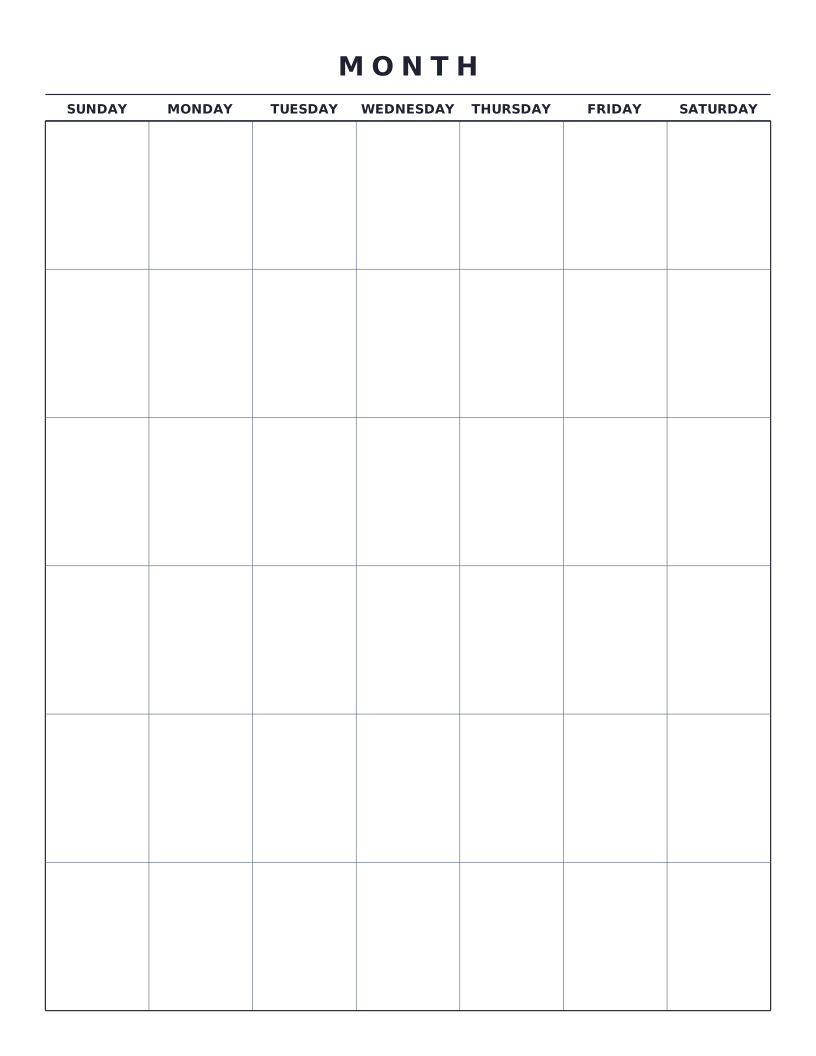
Monthly Calendar
Blank monthly calendar grid: six weeks × seven days, ready to fill in for any month of any year.