Live preview · Letter (8.5" × 11") · Gray lines
5 Squares Per Inch Graph Paper
Graph paper with five squares per inch and a bold line every inch. It's the ruling used on classic engineering computation pads and cross-section paper: each cell is 0.2 inch, so decimal measurements in inches plot directly.
Download generates a crisp vector PDF directly, no print dialog needed.
Choose a different paper size:
Choose a different line color:
Great for
- Engineering homework and hand calculations
- Plotting data in decimal inches or tenths
- Cross-sections, profiles and site sketches
- Statics, surveying and physics diagrams
5 Squares Per Inch Graph Paper at a glance
| What it is | Five squares per inch with a bold line every inch: the ruling of classic engineering computation pads and cross-section paper. |
|---|---|
| Category | Grid Paper |
| Paper sizes | Letter (8.5" × 11"), A4 (210 × 297 mm), 11" × 17", Legal (8.5" × 14"), A3 (297 × 420 mm), A2 (420 × 594 mm), Poster (18" × 24"), Movie Poster (27" × 40"), Letter Landscape (11" × 8.5"), A4 Landscape (297 × 210 mm), Tabloid Landscape (17" × 11") |
| Line colors | Faint, Light, Gray, Dark, Black, Blue, Green (default: Gray) |
| Format | Vector PDF download at exact physical scale, or print directly from the browser |
| Price & license | Free. No signup or watermark. Printed sheets may be used for personal, classroom and commercial work. |
About 5 squares per inch graph paper
Five-to-the-inch paper is the grid many engineers remember from university. Engineering computation pads have traditionally used it, often on pale green paper with the grid printed on the back so it shows through faintly. The appeal is decimal: each cell is 0.2 inch, five cells make an inch, and values like 1.6 or 3.4 inches land exactly on a line. That made it the default for plotting results in a field that measured in decimal inches long before CAD. It's also called cross-section paper, from its long use for drawing road and terrain cross-sections. Compared with engineering paper at ten squares per inch, it has larger cells that are easier to write in, which is why computation pads use it for worked solutions rather than fine drafting.
What's on the page
A grid of 0.2 inch (5.08 mm) squares in 0.15 mm lines, with bold 0.25 mm lines every inch (every fifth line). The grid is trimmed to whole inches and centred: 7 × 10 inches (35 × 50 cells) on US Letter and A4. Landscape sizes are available for wide plots.
How to use it well
Write one digit per cell
At 0.2 inch, a cell comfortably holds one handwritten digit. Engineering students use this to keep calculations aligned in columns, which makes errors easier to spot when you check your work.
Plot in tenths with half cells
Each cell is 0.2 inch, so 0.1 inch is half a cell. For data recorded in tenths, plot on the lines for even tenths and between them for odd ones.
Use the bold lines as the axis scale
Make each bold inch block a round unit (1, 10, 100). Five cells per block then split it into fifths, which matches the 1, 2, 5 steps that most scales use.
Box your final answers
On a computation sheet, draw a box around each final result. The grid makes neat boxes easy, and it's the long-standing convention on engineering homework.
Common mistakes to avoid
- Assuming it's the same as 5 mm paper. 0.2 inch is 5.08 mm, so the two grids look almost identical but drift apart by about 2 mm every 25 cells. Don't mix them.
- Using it for fine drafting. Five squares per inch is coarse for detailed drawings; switch to engineering paper at ten per inch or 1/8 inch paper.
- Printing with scaling on. Check that one bold block measures exactly one inch on your printout before reading measurements from it.
FAQ, 5 Squares Per Inch Graph Paper
Is this the same as engineering paper?+
It's the ruling most engineering computation pads use. Our engineering paper template is the denser drafting version at ten squares per inch. Use five per inch for calculations and plots, ten per inch for fine drawing.
What is cross-section paper?+
Another name for this ruling, from its use in drawing terrain and road cross-sections. The even grid with bold inch lines makes it easy to plot elevation against distance.
How big is each square?+
0.2 inch, which is 5.08 mm. Five squares make one inch, marked by the bold lines.
Why is the grid green on real engineering pads?+
Traditional pads use pale green paper with the grid on the back, so it reads as a soft guide and stays out of photocopies. Pick the Green line colour here for a similar look.
How many squares fit on a page?+
35 × 50 squares (7 × 10 inches) on US Letter or A4. Choose 11 × 17 or a landscape size for larger plots.
Printing tips for best results+
- 1. Click Print above. A new tab opens the template at exact size.
- 2. The print dialog appears automatically. Set Scale to 100%. Never "Fit to page", which silently shrinks every cell.
- 3. Set Margins to None or Minimum so the grid reaches the page edge.
- 4. For a PDF, click Download instead. It generates a vector PDF directly without going through the printer driver.
You might also like
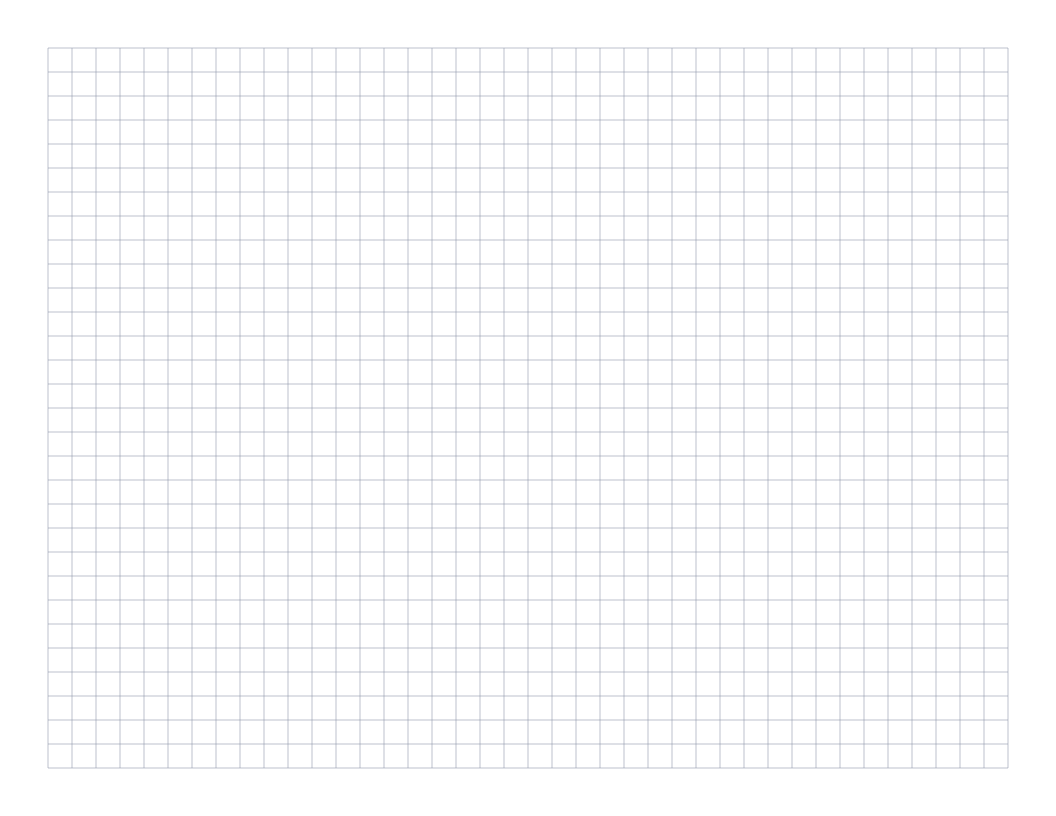
Landscape Graph Paper
Quarter-inch graph paper in landscape orientation: a wide page for timelines, charts and plans that run sideways.
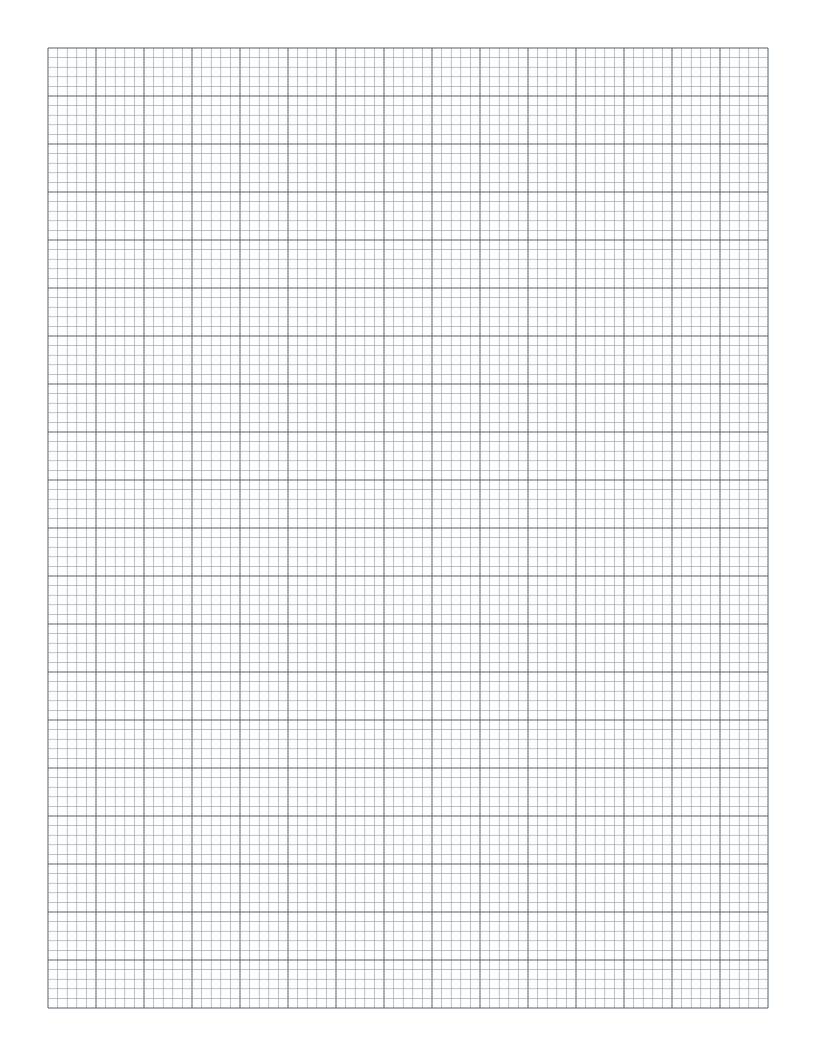
Engineering Paper
10 squares per inch with a bolder line every half inch: a fine engineering grid for technical sketches and circuit layouts.
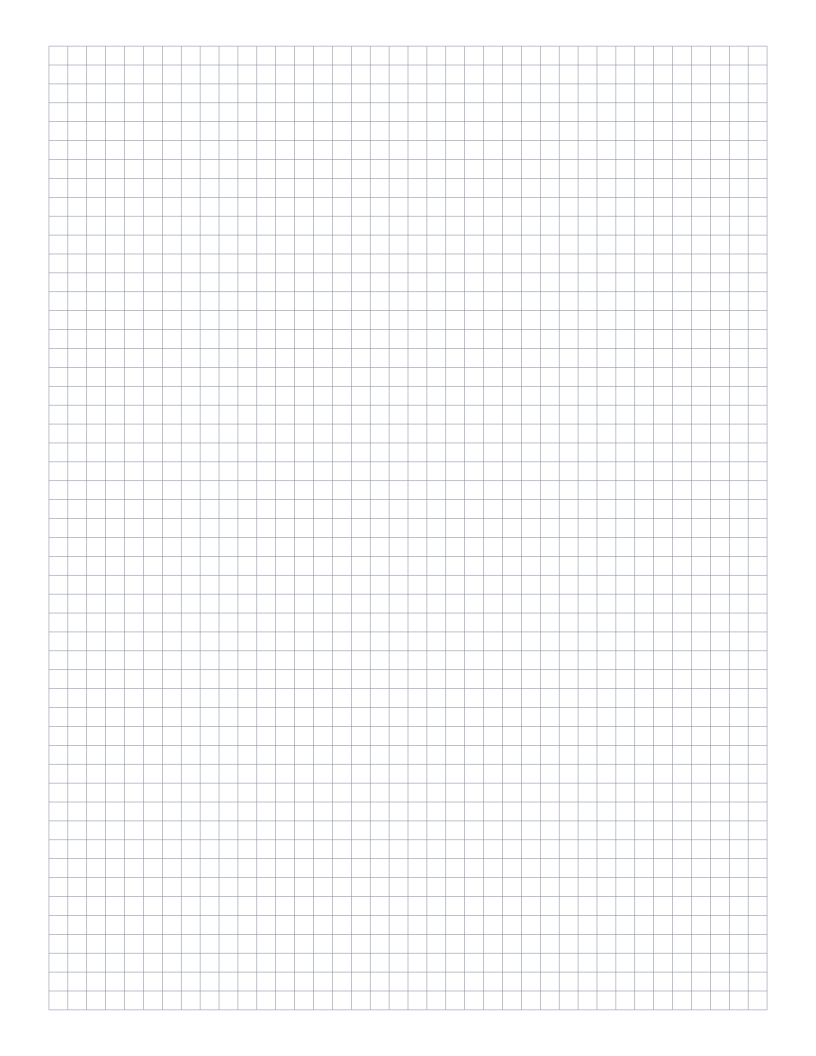
5mm Graph Paper
Standard 5mm square grid: the most popular spacing for math, engineering and general use.
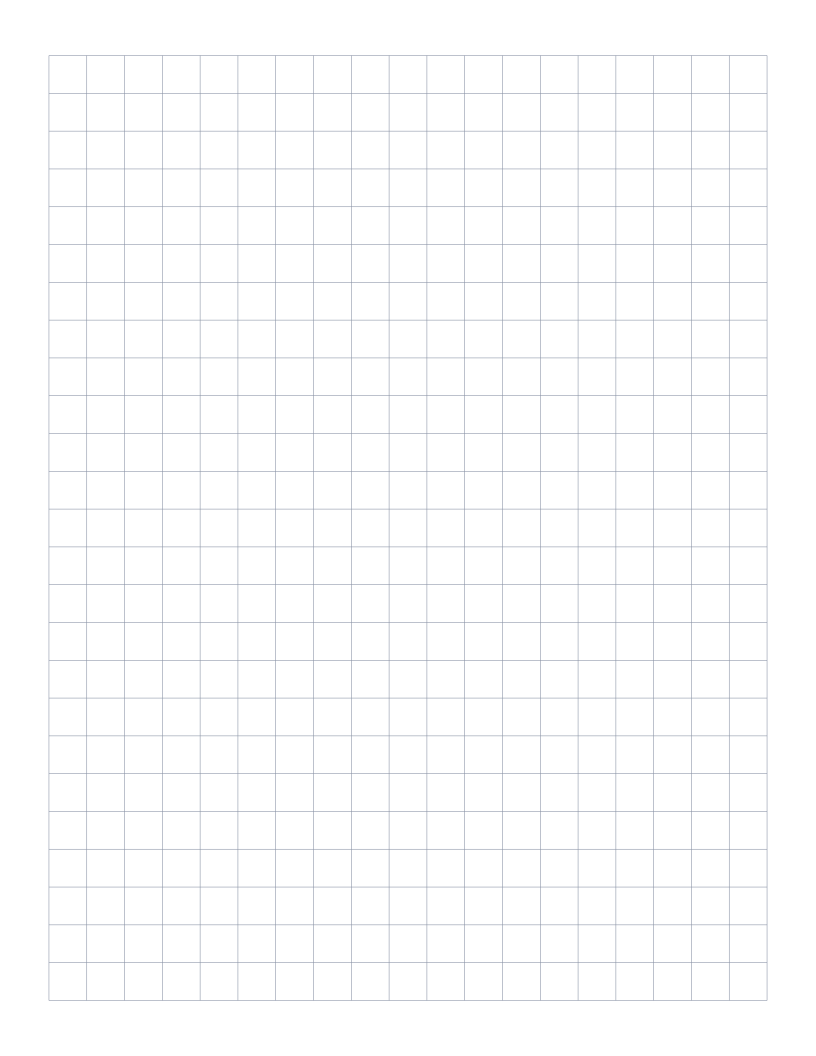
1cm Graph Paper
1 centimeter grid: the everyday graphing standard for elementary math and primary school.