Live preview · Letter (8.5" × 11") · Gray lines
Bullet Journal Monthly Log
The classic bullet journal monthly log. A vertical list of 31 numbered rows down the page, each with a slot for the weekday letter and a horizontal line for that day's entry. The format is straight from Ryder Carroll's original Bullet Journal method, and it's the most copied monthly spread in the bujo community for one reason: it's faster to set up than a calendar grid and easier to scan than a list.
Download generates a crisp vector PDF directly, no print dialog needed.
Choose a different paper size:
Choose a different line color:
Great for
- Bullet journal monthly spreads (the canonical layout)
- Single-line daily logging — one important event or thought per day
- Anniversary and milestone tracking
- Tracking dated entries that don't need cell-style detail
Bullet Journal Monthly Log at a glance
| What it is | Classic Ryder Carroll monthly log: 31 numbered rows with weekday slots for the canonical bullet journal layout. |
|---|---|
| Category | Planning & Productivity |
| Paper sizes | Letter (8.5" × 11"), A4 (210 × 297 mm), 11" × 17", Legal (8.5" × 14"), A3 (297 × 420 mm), A2 (420 × 594 mm), Poster (18" × 24"), Movie Poster (27" × 40") |
| Line colors | Faint, Light, Gray, Dark, Black, Blue, Green (default: Gray) |
| Format | Vector PDF download at exact physical scale, or print directly from the browser |
| Price & license | Free. No signup or watermark. Printed sheets may be used for personal, classroom and commercial work. |
About bullet journal monthly log
The bullet journal method was introduced by Ryder Carroll in 2013 and grew through the late 2010s into one of the most successful analog productivity systems of the smartphone era. The core insight is that paper, used systematically, beats apps for people whose attention is fragmenting. The monthly log is one of the system's three foundational spreads (alongside the future log and the daily log), and Carroll's original specification is what's reproduced here: a numbered vertical list, day numbers down the left, a one-letter weekday slot, and a single writing line for the day's most important entry. Calendar grids show structure; the monthly log shows narrative. You read it top to bottom like a list, which is the natural way the human eye scans short text. Practitioners who've used both formats consistently report that the vertical log is faster to write into and easier to review at the end of the month than a traditional grid. The format isn't competing with the monthly calendar; it serves a different purpose. The calendar tells you 'what's on the 15th'; the log tells you 'what happened this month'.
What's on the page
A 'MONTHLY LOG' header at the top, then 31 numbered rows running down the page. Each row has the day number on the left, a short dashed slot for the weekday letter (M, T, W, T, F, S, S), and a horizontal writing line spanning the rest of the row. There are no cells, no grid lines between days. Just a clean vertical list. Months with fewer than 31 days (April, June, September, November have 30; February has 28 or 29) simply leave the unused rows blank.
How to use it well
Fill in the weekday letters first
Before you start logging entries, take a minute to write the weekday letter (M/T/W/T/F/S/S) next to each day number for the actual month. This makes the page scannable and means you never have to mentally compute 'is the 14th a Tuesday?' while writing. Five minutes at the start of the month, paid back every day after.
One line per day, ruthlessly
The format works because it forces brevity. If you can't fit it in one line, it's probably not a 'monthly log' entry, it belongs in a daily log or a project page. The constraint is the feature.
Use it for highlights, not to-dos
The monthly log is a retrospective tool. What happened, what mattered. Not a forward-looking task list. Task lists go in daily logs or weekly spreads. The log entries are the kind of thing you'd write in a journal: 'Closed the funding round', 'Mom's surgery', 'First snow'.
Review the page at month-end
Spend five minutes at the end of the month reading through the log top to bottom. Highlights jump out. Patterns become visible (three migraine days in a row, two weeks of no exercise, one big work week). The review is where the format pays off.
Common mistakes to avoid
- Treating the monthly log like a calendar. They serve different purposes: calendar = future events; log = past entries. Don't write 'dentist appointment 3pm' on the 15th line, that's a calendar entry. Write 'dentist went well' after the appointment.
- Trying to fit multiple entries per day. The single-line constraint is what makes the log readable. If you have multiple things to record, they belong in a daily log on a separate page, with the monthly log holding only the headline.
- Skipping days. The page can absorb blank days, that's fine. But abandoning the page mid-month and starting fresh is a common bujo failure mode. If you missed days, mark the misses with a dash and move on; don't restart.
FAQ, Bullet Journal Monthly Log
Is this the original Ryder Carroll format?+
Yes, this is the canonical monthly log from the original Bullet Journal Method. The book and bulletjournal.com both describe essentially this layout: numbered vertical list with weekday letters. Many bujo practitioners create elaborate decorative versions, but the underlying structure is unchanged.
Where do I write the month name?+
Above the 'MONTHLY LOG' header at the top of the page, in your own hand. Decorating the header is a small ritual that bujo practitioners often enjoy — some leave it plain text, others add lettering, doodles or washi tape. The template leaves space for whatever you want.
How is this different from the [monthly calendar](/graph-paper/monthly-calendar)?+
Different format for different uses. The calendar is a 6×7 grid of cells, good for planning future events at a glance. The monthly log is a vertical numbered list, good for recording what happened on each day. Calendar = future-facing visual; log = past-facing narrative. Most committed bullet journalers use both: a calendar for forward planning, a log for retrospective notes.
What if the month has fewer than 31 days?+
Leave the extra rows blank. April, June, September and November end at 30; February ends at 28 (29 in leap years). The unused rows don't hurt anything, and reusing them for notes or a small monthly summary is a common practice.
Can I use this for habit tracking too?+
It works, but a dedicated habit tracker is better. The monthly log gives you one line per day, which is enough to mark a single habit; for tracking multiple habits, you need the horizontal cells of a proper tracker. Use the log for narrative entries and a separate tracker for habits.
What about a future log or daily log?+
Those are the other two foundational bujo spreads. The future log holds events scheduled months or a year out; the daily log is the in-the-moment task list. We may add them as separate templates if there's demand — the monthly log is the most commonly searched of the three.
Printing tips for best results+
- 1. Click Print above. A new tab opens the template at exact size.
- 2. The print dialog appears automatically. Set Scale to 100%. Never "Fit to page", which silently shrinks every cell.
- 3. Set Margins to None or Minimum so the grid reaches the page edge.
- 4. For a PDF, click Download instead. It generates a vector PDF directly without going through the printer driver.
You might also like
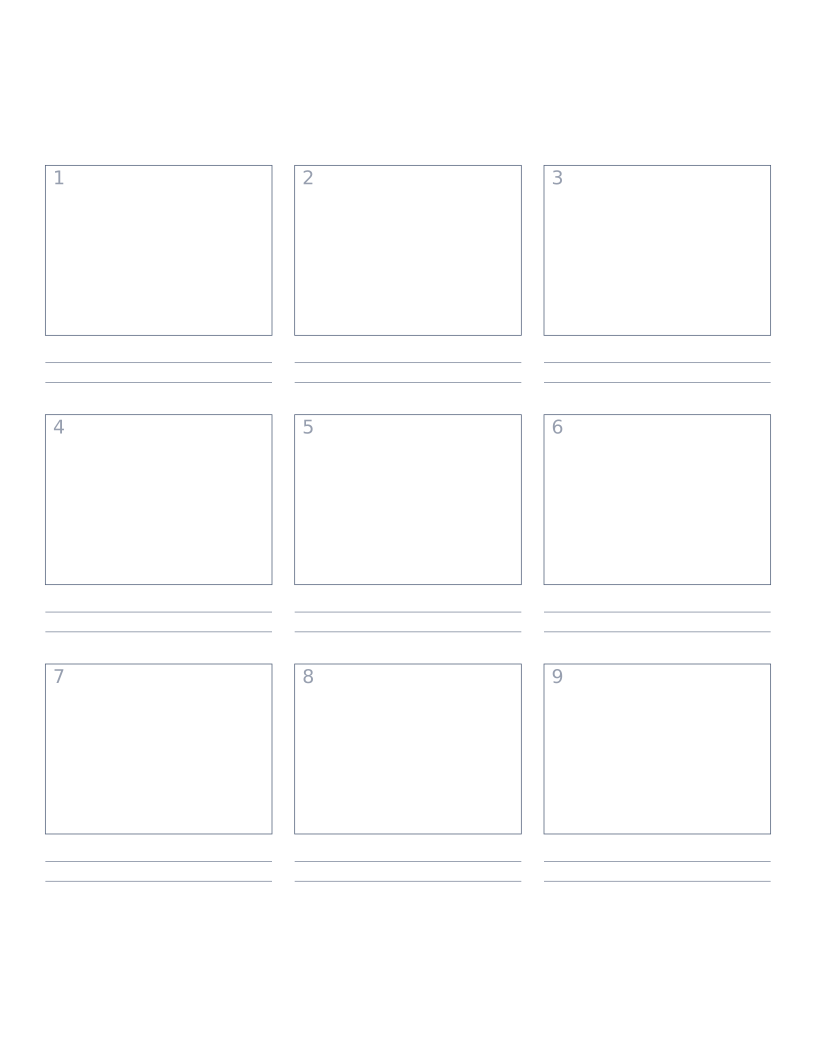
Storyboard Paper (3×3)
Nine-panel storyboard layout with caption space: for filmmakers, animators and UX designers.
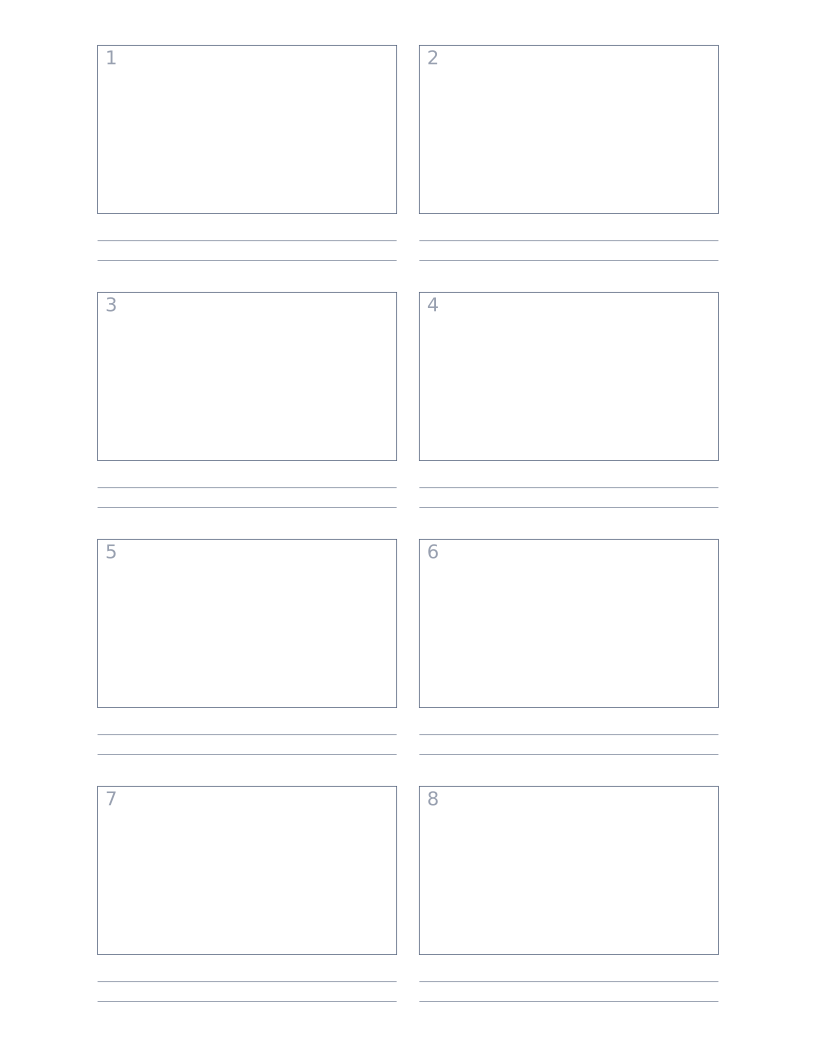
Storyboard Paper (2×4)
Eight-panel storyboard with widescreen 16:9 frames for video and film work.
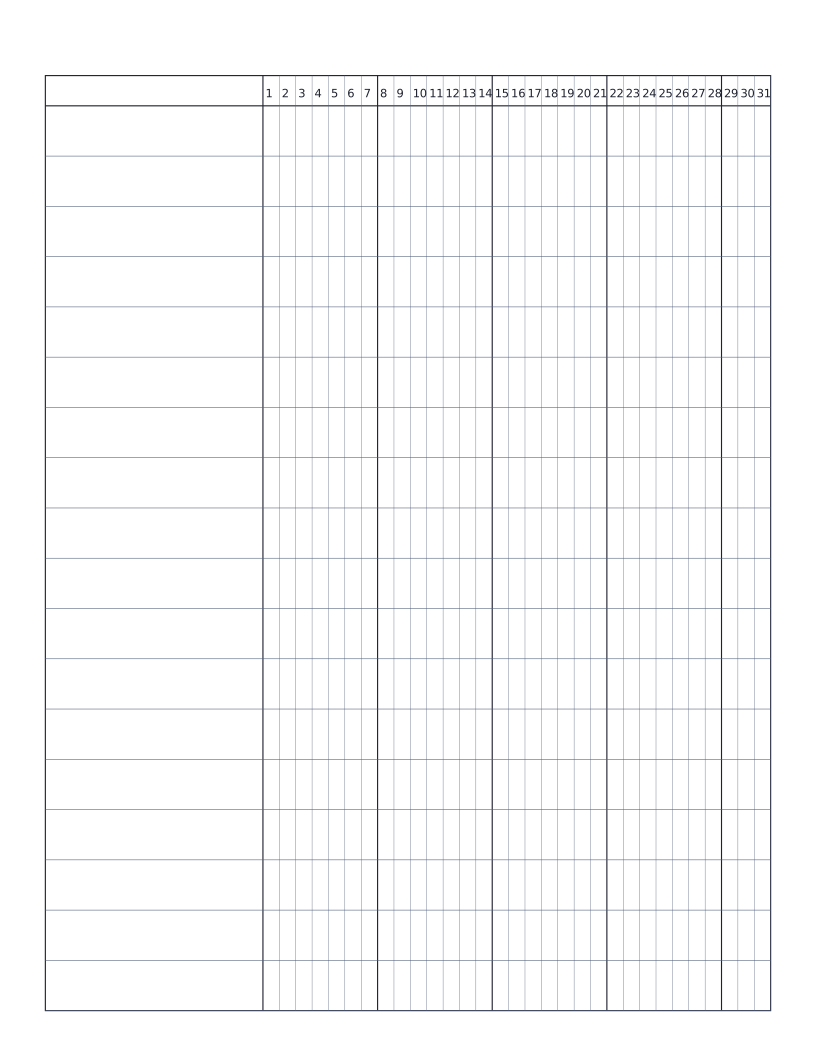
Habit Tracker (Monthly)
Monthly habit tracker: name column plus 31-day grid for marking off daily habits.
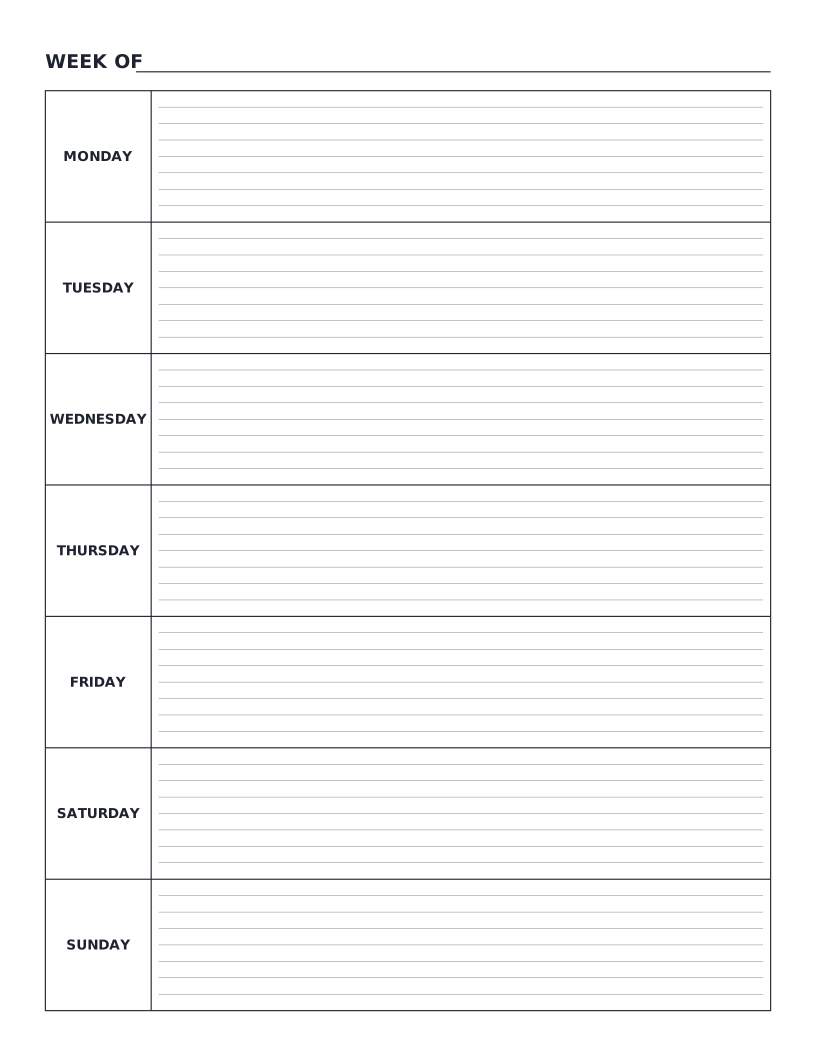
Weekly Planner
Monday-to-Sunday weekly planner: seven labelled day rows with writing lines for tasks, notes and appointments.