Live preview · Letter (8.5" × 11") · Gray lines
Zaner-Bloser Handwriting Paper
Three-line handwriting paper at the row spacing used by the Zaner-Bloser curriculum, the most widely-adopted handwriting system in US elementary education. Solid topline, dashed midline, solid baseline, and a generous descender gap between rows for tails of g, j, p, q and y.
Download generates a crisp vector PDF directly, no print dialog needed.
Choose a different paper size:
Choose a different line color:
Great for
- K–2 Zaner-Bloser handwriting instruction
- Daily handwriting drills and copybook work
- Penmanship homework and worksheets
- Adult handwriting remediation with traditional letter forms
Zaner-Bloser Handwriting Paper at a glance
| What it is | Three-line handwriting paper at the traditional Zaner-Bloser pitch: the most widely used handwriting format in US elementary schools. |
|---|---|
| Category | Writing & Notes |
| Paper sizes | Letter (8.5" × 11"), A4 (210 × 297 mm), 11" × 17", Legal (8.5" × 14"), A3 (297 × 420 mm), A2 (420 × 594 mm), Poster (18" × 24"), Movie Poster (27" × 40") |
| Line colors | Faint, Light, Gray, Dark, Black, Blue, Green (default: Gray) |
| Format | Vector PDF download at exact physical scale, or print directly from the browser |
| Price & license | Free. No signup or watermark. Printed sheets may be used for personal, classroom and commercial work. |
About zaner-bloser handwriting paper
Zaner-Bloser is the older and more widespread of the two dominant US handwriting curricula (the other being D'Nealian). The company that developed it — Zaner-Bloser, founded in 1888 — was for decades the principal supplier of school handwriting books, copy slips, and ruled paper in the United States. Generations of American adults learned to print on Zaner-Bloser paper without ever knowing the brand name; they just called it 'kindergarten paper' or 'baby paper'. The defining feature of Zaner-Bloser print is that letters are vertical (no slant) and the strokes are mostly straight or simple curves, with no flourish at the exits. The transition to Zaner-Bloser cursive in grade 3 is a separate retraining — the print letters don't connect, the cursive letters do, and the two styles look noticeably different. Despite this discontinuity, the curriculum has remained widely used because the print is exceptionally legible and the three-line paper at this row pitch (22 mm, about 7/8 inch) provides a generous, forgiving practice surface for very young writers.
What's on the page
Stacked three-line rows at 22 mm pitch — slightly taller than the D'Nealian variant on this site. Each row has a solid topline, a dashed midline (drawn lighter to distinguish it from the solid lines), and a solid baseline. The vertical gap between baseline and the next topline is about 6 mm: enough for descenders without crowding. Lines extend from margin to margin so children can write from the start of a line.
How to use it well
Vertical strokes only
Zaner-Bloser print has no slant. The vertical of an 'l' or a 't' should be perfectly upright. Children who lean their letters by accident are usually emulating cursive or a parent's hand; gently correct toward straight verticals during practice.
Each letter ends cleanly
Zaner-Bloser print letters don't have entry or exit hooks. The bottom of a 'c' just stops at the baseline; the right side of an 'n' just stops at the baseline. No tails, no flourishes. That clean end is what distinguishes it from D'Nealian.
Use the midline aggressively
Lowercase letters without ascenders or descenders (a, c, e, n, o, s, m, etc.) should fill the space between baseline and midline. Letters that go too low (below baseline) or too high (above midline) need correction. The dashed line is the most important visual cue on the page.
Match row size to grade
The 22 mm pitch on this template suits late K and grade 1. Kindergarten students just starting often benefit from 25–30 mm rows; grade 2 and beyond move to 18–20 mm. The smaller the rows, the more motor control required.
Common mistakes to avoid
- Letting children invent their own letter shapes. Zaner-Bloser has a specific letter shape for each printed character; deviating from it (a Greek-style ε for 'e', for instance) confuses children when they later read printed books. Insist on the standard shapes during practice.
- Skipping the midline. The dashed midline is the single most important guide on handwriting paper. Letters that don't respect the midline come out at wildly inconsistent sizes, which makes the whole text hard to read.
- Treating the paper as decorative. The three lines aren't just visual — they're functional limits. Letters should touch them deliberately. The topline is the ceiling for tall letters; the midline is the ceiling for short letters; the baseline is the floor for all of them.
FAQ, Zaner-Bloser Handwriting Paper
How does Zaner-Bloser differ from [D'Nealian](/graph-paper/dnealian-handwriting-paper)?+
Zaner-Bloser print is vertical and uses straightforward letter shapes with no exit hooks; the transition to cursive in grade 3 is a separate retraining. D'Nealian print is slightly slanted with curved exit tails that flow naturally into cursive without retraining. The paper formats are similar; the letter shapes children practice differ.
What grade is the 22 mm pitch right for?+
Late kindergarten and grade 1. Earlier than that, taller rows (25–30 mm) help children gain motor control. Beyond grade 1, schools typically shift to smaller rows (18 mm or less) as fine motor skills develop. The 22 mm pitch is a reasonable default for most early elementary use.
Can I use this for left-handed writers?+
Yes — the three-line format works equally well for left and right hands. Left-handed writers sometimes prefer the paper rotated slightly clockwise (so the lines run downward-right-to-upward-left) to keep the writing hand below the line, but the underlying scaffold is the same.
What's the difference between this and [generic handwriting paper](/graph-paper/handwriting-practice-paper)?+
Generic handwriting paper is the same three-line scaffold without a brand-curriculum association. Zaner-Bloser paper specifically matches the row pitch used in Zaner-Bloser-branded workbooks. The functional difference is small (a few millimetres in row height), but parents and teachers using the curriculum often prefer the matching pitch for consistency between school and home.
Is Zaner-Bloser still widely used?+
Yes, though estimates vary. As of the mid-2010s, somewhere between 40 and 60 percent of US elementary schools used Zaner-Bloser; most of the rest used D'Nealian. A few use other curricula (Handwriting Without Tears, Italic, Modern Manuscript). Both Zaner-Bloser and D'Nealian remain commercially active and continue to publish new editions of their workbooks.
Printing tips for best results+
- 1. Click Print above. A new tab opens the template at exact size.
- 2. The print dialog appears automatically. Set Scale to 100%. Never "Fit to page", which silently shrinks every cell.
- 3. Set Margins to None or Minimum so the grid reaches the page edge.
- 4. For a PDF, click Download instead. It generates a vector PDF directly without going through the printer driver.
You might also like
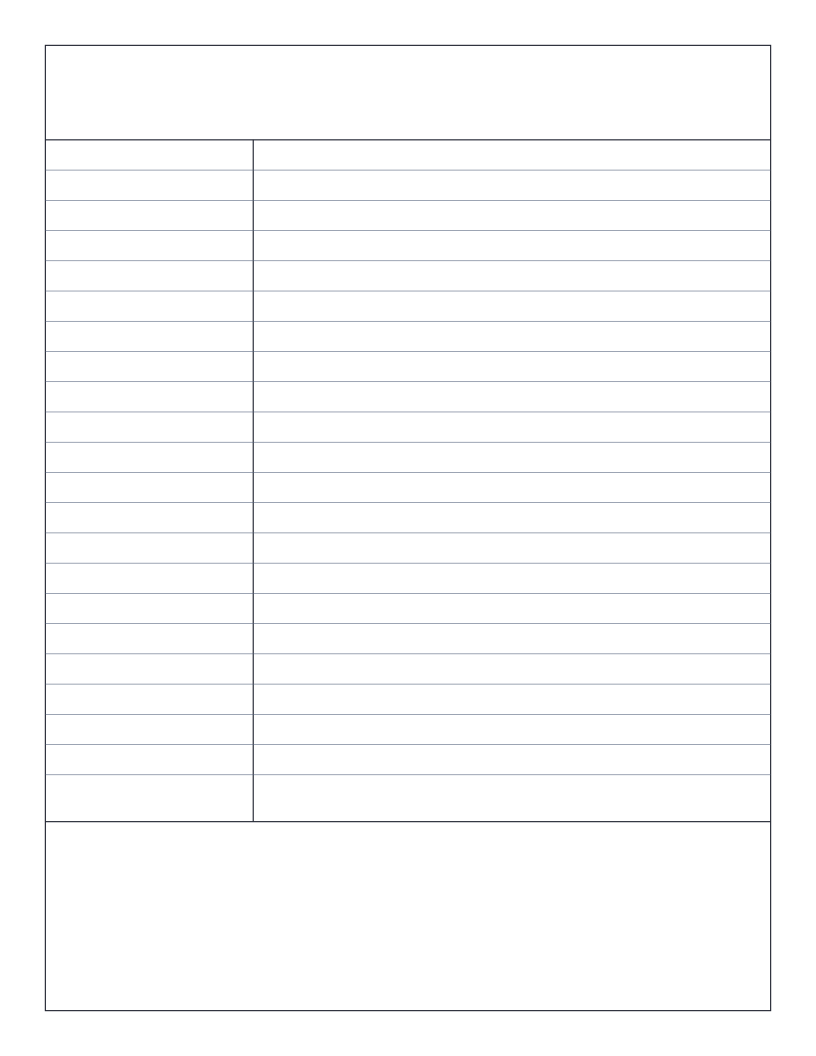
Cornell Notes Paper
The famous Cornell note-taking layout: cue column, main notes and summary band.
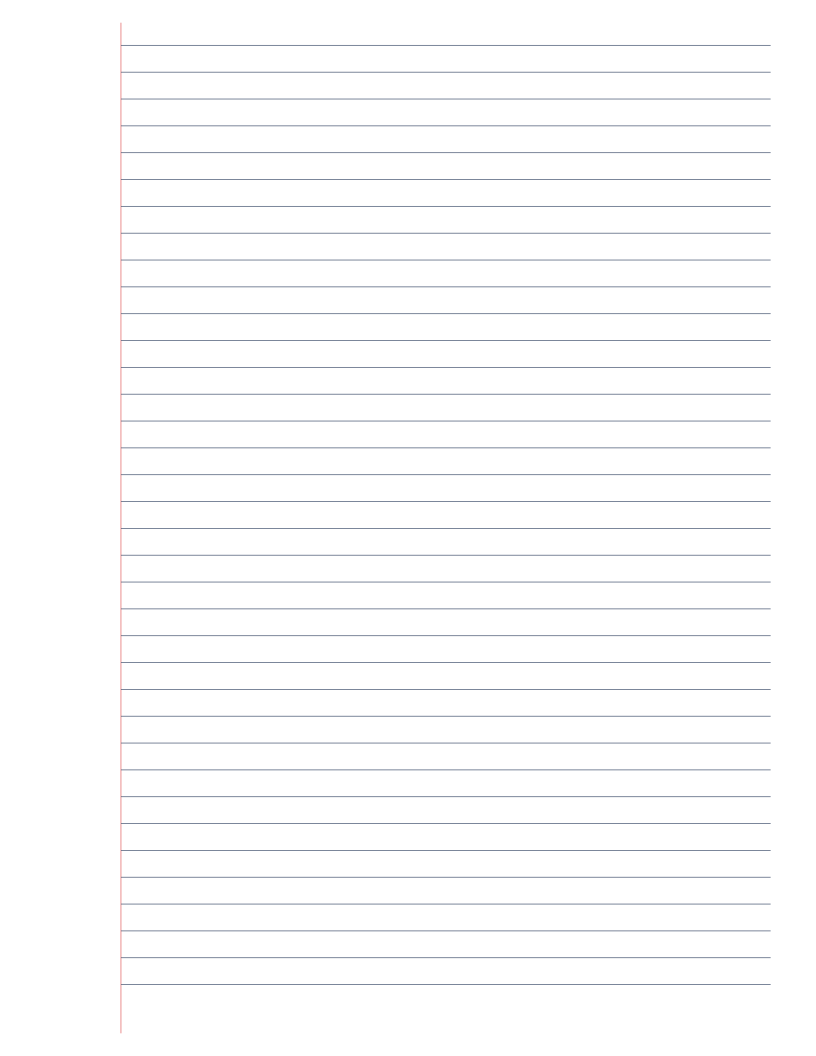
Lined Paper (College Ruled)
Classic college-ruled lined paper: 7.1mm line spacing with a red margin.
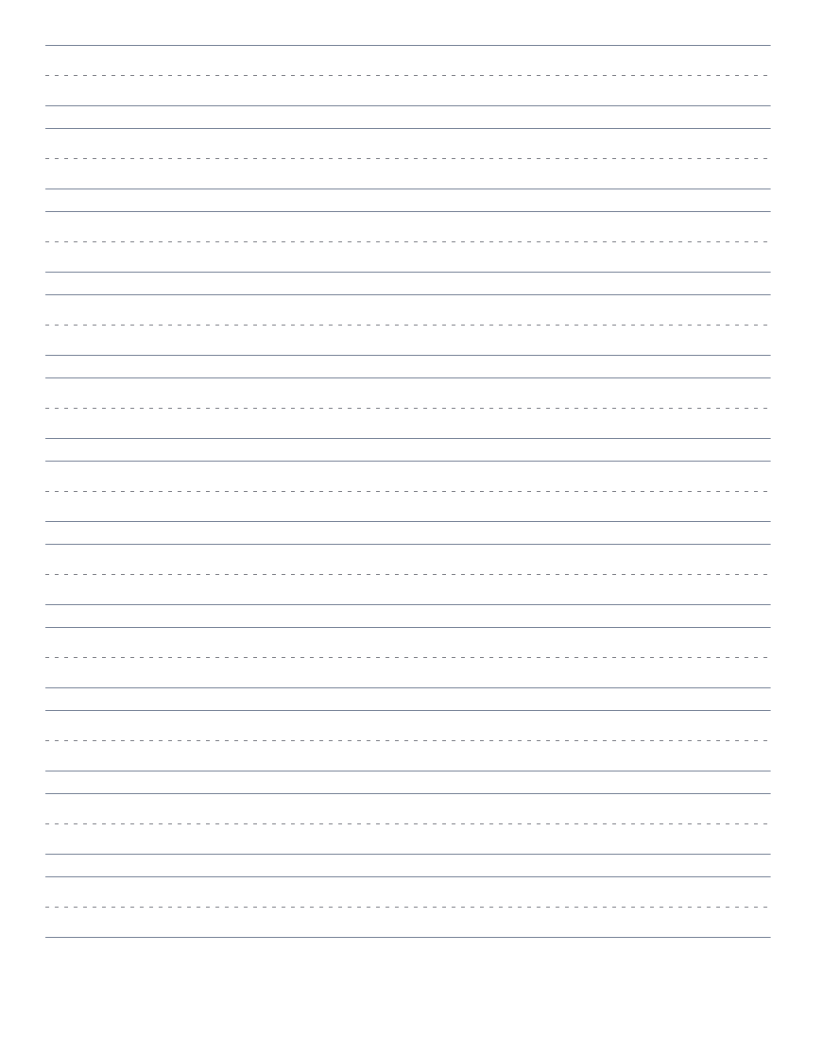
Handwriting Practice Paper
Three-line handwriting paper with dashed midline: for primary writing practice.
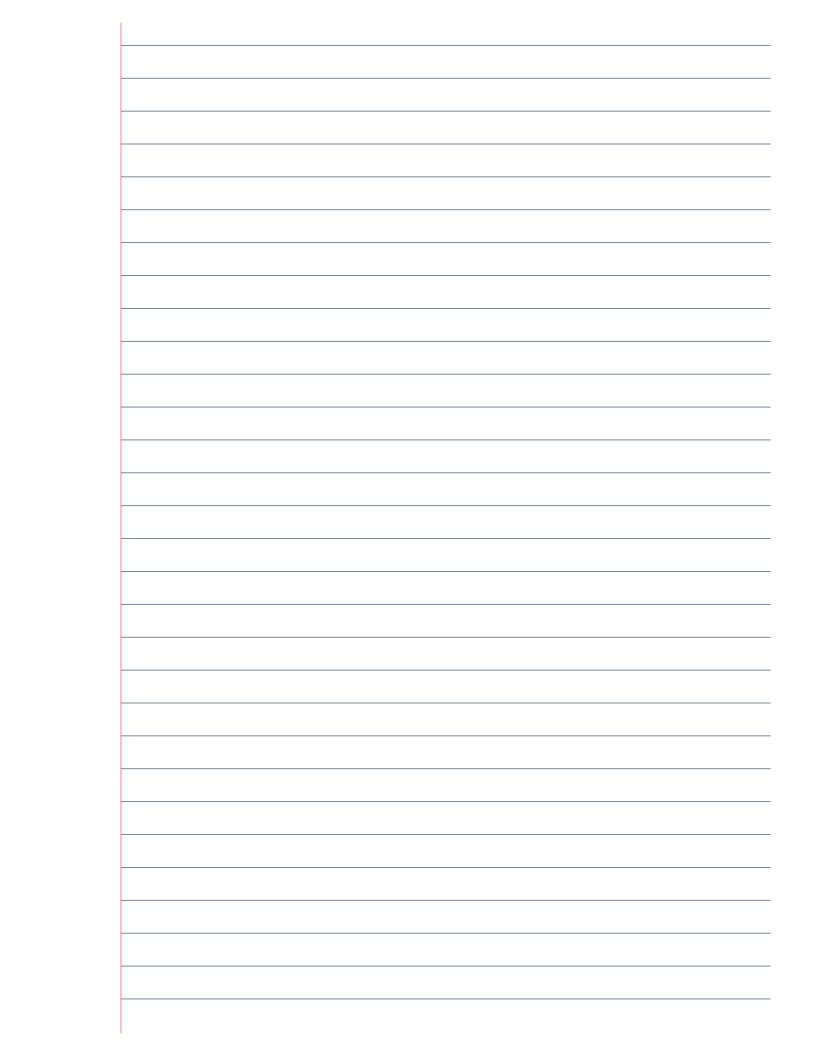
Wide Ruled Lined Paper
Classic wide-ruled lined paper: 8.7mm line spacing, the US elementary school standard.