Live preview · Letter (8.5" × 11") · Light lines
3-Point Perspective Grid
A 3-point perspective grid: two vanishing points on the horizon for horizontal convergence plus a third vanishing point below the page that makes vertical lines converge downward. The setup for any dramatic 'looking up at a tall building' or 'standing at the top of a tower' view.
Download generates a crisp vector PDF directly, no print dialog needed.
Choose a different paper size:
Choose a different line color:
Great for
- Skyscrapers and tall buildings viewed from street level
- Bird's-eye-view cityscapes (with the third VP above instead of below)
- Dramatic action scenes in comics and concept art
- Any scene where vertical convergence is part of the composition
3-Point Perspective Grid at a glance
| What it is | Two vanishing points on the horizon plus a third below the page: the standard layout for looking up at tall buildings. |
|---|---|
| Category | Specialty |
| Paper sizes | Letter (8.5" × 11"), A4 (210 × 297 mm), 11" × 17", Legal (8.5" × 14"), A3 (297 × 420 mm), A2 (420 × 594 mm), Poster (18" × 24"), Movie Poster (27" × 40") |
| Line colors | Faint, Light, Gray, Dark, Black, Blue, Green (default: Light) |
| Format | Vector PDF download at exact physical scale, or print directly from the browser |
| Price & license | Free. No signup or watermark. Printed sheets may be used for personal, classroom and commercial work. |
About 3-point perspective grid
Three-point perspective is what you reach for when the camera tilts. In 1-point and 2-point, vertical lines stay vertical — the assumption is the viewer is looking horizontally. Three-point adds a third vanishing point above the scene (looking down) or below the scene (looking up), so vertical lines converge as well. The result is the dramatic foreshortening you see in comic-book splash pages of superheroes looming over alleys, in concept art for skyscraper interiors, and in the photographs that come out of a phone camera held at the base of a tall building. The technique was uncommon in painting before the 20th century — the calm horizontals and verticals of classical architecture made it unnecessary — but became routine in mid-century commercial art when illustrators needed to convey scale and drama in advertising and comics. The third VP is usually placed far outside the page, sometimes several pages away, because vertical convergence is subtle in any real scene where the viewer is more than a few feet from the building.
What's on the page
Two vanishing points on the horizon (off the left and right edges, slightly further out than the 2-point version), plus a third VP below the page (at 140% of page height). The horizon line runs across the page. 28 rays radiate from each of the two horizon VPs and 20 rays from the lower VP. The lower-VP rays fan upward into the page, producing the converging-downward verticals that define a 'looking up' view.
How to use it well
Use the third VP sparingly
Real scenes only show noticeable vertical convergence when the viewer is close to a tall object. Apply the third VP for dramatic emphasis; for normal mid-range views, 2-point is more truthful to what the eye actually sees.
Move the third VP above the page for a downward view
The grid puts the third VP below, which converges verticals downward — a 'looking up at a building' setup. To draw looking *down* from a height, mentally flip the grid (or rotate the page 180°). The geometry is symmetric.
Place the third VP far away for subtlety
The further the third VP from the page, the less aggressive the vertical convergence. The grid puts it at 140% of page height, which is mild. For comic-book-dramatic compression, you'd want it closer (110–120%). For realistic architectural views, you'd want it further (200%+).
All three VPs must form a triangle for valid geometry
In a true 3-point setup, the three VPs sit at the corners of a triangle (two on the horizon, one above or below). They cannot all be collinear. The grid satisfies this by default; if you redraw VPs by hand, keep them in a triangle.
Common mistakes to avoid
- Using 3-point when 2-point suffices. The third VP introduces real geometric constraints; using it on a scene that doesn't need it just complicates the drawing without adding believability.
- Putting the third VP too close. If the VP is just below the page, every vertical converges aggressively and the building looks like it's collapsing inward. Far VPs give realistic mild convergence; close VPs give cartoony drama.
- Mixing up which VP each line converges to. A 3-point scene has three sets of parallel lines, each converging to one VP. Edges that look superficially similar but actually run in different directions in the scene go to different VPs — keep this straight or the drawing falls apart.
FAQ, 3-Point Perspective Grid
When do I need 3-point instead of [2-point](/graph-paper/two-point-perspective-grid)?+
Whenever vertical convergence is part of the scene — looking up at a tall building from street level, standing at the top of a tower looking down at the street, dramatic comic-book angles. If the viewer's eye is looking strictly horizontally, you're in 2-point land. The moment the camera tilts up or down meaningfully, 3-point is the honest choice.
Why is the third VP below the page, not above?+
The grid is configured for a 'looking up at a tall building' view, where verticals converge downward toward a VP somewhere below the viewer's feet. For a 'looking down from a height' view, rotate the page 180° and you get the equivalent geometry with the third VP above. Both are valid 3-point setups; one of them happens to match the most common search use case.
Can the third VP be anywhere?+
Anywhere not on the horizon line. The horizon contains the first two VPs; the third must sit off-horizon, above or below. Where exactly is up to the artist — closer to the page produces dramatic convergence, further away produces subtle realism.
How do verticals work in 3-point?+
They don't stay vertical. Every vertical edge in the scene converges to the third VP. A skyscraper drawn in 3-point has its sides leaning toward each other as they rise (or fall), with the leftward and rightward horizontal edges still converging to the two horizon VPs. That triple convergence is what gives 3-point its characteristic look.
Is this overkill for casual sketching?+
Probably. 3-point is most useful when drama and scale matter — comics, cinematic concept art, architectural towers. For most everyday sketching, 1-point or 2-point handles the scene with less geometric overhead.
Printing tips for best results+
- 1. Click Print above. A new tab opens the template at exact size.
- 2. The print dialog appears automatically. Set Scale to 100%. Never "Fit to page", which silently shrinks every cell.
- 3. Set Margins to None or Minimum so the grid reaches the page edge.
- 4. For a PDF, click Download instead. It generates a vector PDF directly without going through the printer driver.
You might also like
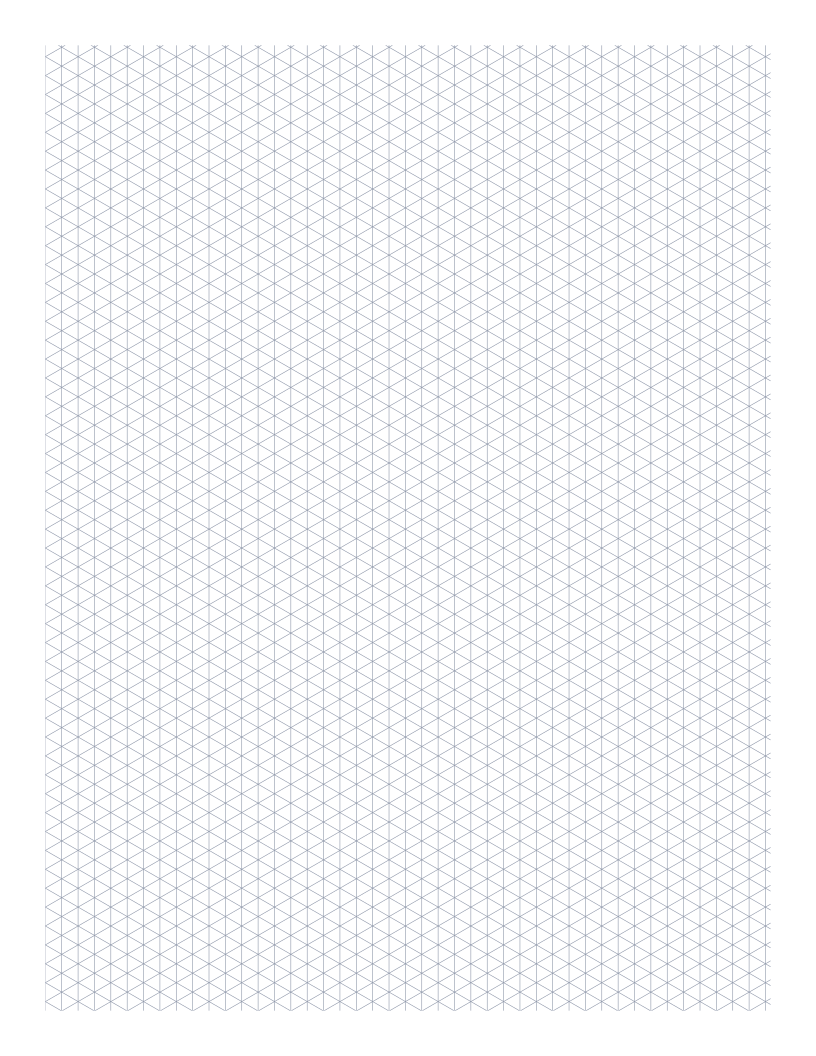
Isometric Graph Paper
Triangular 30°/60° grid for 3D drawings, technical sketches and Minecraft-style design.
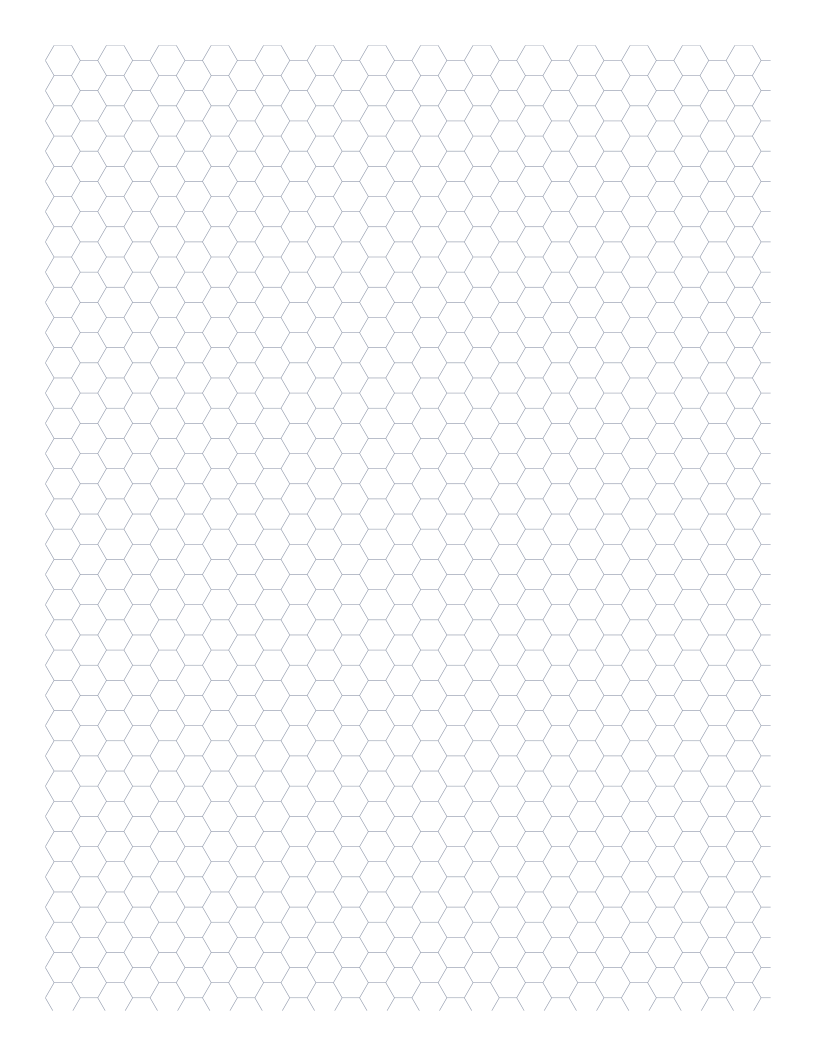
Hexagonal Graph Paper
Hexagonal tessellation: perfect for tabletop wargaming, organic chemistry and tile-based games.
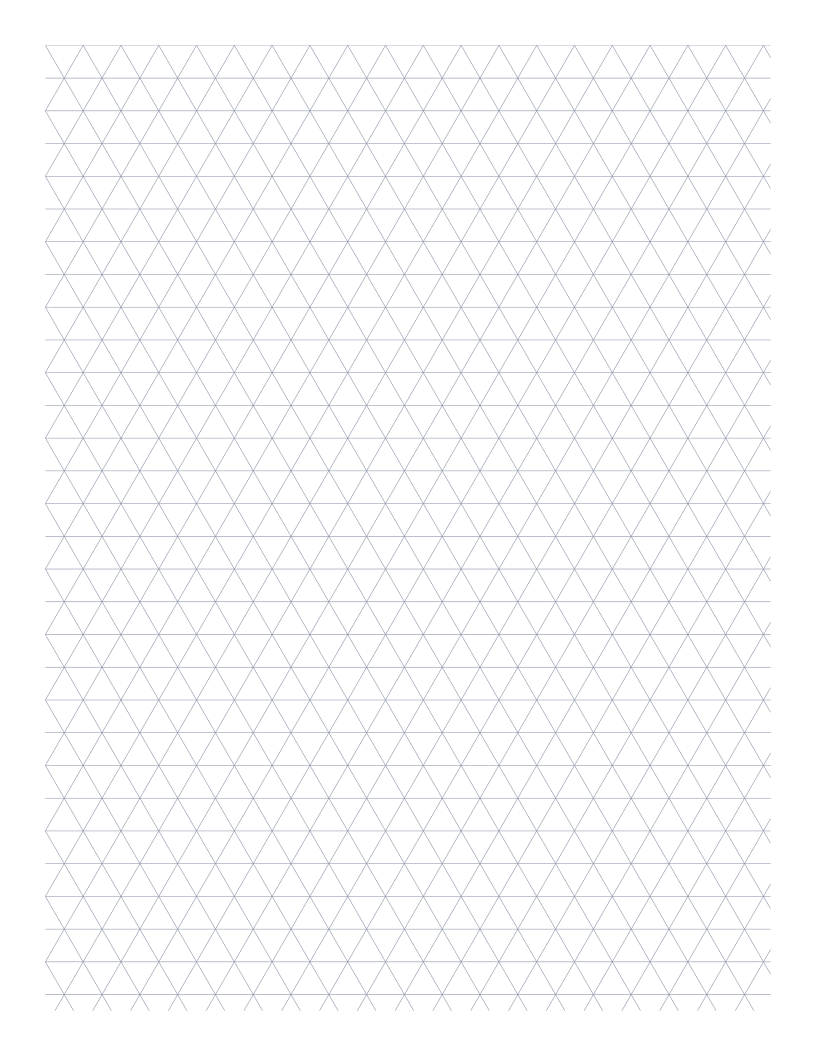
Triangular Graph Paper
Equilateral triangle grid: useful for ternary diagrams and tessellation art.
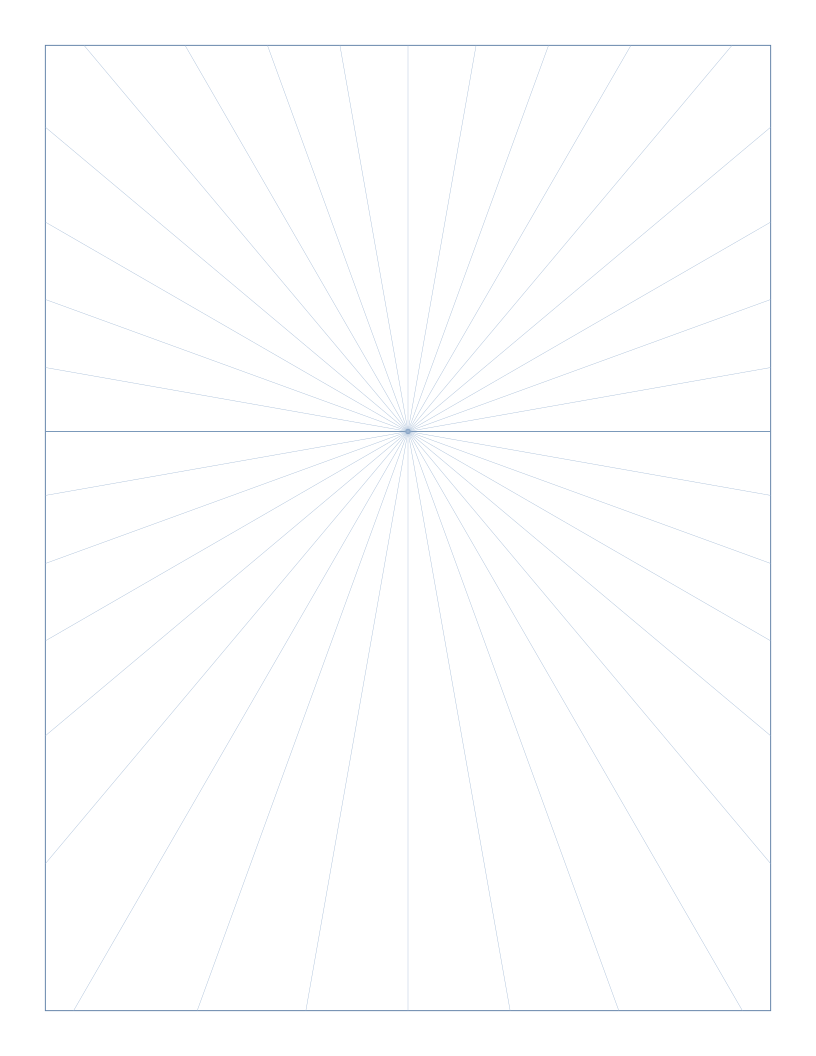
1-Point Perspective Grid
Single vanishing point on the horizon with radiating guides: the classic setup for hallways, rooms and street scenes.