Live preview · Letter (8.5" × 11") · Gray lines
Knitting Chart Paper
Knitting chart paper with rectangular cells in a 5:4 (wider than tall) ratio that matches the gauge of standard stockinette stitch. Designs charted on this paper come out looking right when knit, unlike square graph paper, which distorts the proportions of any colourwork or stitch pattern.
Download generates a crisp vector PDF directly, no print dialog needed.
Choose a different paper size:
Choose a different line color:
Great for
- Colourwork charts (Fair Isle, intarsia, mosaic)
- Cable and stitch-pattern diagrams
- Picture knitting and chart-from-photo conversions
- Custom sweater motifs and sock heel charts
Knitting Chart Paper at a glance
| What it is | Rectangular cells (5:4 aspect ratio) matching the stitch gauge of stockinette knitting: charts look right when knit up. |
|---|---|
| Category | Specialty |
| Paper sizes | Letter (8.5" × 11"), A4 (210 × 297 mm), 11" × 17", Legal (8.5" × 14"), A3 (297 × 420 mm), A2 (420 × 594 mm), Poster (18" × 24"), Movie Poster (27" × 40") |
| Line colors | Faint, Light, Gray, Dark, Black, Blue, Green (default: Gray) |
| Format | Vector PDF download at exact physical scale, or print directly from the browser |
| Price & license | Free. No signup or watermark. Printed sheets may be used for personal, classroom and commercial work. |
About knitting chart paper
The most common mistake in knitting design is charting a pattern on square graph paper. A typical stockinette stitch is wider than it is tall — roughly five stitches per inch across and seven rows per inch down, giving a stitch aspect ratio of about 5:7 or 4:5 depending on yarn and tension. A heart drawn on square paper looks correct on the page; the moment it's knit, it stretches into an awkward elongated heart because each stitch is shorter than it is wide. Knitting chart paper compensates by making the cells the same shape as the underlying stitch, so what you see on paper is what you get on the needles. The convention dates back to the printed pattern books of the early 20th century: industrial knitting machine manufacturers shipped graph paper with their machines that matched the gauge of the machine's stitch, and home knitters adopted the same paper for hand-knit designs. The 5:4 ratio on this template is the average across common worsted-weight stockinette; very fine yarns or unusual stitches may have slightly different ratios, in which case you'd want a custom paper, but 5:4 is the right starting point for the majority of projects.
What's on the page
Rectangular cells, 5 mm wide and 4 mm tall, arranged in a grid that fills the printable area. Heavier accent lines mark every tenth row and tenth column, so you can count out 10×10 blocks without losing your place — essential when reading a chart for a long row. The grid is centred horizontally and vertically on the page so the leftover space splits evenly into the margins.
How to use it well
Read charts from the bottom up
Knitting builds upward from the cast-on edge, so charts are read bottom-to-top to match. Each row of the chart corresponds to one row of knitting; the first row of the chart is the first row above the cast-on.
Odd rows right-to-left, even rows left-to-right (flat knitting)
When you knit flat (back and forth), every other row is worked from the wrong side. The chart reading direction alternates to match: row 1 right-to-left, row 2 left-to-right, and so on. For knitting in the round, all rows read right-to-left.
Use the 10×10 blocks for counting
The heavier lines every 10 cells let you say 'this motif is 30 stitches wide, 20 rows tall' at a glance, without counting individual cells. Block-counting also makes it easier to align repeats when you're charting a multi-element pattern.
Test your gauge before trusting the proportions
The 5:4 ratio matches average worsted stockinette, but your personal gauge may differ depending on yarn weight, needle size and tension. Swatch first, measure your stitches and rows per inch, and decide whether the chart needs adjustment for your specific project.
Common mistakes to avoid
- Using square graph paper. The most common cause of 'why does my motif look stretched?' is charting on a square grid. Always use rectangular knitting paper or your designs will distort vertically by 25–40%.
- Not matching the chart aspect to the actual knit gauge. The 5:4 ratio is generic; lace, garter stitch, ribbing and slipped-stitch fabrics have different gauges. Custom paper or a digital tool that matches your project's gauge is more accurate for unusual fabrics.
- Charting in the wrong direction. Mirroring confusion (reversing the chart left-to-right) is a common error in beginner colourwork; it produces a mirror-image knit that looks subtly wrong. Always note the reading direction on the chart explicitly.
FAQ, Knitting Chart Paper
Why are the cells rectangular?+
Because stitches are wider than tall. A standard knitted stitch is about 5 stitches per inch wide but 7 rows per inch tall, giving a stitch shape that's roughly 5:7 — wider in the horizontal direction (per stitch) and shorter in the vertical (per row). Rectangular cells match this so the charted design and the finished knit look the same.
Is 5:4 the right ratio for my knitting?+
It's the average for stockinette in worsted-weight yarn. Knit a small gauge swatch, measure your stitches per inch (s/in) and rows per inch (r/in), then divide: cell width / cell height should equal r/s. If your gauge is 5 stitches/in × 7 rows/in, the ratio is 7/5 = 1.4 — which matches the 5:4 (1.25) paper reasonably well but lace and other stitch patterns can vary significantly.
Can I use this for crochet?+
Crochet typically uses square graph paper for tapestry crochet because each single crochet stitch is roughly as wide as it is tall. Granny squares and filet crochet also use squares. So for crochet, the regular grid paper templates are usually better than this one.
How do I print a chart on this paper?+
Two options. Hand-draw your chart on the printed paper, or design digitally (any spreadsheet or chart program), set the column width and row height to the same 5:4 ratio, print the design, and use this paper for the gauge-correct counting reference next to your printed chart.
What's the difference between this and [cross-stitch paper](/graph-paper/cross-stitch-paper)?+
Cross-stitch paper has square cells (because cross-stitches are square) with heavy lines every 10 stitches; knitting chart paper has rectangular cells matching the stitch gauge. They serve similar purposes (counting patterns) but for fabrics with different stitch geometries.
Printing tips for best results+
- 1. Click Print above. A new tab opens the template at exact size.
- 2. The print dialog appears automatically. Set Scale to 100%. Never "Fit to page", which silently shrinks every cell.
- 3. Set Margins to None or Minimum so the grid reaches the page edge.
- 4. For a PDF, click Download instead. It generates a vector PDF directly without going through the printer driver.
You might also like
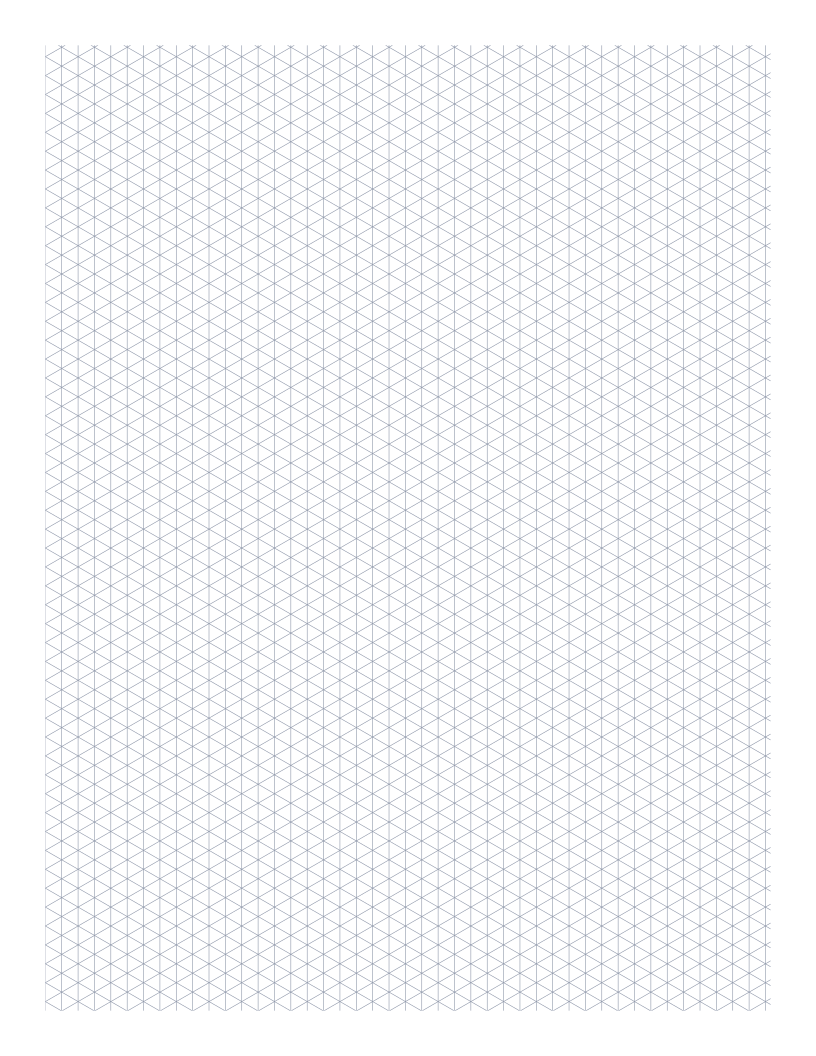
Isometric Graph Paper
Triangular 30°/60° grid for 3D drawings, technical sketches and Minecraft-style design.
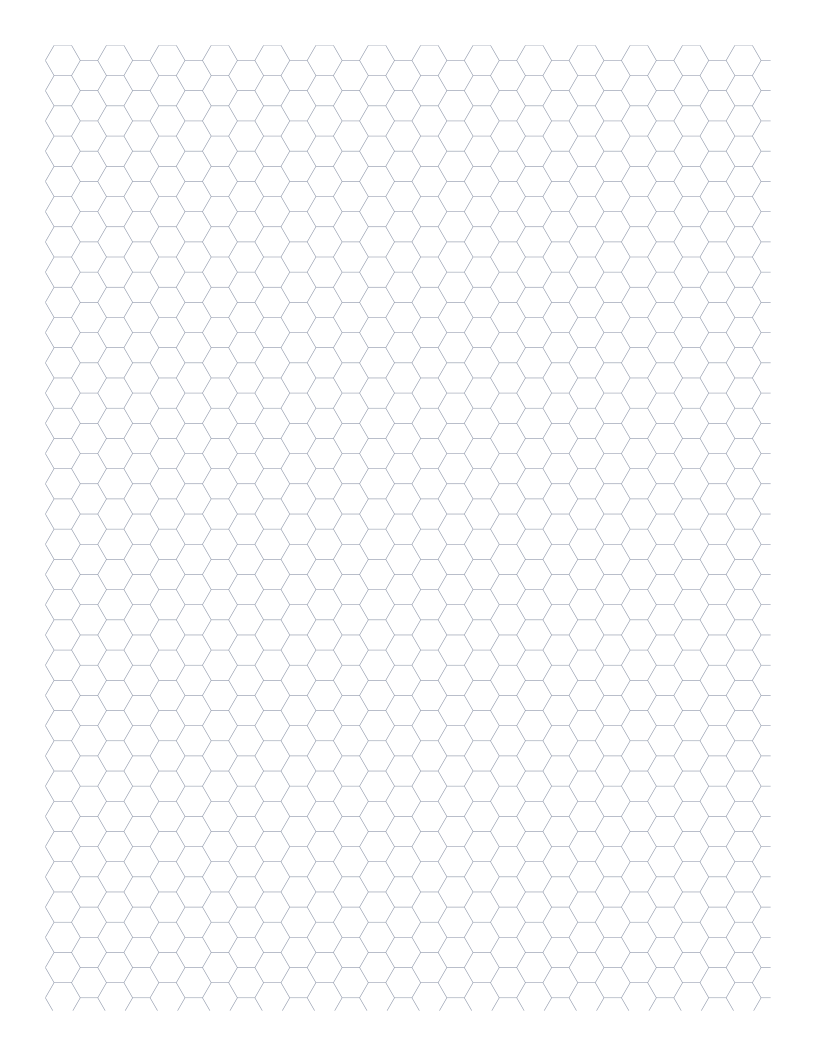
Hexagonal Graph Paper
Hexagonal tessellation: perfect for tabletop wargaming, organic chemistry and tile-based games.
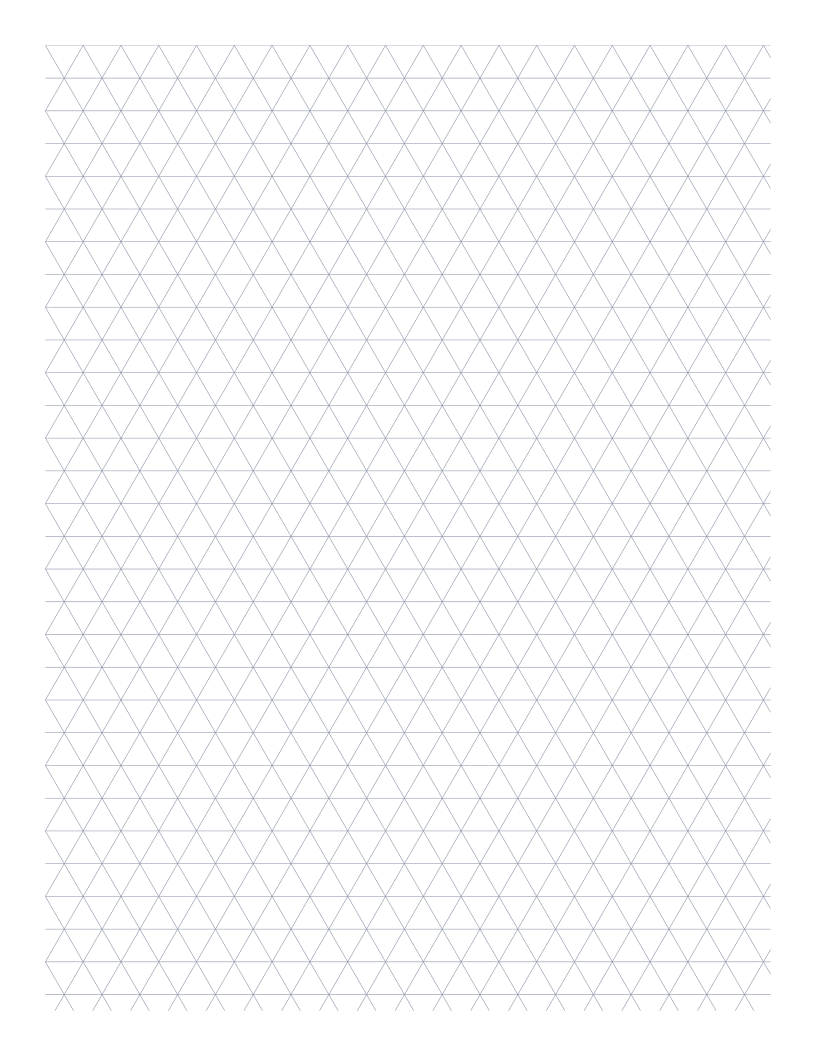
Triangular Graph Paper
Equilateral triangle grid: useful for ternary diagrams and tessellation art.
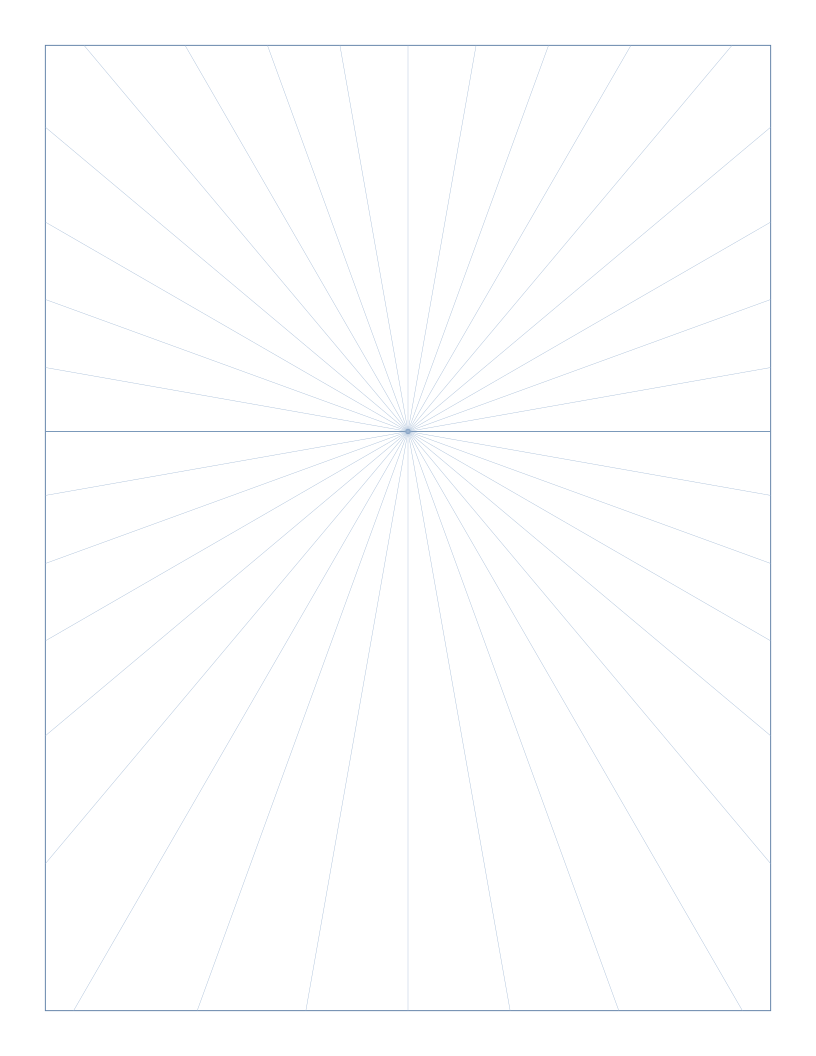
1-Point Perspective Grid
Single vanishing point on the horizon with radiating guides: the classic setup for hallways, rooms and street scenes.