Live preview · Letter (8.5" × 11") · Light lines
Dot Grid Paper (1/4")
Quarter-inch dot grid is the imperial cousin of the more common 5 mm version. The 6.35 mm spacing fits US Letter without awkward remainder space, and the slightly larger gap gives each line of handwriting a touch more breathing room.
Download generates a crisp vector PDF directly, no print dialog needed.
Choose a different paper size:
Choose a different line color:
Great for
- Bullet journaling on US Letter paper
- Planner and weekly-spread layouts
- Sketchnotes and visual meeting notes
- Hand lettering with mid-size letterforms
Dot Grid Paper (1/4") at a glance
| What it is | Quarter-inch dot grid: bullet journal layout matched to US paper. |
|---|---|
| Category | Dot Grid |
| Paper sizes | Letter (8.5" × 11"), A4 (210 × 297 mm), 11" × 17", Legal (8.5" × 14"), A3 (297 × 420 mm), A2 (420 × 594 mm), Poster (18" × 24"), Movie Poster (27" × 40") |
| Line colors | Faint, Light, Gray, Dark, Black, Blue, Green (default: Light) |
| Format | Vector PDF download at exact physical scale, or print directly from the browser |
| Price & license | Free. No signup or watermark. Printed sheets may be used for personal, classroom and commercial work. |
About dot grid paper (1/4")
Most dot grid notebooks are designed around metric 5 mm spacing because the European stationery industry set the standard. Quarter-inch dot grid is the parallel imperial standard. Used by US-made notebooks and worksheets that need to land cleanly on Letter paper without metric remainder margins. The 6.35 mm cell is 27 % wider than 5 mm (about 61 % larger by area), which means slightly more handwriting space per row but fewer rows per page. If you're committing to a Western-paper workflow (Letter, Legal, US printers, US notebooks), this is the spacing that aligns with everything else in that ecosystem.
What's on the page
0.9 mm dots at 6.35 mm spacing in your selected line colour, light weight by default. On Letter you get about 31 × 41 dots; on Legal, 31 × 53. We use a slightly larger dot than the 5 mm version (0.9 mm vs 0.8 mm) because the wider spacing makes each dot need to register more confidently on its own. At 5 mm the dots support each other visually, at 6.35 mm they're more isolated.
How to use it well
Match dot grid to your notebook spacing
If you carry a US-bought journal (Baron Fig, Field Notes, Moleskine US edition), it's almost certainly 1/4 inch dot grid. Match your printable inserts to the same spacing so a flat sheet in front of your journal feels continuous with the bound pages.
Use the imperial scale for measurement
Four dots equals one inch. For bullet journal habit trackers or weekly grids where each cell represents one day, the inch-aligned structure makes it easy to draw frames with a US ruler.
Pencil headers, ink content
The 0.9 mm dot is just visible enough to act as a registration mark for big headers. Pencil the bounding box dot-to-dot, then ink inside. The pencil disappears at erase, leaving only the inked content and the background dots.
Pick Gray over Light for technical use
For diagrams you need to count dots across after sketching (network diagrams, table layouts), Light dots disappear under any reasonable ink density. Gray stays visible without becoming distracting.
Common mistakes to avoid
- Assuming 1/4 inch dots and 5 mm dots line up. They don't, the spacing differs by about 1.35 mm per cell, enough that any sticker, overlay, or stencil designed for one will visibly drift over the other after about five cells.
- Printing on A4. The grid will land fine, but the cell layout won't be symmetrical relative to the paper edge: A4 is metric, the spacing is imperial. For metric paper, use the 5 mm dot grid template instead.
- Going larger on dot diameter. Anything above 1.2 mm at this spacing reads as a visible texture across the page. Stick to 0.9–1.0 mm and let the dots recede when you write over them.
FAQ, Dot Grid Paper (1/4")
How does this differ from the 5 mm dot grid?+
Spacing only. The 5 mm version has dots 5 mm apart; this one has dots 6.35 mm (1/4 inch) apart. The choice is paper-system: metric paper and metric notebooks → 5 mm, imperial paper and US notebooks → 1/4 inch. Both behave the same way structurally.
Will it fit in my Leuchtturm or Rhodia journal?+
Not exactly. Those notebooks use 5 mm spacing. A printed insert at 1/4 inch will be visibly different. Slightly more spacious dots, with one fewer row per inch of page.
Is dot grid better than graph paper for bullet journaling?+
Most bullet journalers prefer it because the dots stay invisible under handwriting and ink art, while graph lines compete visually. For spreads where you want a visible structure (tables, weekly habit grids), graph paper or a hybrid is sometimes cleaner.
Why is the dot slightly larger than on the 5 mm version?+
At wider spacing, each dot has to register more confidently on its own. The 0.9 mm size keeps the dots visible across the larger gap without making them feel heavy on the page.
What pen weight works best?+
0.3 mm to 0.5 mm. Wider pens (0.7 mm+) start to obscure individual dots when you write across them, defeating the registration purpose.
Printing tips for best results+
- 1. Click Print above. A new tab opens the template at exact size.
- 2. The print dialog appears automatically. Set Scale to 100%. Never "Fit to page", which silently shrinks every cell.
- 3. Set Margins to None or Minimum so the grid reaches the page edge.
- 4. For a PDF, click Download instead. It generates a vector PDF directly without going through the printer driver.
You might also like

Dot Grid Paper (5mm)
Subtle 5mm dot grid: the gold standard for bullet journals and clean sketches.
5mm Graph Paper
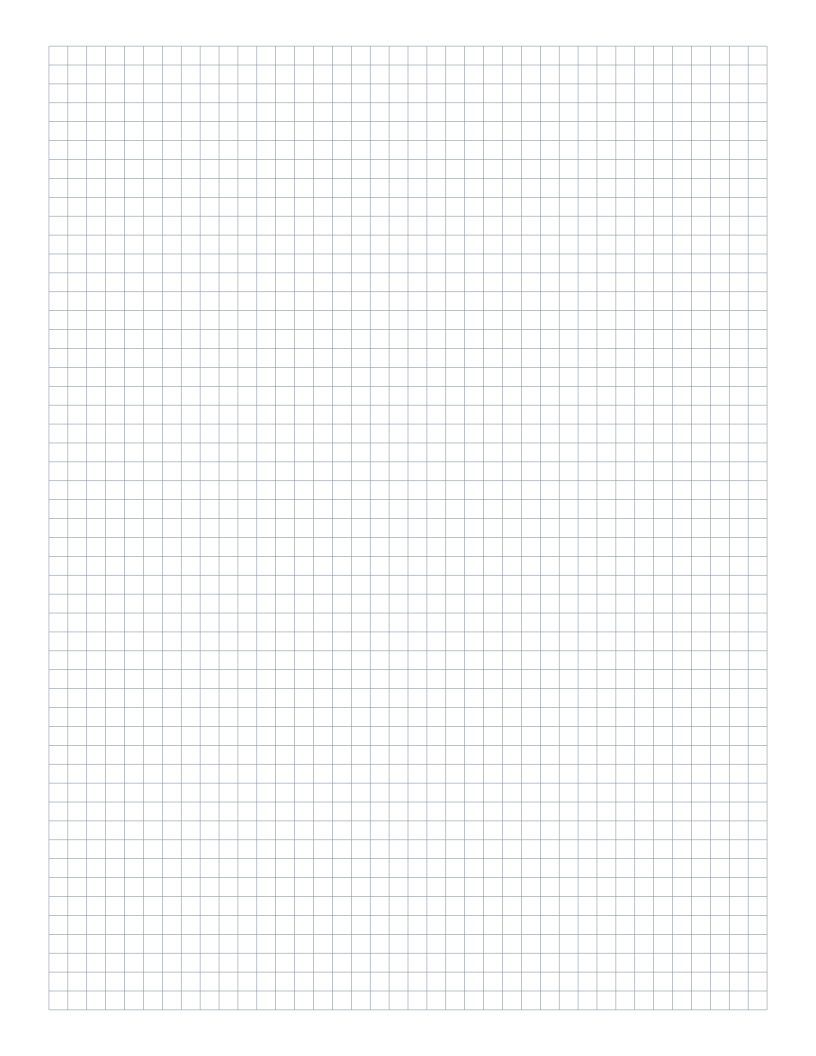
Standard 5mm square grid: the most popular spacing for math, engineering and general use.
1cm Graph Paper
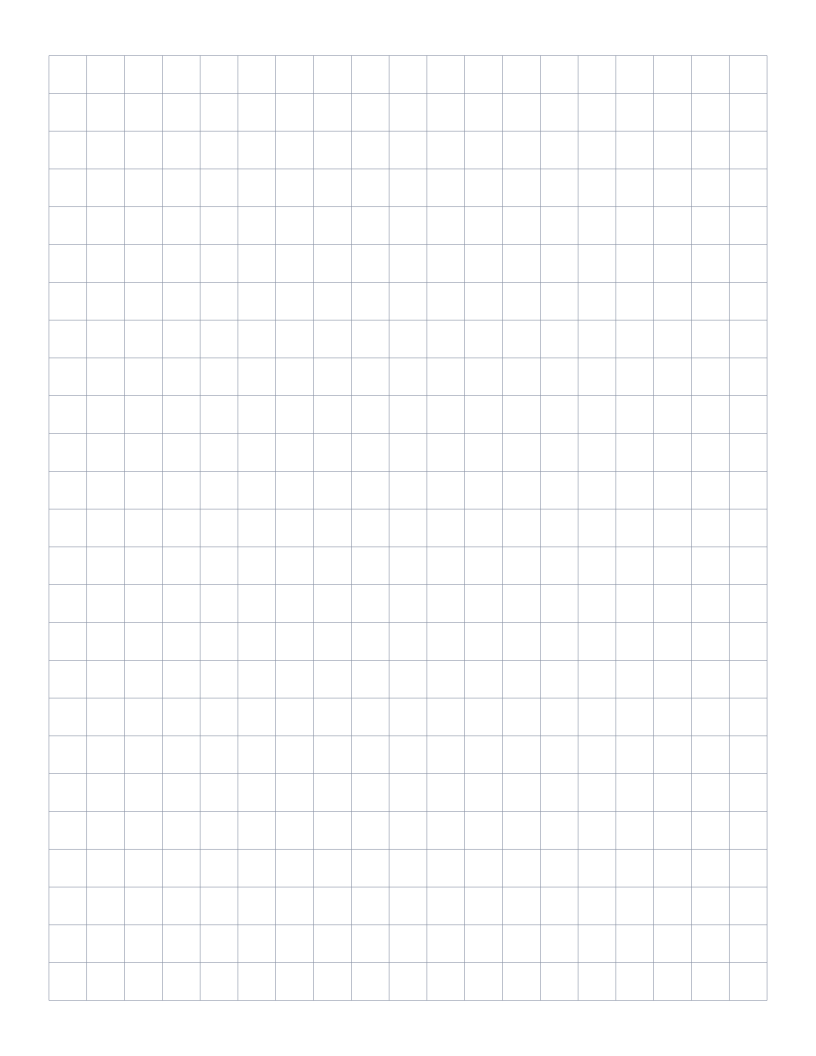
1 centimeter grid: the everyday graphing standard for elementary math and primary school.
1/4 Inch Graph Paper
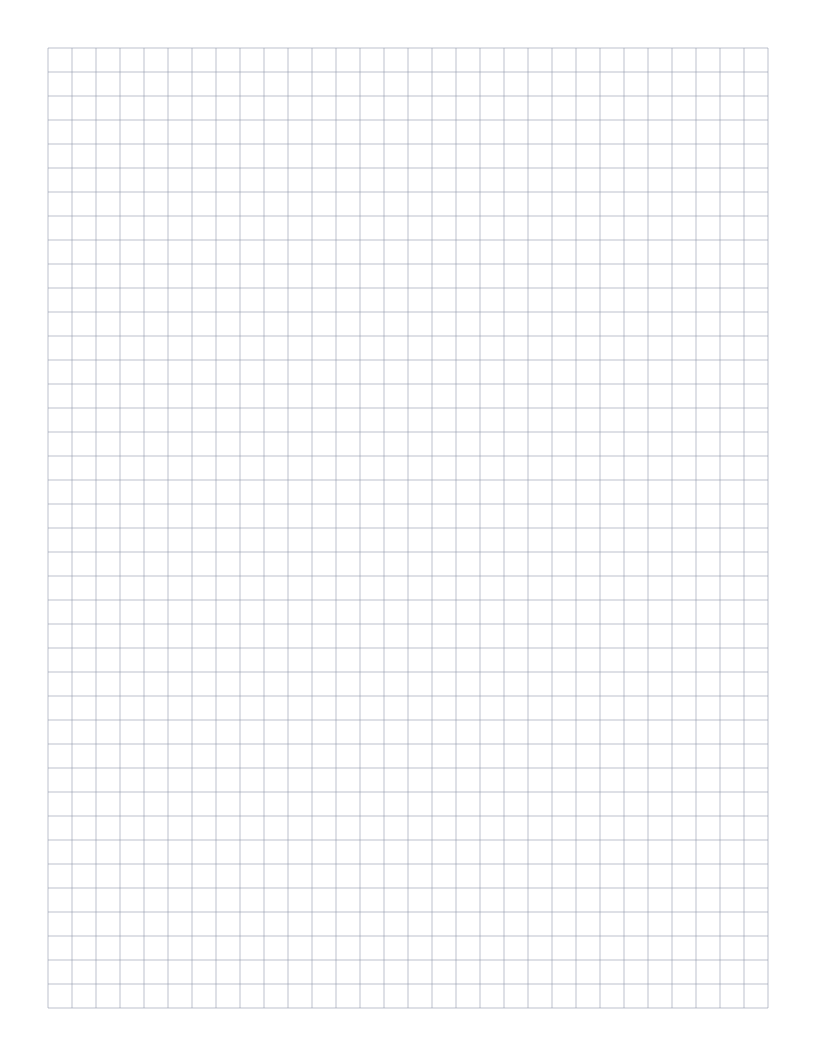
Classic four-squares-per-inch quad ruled paper: the US engineering standard.